If your business ships or handles hazardous materials, you’ve probably asked this question: Is hazmat training worth the investment? Or can we get by without it?
The short answer: you don’t have a choice.
It’s the law.
In 2026, U.S. businesses that skip proper HAZMAT training aren’t just taking a safety risk. They’re taking a legal and financial one.
Penalties for non-compliance can reach $102,348 per violation.
For violations that result in death, injury, or serious property damage, that number rises to $238,809.
Here’s what you need to know about current HAZMAT regulations.
And why the smartest move for many businesses is partnering with a logistics provider that already has a certified team.
What Do DOT HAZMAT Regulations Actually Require?
The U.S. Department of Transportation’s PHMSA oversees HAZMAT compliance under 49 CFR Part 172, Subpart H.
These DOT HAZMAT regulations apply to any “hazmat employee.” That definition is broad.
A hazmat employee is anyone who directly affects hazardous materials transportation safety.
This includes drivers, loaders, handlers, packagers, and anyone overseeing a hazmat shipment.
Under 49 CFR 172.704, hazmat training must cover five core areas:
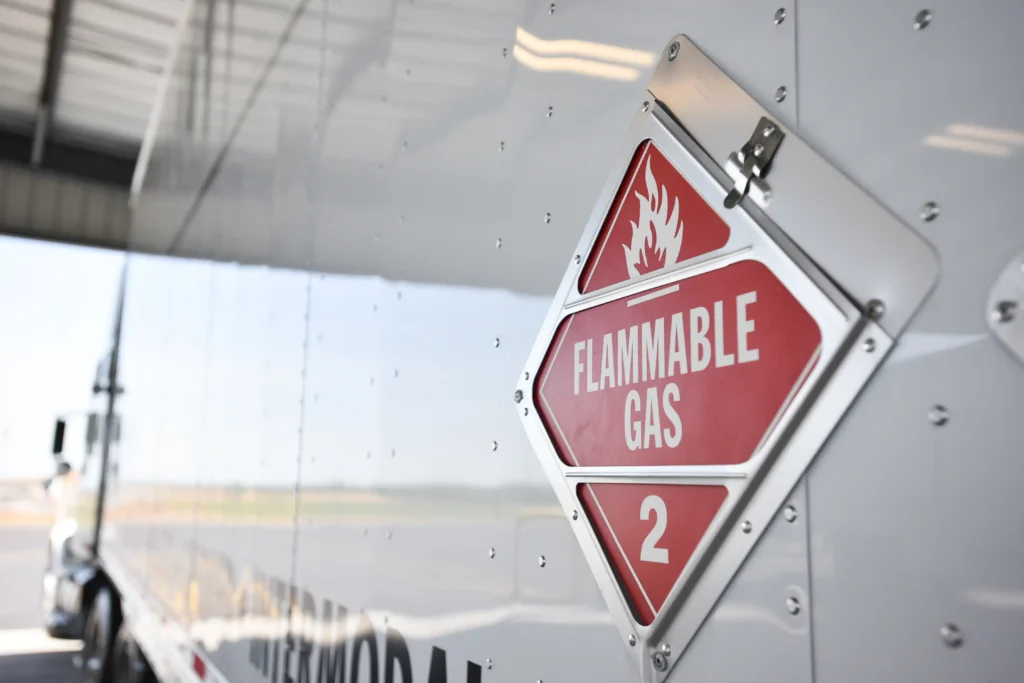
- General awareness and familiarization. Employees must recognize and identify hazardous materials using HAZMAT labeling and placards.
- Function-specific training based on the employee’s actual duties.
- HAZMAT safety, including emergency response information and accident prevention.
- Security awareness training, including how to recognize and respond to threats.
- In-depth security training for employees at companies that must maintain a security plan.
This isn’t a one-time requirement.
Recurrent hazmat training must happen at least once every three years.
New employees must complete training within 90 days of being hired. Records must be kept for the duration of employment plus 90 days after.
What Happens If You’re Not Compliant?
HAZMAT compliance isn’t optional. PHMSA enforces these requirements actively.
A single violation can result in a civil penalty of up to $102,348.
If that violation causes death, serious illness, severe injury, or major property damage, the penalty can reach $238,809.
There is also a minimum penalty of $601 for training-specific violations.
Beyond the fines, non-compliance puts your team at risk.
Hazardous materials transportation is one of the most regulated areas of logistics. And for good reason.
A spill, leak, or mishandled HAZMAT emergency can injure worker and damage property.
It can also trigger environmental consequences that cost far more than any training program.
OSHA HAZMAT guidelines, DOT HAZMAT regulations, and NFPA standards all intersect here.
Staying compliant means understanding all of them, not just one.
What Does a Full HAZMAT Training Program Cover?
A complete hazmat training program goes well beyond reading a label.
It covers HAZMAT classification. Employees need to understand the nine hazard classes and how each affects handling, packaging, and transport.
It covers HAZMAT labeling and placards so shipments are properly marked at every stage.
Additionally, it also includes Safety Data Sheets (SDS).
These documents detail the chemical properties, health risks, and handling requirements for each hazardous substance.
Workers need to know how to read and use them.
PPE for HAZMAT is another critical component. Employees must know what protective equipment is required for each material type and how to use it correctly.
HAZMAT storage and handling procedures, chemical spill procedures, and emergency response plan protocols are all part of a compliant program.
For international shipments, requirements go further.
The IMDG Code governs hazardous materials transport by sea. ICAO Dangerous Goods regulations apply to air shipments.
International HAZMAT standards require their own function-specific training on top of the domestic baseline.
Building all of this in-house takes time, expertise, and ongoing investment.
For many U.S. businesses, especially those that don’t ship hazardous materials regularly, it simply doesn’t make financial sense.
Is There a Smarter Way to Handle HAZMAT Transport?
Yes. And it doesn’t involve building a team from scratch.
For U.S. businesses that need to move hazardous materials without the overhead of maintaining a full in-house hazmat training program, the answer is partnering with a logistics provider that’s already done the work.
That’s where Jansson LLC comes in.
Jansson LLC operates a fleet of drivers trained and certified in hazardous waste transportation, HAZMAT transport protocols, and HAZMAT safety compliance.
When you partner with Jansson LLC, you’re not just outsourcing a shipment.
Entrust your regulatory compliance to professionals who specialize in these complex standards.
Driver hazmat training stays current without constant internal monitoring.
Record-keeping and certification verification are also offloaded, freeing up your internal resources for core operations.
Jansson LLC handles all of it.
Why Partner with Jansson LLC for HAZMAT Transport?
Hazardous materials shipping is not the place to cut corners. The regulatory stakes are high. The safety stakes are higher.
And the cost of getting it wrong, whether that’s a fine, a spill, or a delayed shipment, is always greater than the cost of doing it right.
Fully Trained and Certified HAZMAT Drivers
Every Jansson LLC driver who handles hazardous materials has completed the required hazmat training under 49 CFR 172.704.
That means general awareness training, function-specific instruction, HAZMAT safety protocols, and security awareness.
Our drivers understand HAZMAT classification and are equipped to handle every shipment with the professionalism the law demands.
End-to-End HAZMAT Compliance
From HAZMAT labeling and placards to proper HAZMAT storage and handling en route, Jansson LLC manages every detail.
We stay current on DOT HAZMAT regulations, OSHA HAZMAT guidelines, and updates to international HAZMAT standards that may affect your shipment.
Real-Time Visibility and Transparent Communication
You’ll always know where your shipment is. Jansson LLC provides live tracking and clear communication at every stage.
No guessing. No gaps.
A Team That Treats Every Load Seriously
HAZMAT transport isn’t routine freight, and so Jansson LLC treats it accordingly.
Our team takes personal accountability for every shipment.
There’s no handoff maze. We stay with your load from start to finish.
Ready to Move Freight the Right Way with Expert Hazmat Training?

You don’t have to navigate HAZMAT regulations alone.
And you don’t have to build a compliant team from scratch just to ship your freight safely.
Jansson LLC is ready to handle your hazardous materials transport with the training, compliance, and accountability your business needs.
Book a call with a Jansson LLC expert today.
Let’s build a HAZMAT shipping solution that keeps your freight moving, your team protected, and your business fully compliant.