What are pallet loading patterns and why do they matter?
Pallet loading patterns define how freight is arranged within a truck trailer, directly influencing space efficiency, load stability, and cargo safety. Choosing the right pattern can reduce damage, cut costs, and improve delivery performance—and that’s exactly what keeps supply chains running smoothly.
Tried-and-True Pallet Loading Patterns for Truck Shipments
1. Side-by-Side Loading
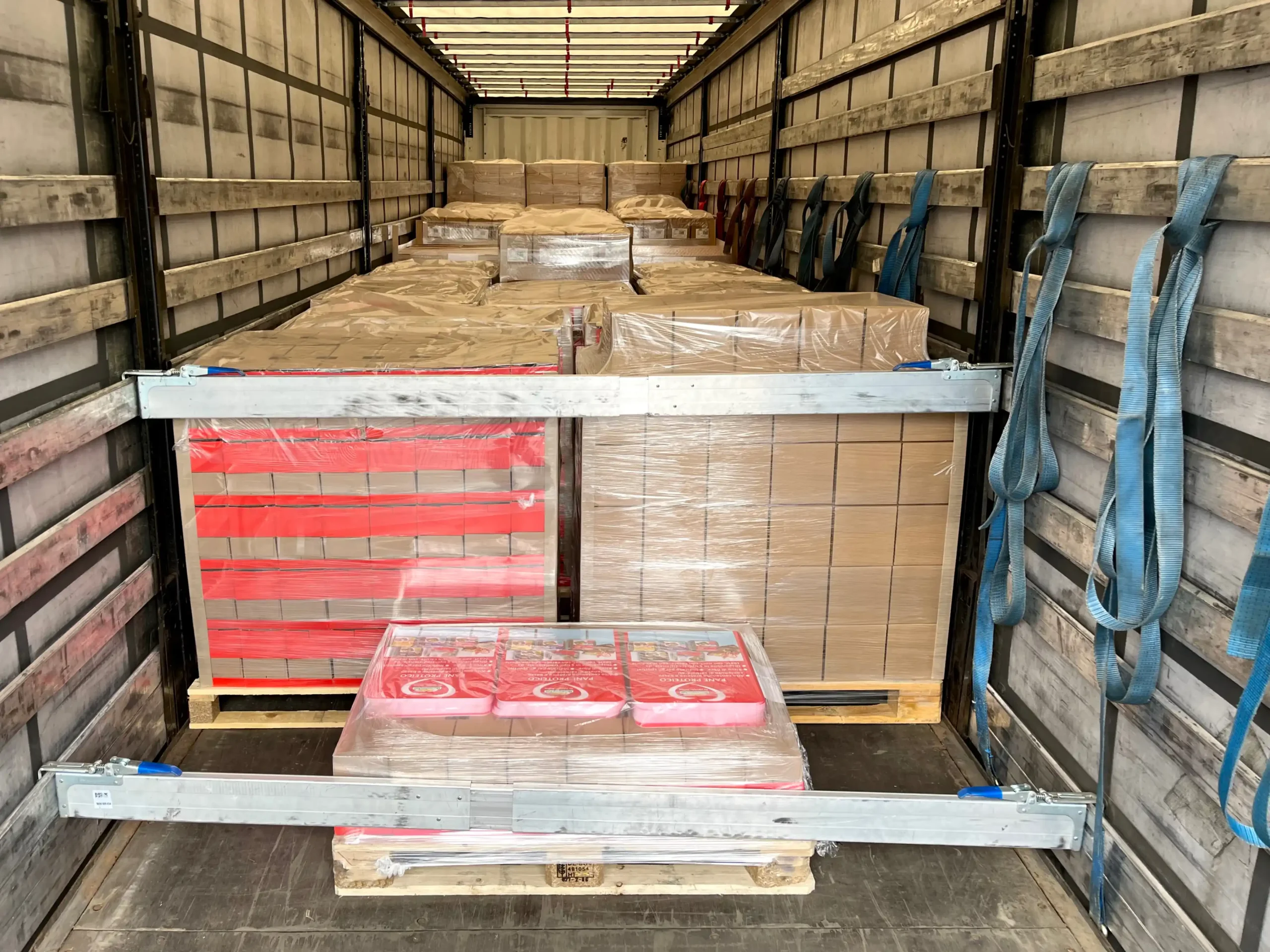
One of the most widely used methods, where pallets are placed tightly next to each other in rows.
- Best for: Standard boxed or general freight.
- Practical tips:
- Keep pallets snug but stable.
- Stagger rows to prevent shifting during transit.
- Uniform orientation helps avoid damage.
2. Turned (Sideways) Loading
Here, pallets are rotated 90 degrees—often used for long, narrow, or cylindrical items like pipes or rolls.
- Best for: Tubular goods, bulky cartons, or objects prone to shifting.
- Advantages:
- Maximizes horizontal space usage.
- Helps avoid contact damage with neighboring pallets.
- Note: Check handling equipment and ensure weight is evenly distributed to avoid shifting.
3. Pinwheeled (Alternating) Loading
Pallets are placed in alternating orientations—lengthwise then crosswise—creating a “pinwheel” or interlocking pattern.
- Best for: Irregular pallet sizes, tight trailer widths, or maximizing load density.
- Advantages:
- Can fit more pallets in a standard trailer (e.g., 28 vs. 26 in a 53-ft trailer)
- Adds bracing and stability, especially useful for odd-sized or heavy cargo
- Drawbacks:
- More complex to load and unload manually
Quick Real-World Example
A Midwest beverage distributor usually employs side-by-side loading for boxed drinks. For cylindrical kegs, they switch to turned loading to fit more into the trailer without impact. When shipping mixed or odd-sized products, pinwheeled loading ensures maximum capacity and stability—but it requires more loading time and precision.
FAQs: Pallet Loading Patterns for Truck Shipments
Which pattern gives the most pallet capacity?
Pinwheeled loading often wins—research shows it can increase pallet count from 26 to around 28 in a 53-ft trailer.
Are there risks to turned loading?
Yes—heavy or uneven loads may shift if pallets aren’t accessible from all sides or weight isn’t well-distributed.
Is pinwheeled loading always the best choice?
Not always. It offers excellent space optimization but can slow down loading/unloading and may not suit fragile items.
How do I reduce shipment damage risk across patterns?
Keep heavy items low, distribute weight evenly across pallets, and avoid overhangs that compromise stability.
Why It Pays to Pick the Right Pallet Loading Pattern

Loading pallets strategically is more than stacking—it’s logistics optimization. Side-by-side is straightforward and effective for standard freight. Turned loading works better for long or cylindrical items and improves space use. Pinwheeled loading offers top efficiency and stability for mixed or non-standard loads. Each method has tradeoffs in labor and handling—choosing wisely saves money, protects goods, and boosts supply chain performance.
At Jansson Logistics, as trusted Landstar agents, we tailor our loading strategies to each shipment. Whether it’s maximizing trailer payload or minimizing risk to fragile goods, our team ensures your cargo arrives safely, efficiently, and on schedule.
Contact Jansson Logistics today to learn how our tailored pallet-loading solutions can optimize your next shipment.