LTL re-weigh fees are one of the most common—and most preventable—surprise costs in freight LTL shipping.
Here is how it happens.
You ship a pallet and list the weight as 500 pounds on the bill of lading.
The LTL carrier weighs it at the terminal. It comes in at 620 pounds.
Suddenly you owe more than you budgeted and there is nothing you can do about it.
That is an LTL re-weigh fee. But the story does not end there.
If the freight class is also wrong, a reclassification fee lands on top. The two charges together add up fast.
For U.S. businesses shipping LTL freight regularly, these fees are not rare accidents.
They are a recurring drain on logistics budgets.
If you want to understand exactly how carriers catch weight errors and why re-weighs happen in the first place, our breakdown of LTL re-weighs and hidden freight fees covers that in detail.
This article focuses on the next layer, which includes reclassification fees and the NMFC system.
We’ll also tackle how to prevent both charges before your invoice arrives.
How LTL Pricing Actually Works
To understand why these fees happen, you need to understand how LTL logistics pricing works.
LTL trucking uses the National Motor Freight Classification system, also known as NMFC.
According to the National Motor Freight Traffic Association (NMFTA), the official body that governs the NMFC, this system assigns freight to one of 18 classes numbered 50 to 500.
Lower class numbers mean lower rates. Higher class numbers mean higher rates.
Four factors determine your freight class: density, stowability, handling requirements, and liability risk.
Density is the most important.
It measures how many pounds your shipment weighs per cubic foot.
Denser freight gets a lower class. Lighter, bulkier freight gets a higher class and a higher rate.
This is where many businesses get into trouble.
They guess at weight and dimensions instead of measuring accurately.
The carrier measures it correctly at the terminal.
The shipper pays the difference plus a penalty fee.
What Is an LTL Re-weigh Fee?
An LTL re-weigh fee is charged when a carrier weighs your shipment and finds it heavier than what you declared.
LTL carriers weigh shipments at origin terminals.
If the actual weight is higher than the declared weight on your bill of lading, the carrier recalculates your rate based on the correct weight and charges a re-weigh fee on top of that.
It sounds small per occurrence.
But across dozens or hundreds of shipments, it adds up quickly.
What Is a Reclassification Fee?
A reclassification fee, also called a re-class fee, is charged when the freight class on your bill of lading does not match the actual class of your shipment.
According to NMFTA, if you use a lower freight class and your LTL carrier determines the class should be higher, the carrier reclassifies your freight and applies additional charges on top of the adjusted rate.
The rate jump can be significant.
For instance, a shipment incorrectly classed at 70 that gets reclassified to 125 might see its rate double or triple.
Even a one-class difference can change your rate by hundreds of dollars per shipment.
That is a serious cost surprise, especially if you quoted a customer based on your original estimate.
Why These Fees Keep Happening
Re-class fees are almost always caused by inaccurate or missing product data.
Shippers who do not maintain current NMFC codes, correct weights, and accurate dimensions are guessing at freight class every time they create a bill of lading.
Here are the most common reasons businesses get this wrong.
Outdated Product Data
NMFC codes change regularly.
According to NMFTA, the classification system is updated continuously and codes are amended on an ongoing basis.
A class that was accurate last year may not be accurate today. If you are working from old data, you are already at risk.
Estimating Instead of Measuring
Many businesses estimate weights and dimensions instead of measuring them.
In LTL logistics, estimation creates a consistent source of unexpected fees.
Carriers now routinely use dimensioning machines at terminals to measure shipments automatically.
This ensures inaccurate declarations are easier than ever to catch.
Packaging Changes
If you change packaging, such as new box size, different pallet configuration, added wrapping, your freight dimensions and density change too.
That can shift your freight class without anyone noticing.
Not Understanding the NMFC System
The NMFC system’s 18 freight classes create real opportunities for confusion. Even a single class difference can change your rate significantly.
And that is a gap that catches many shippers off guard.
How to Avoid LTL Re-weigh and Re-class Fees
The good news is that these fees are almost entirely preventable.
Measure Everything Accurately
Do not estimate. Weigh every pallet before it ships. Measure length, width, and height precisely.
Use the actual numbers on your bill of lading every time.
Keep Your NMFC Codes Current
Review your freight classes regularly. According to NMFTA, the NMFC is a living standard that evolves continuously.
If your products or packaging have changed, your class may have changed too.
Calculate Density Before You Ship
Density drives class. Calculate it yourself before the carrier does. Divide the weight of your shipment by its cubic footage.
Use that number to verify your freight class is correct before booking.
Document Everything
Keep records of shipment weights and dimensions.
If a carrier disputes your declared class, documentation gives you the evidence to challenge the charge.
Work With a Knowledgeable Logistics Partner
An experienced logistics partner knows the NMFC system inside and out.
They catch classification errors before shipments leave your facility and help you avoid fees before they appear on an invoice.
How Jansson LLC Helps You Ship Smarter And Avoid LTL Re-Weigh Fees
Jansson LLC helps U.S. businesses navigate the complexity of LTL shipping without the costly surprises.
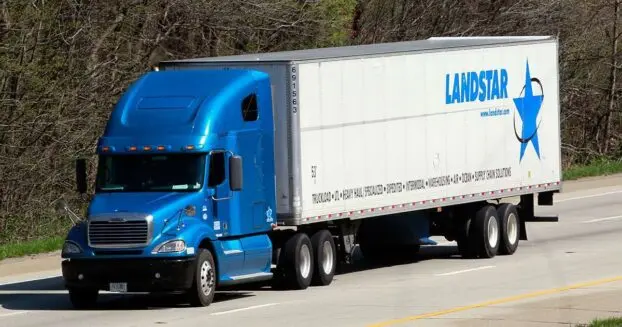
As a Landstar freight agent, Jansson connects clients with an extensive network of trusted LTL carriers across the country.
Our team understands freight classification, NMFC codes, and the details that determine what you actually pay.
What Working With Jansson Looks Like
Freight class accuracy is reviewed before shipments move. Potential LTL re-weigh and reclassification risks are identified early.
Every shipment moves with LTL carriers who handle freight correctly, reducing the chance of disputes at the terminal.
LTL trucking does not have to be a source of budget surprises. With the right partner, it becomes a predictable, well-managed part of your operations.
Talk to a Jansson LLC expert today and let’s make sure your next LTL shipment goes exactly as planned without the surprise fees.