It took a tragedy to kickstart hazmat regulations in the U.S.
On April 16, 1866, in San Francisco, an incident unfolded two days after unmarked crates arrived from New York via Panama at the harbor.
A wharf employee noticed an oily leak from one of the crates.
A Wells Fargo employee named F. E. Webster and his colleagues decided to open it. This was to primarily determine financial responsibility for the lost product, rather than to initiate cleanup.
This decision proved fatal.
While this wasn’t the first hazardous materials accident, it pushed lawmakers to act.
That incident, along with several others in the following decades, laid the groundwork for over a century of evolving hazmat safety rules.
Back then, transporting hazardous materials like chemicals, flammable gases, and radioactive substances was unregulated and chaotic.
Containers leaked. Labels were inconsistent. Emergency responders lacked training and equipment.
It was dangerous, costly, and unpredictable.
The initial federal legislation concerning hazardous materials transportation was enacted in 1866.
Fast forward to today, and the landscape looks very different.
Thanks to a strong foundation of hazmat regulations, businesses and carriers now operate within clear standards.
These rules are driven by agencies like the Department of Transportation (DOT), Occupational Safety and Health Administration (OSHA), and Pipeline and Hazardous Material Safety Administration (PHMSA).
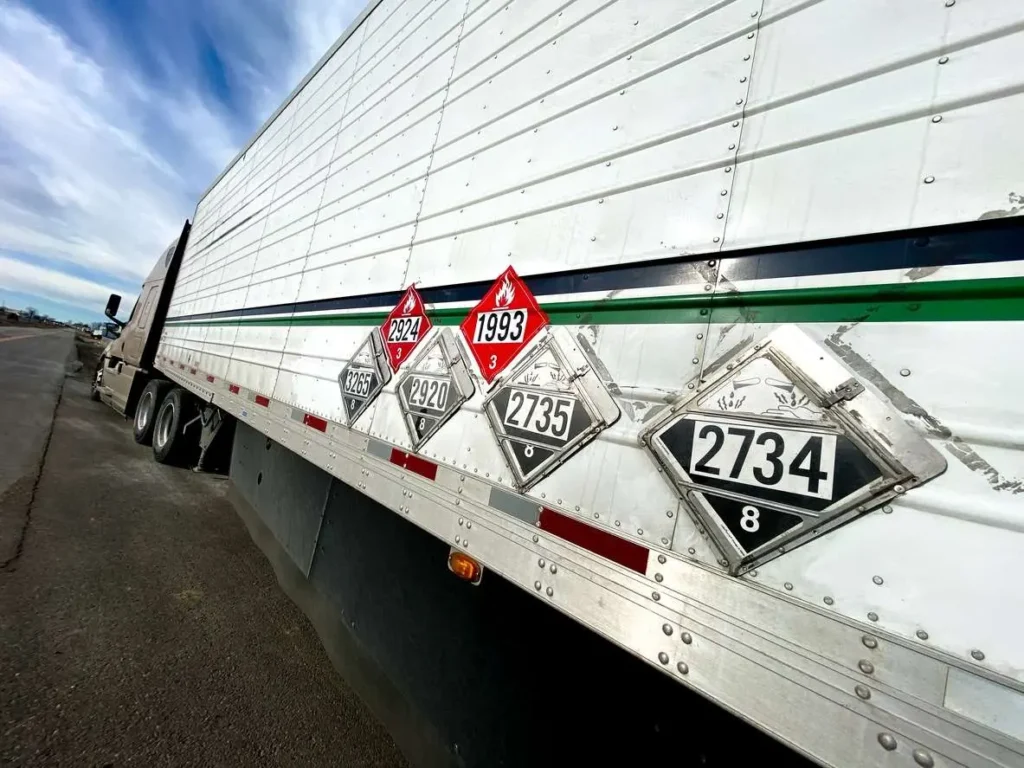
They ensure that hazardous materials are classified, labeled, transported, and handled with care and precision.
Why Hazmat Regulations Matter Now More Than Ever
In today’s high-pressure logistics environment, staying compliant isn’t optional.
It’s essential.
Businesses face tighter delivery windows, stricter liability concerns, and higher customer expectations.
A chemical spill, mislabeled drum, or paperwork oversight can trigger massive disruptions and fines. Worse, it can cause loss of life.
Hazmat compliance is the buffer between a safe delivery and a costly emergency.
From hazmat classification systems to safety data sheets (SDS) and hazmat labeling and placards, the entire system is built to reduce risk at every step.
Compliance with the IMDG (International Maritime Dangerous Goods) Code, ICAO (International Civil Aviation Organization) Dangerous Goods regulations, and International HAZMAT Standards allows U.S. companies to operate confidently in global markets, too.
The stakes are even higher with hazmat storage and handling.
Improper containment or temperature control can lead to fires, contamination, or toxic exposure.
That’s where PPE (personal protective equipment) for hazmat and an effective emergency response plan come into play.
These are not just regulatory boxes to check. They’re tools that protect employees, assets, and the public.
The Role of Training in Hazmat Safety
Even the best hazmat regulations fall short without proper execution.
That’s why hazmat training is critical.
Employees need to know not just the rules, but how to respond in real-life scenarios.
Whether it’s a hazmat emergency, a packaging issue, or a shipping delay, training ensures frontline workers act fast and safely.
Hazmat team training prepares crews for incidents like chemical leaks or transportation accidents.
It teaches them how to contain threats, coordinate with responders, and follow chemical spill procedures.
These skills are essential to minimize damage, protect lives, and restore operations quickly.
And let’s not forget workplace safety compliance.
Every facility that stores or handles hazardous materials must meet OSHA Hazmat guidelines and maintain clear documentation, including up-to-date SDS and accessible PPE.
These aren’t just good practices. They’re legal requirements.
Why Smart Companies Choose Proven Hazmat Carriers
With so many moving parts, companies can’t afford to cut corners on hazmat logistics.
Whether you’re shipping flammable liquids, toxic chemicals, or industrial waste, the quality of your carrier matters.
You need someone who gets the details right every time.
That’s where Jansson comes in.
Jansson isn’t just a trucking company.
A trusted logistics partner, Jansson is built to navigate the high-risk, high-stakes world of hazmat transport.
In this line of work, every detail matters, such as the packaging, routing, timing, and the people trusted to carry it out.
Their deep experience with DOT hazmat regulations, NFPA (National Fire Protection Association) standards, and international compliance systems means your shipments are handled with accuracy and care.
They’ve invested in both technology and training to support full-spectrum safety, from route planning to incident response.
More importantly, Jansson treats every load like it matters.
Because it does.
Why Jansson Leads in Hazmat Transport
Jansson combines old-school reliability with modern logistics smarts.
Their roots in OTR trucking, which is the backbone of U.S. supply chains, give them unmatched reach and flexibility.
Whether you’re shipping across the state or across the country, they have the capacity and know-how to deliver safely and on time.
Their approach to HAZMAT compliance isn’t reactive. It’s built in.
Jansson uses real-time tracking, automated reporting, and live visibility tools so clients never have to guess where their freight is or whether it’s in compliance.
That’s transparency you can count on.
In an industry where errors cost lives, fines, and reputation, Jansson brings control and confidence.
Their teams follow strict OSHA hazmat guidelines, maintain readiness with hazmat team training, and ensure their drivers are equipped for every possible scenario.
From hazardous waste transportation to mission-critical chemical deliveries, Jansson delivers with precision.
They don’t just follow the rules but make them work in your favor.
If you’re serious about hazmat safety, don’t leave it to chance.
Book a call with a Jansson expert today and build a logistics strategy that puts compliance, control, and peace of mind at the center of your operations.