
Every company that moves bulk liquid hazmat faces the same mode decision — truck or rail. Most default to truck because it is familiar, flexible, and available on almost any lane.
That default is worth questioning — especially for long-distance movements where the cost and risk profiles of the two modes diverge significantly.
Between April 2021 and April 2026, highway shipments accounted for 119,346 hazmat incidents in the U.S. Rail accounted for 1,684 during the same period. U.S. Class I railroads deliver more than 99.9% of hazardous materials shipments without a release caused by a train accident.
Hazmat transit incidents have surged 84.8% since 2010, reaching 27,355 annual cases in 2025. Highways drive the majority of those incidents. Corrosives and flammable liquids make up the majority of cases — concentrating risk along heavily traveled roadways.
That is the safety picture. The cost picture is more nuanced — and the right answer depends on your specific commodity, lane, and volume.
The Risk Comparison
Risk profiles for rail and highway are not just different in scale — they are different in kind. Understanding what drives incidents on each mode is what allows you to make a risk-informed decision rather than a familiarity-based one.
Why Highway Incident Rates Are Higher
Highway hazmat incidents outnumber rail incidents by a factor of roughly 70 to 1 over the five-year period ending in 2026. The primary reason is volume — truck-based logistics serve as the backbone of domestic supply chains and often operate across densely populated corridors.
But volume alone does not explain the gap. Truck hazmat incidents are also concentrated in specific failure categories: packaging failures, improper hazard communication, and errors in shipping documentation — issues that can arise at multiple points across the supply chain.
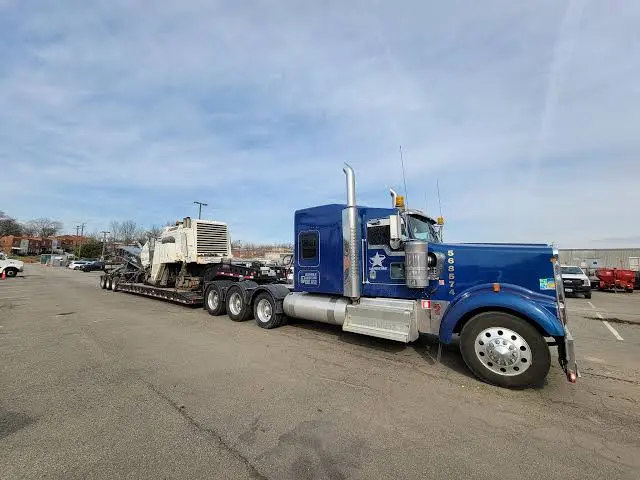
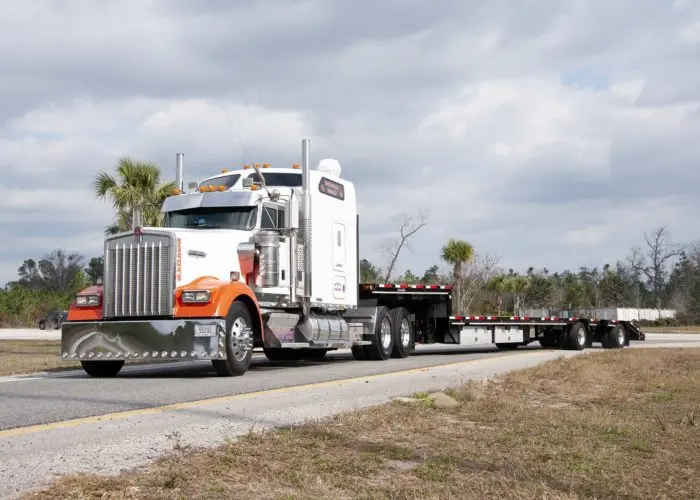
A tank truck carrying bulk liquid hazmat is a single-vehicle asset. When it fails — a traffic accident, a rollover, a mechanical failure — it typically releases its entire contents. The exposed population is whatever community surrounds the highway at that location.
Why Rail Incidents Are Fewer But More Consequential When They Occur
Rail is substantially safer per ton-mile than truck for hazmat — by a factor commonly cited at 4 to 5 times in federal analyses, varying by commodity class.
But rail incidents, when they do occur, carry different consequence profiles. A unit train carrying hazmat can include up to 120 cars. A derailment involving multiple hazmat cars — like the high-profile incidents of recent years — produces larger release volumes and wider evacuation zones than a typical truck incident.
The risk profile of rail hazmat is lower frequency but potentially higher consequence per event. The risk profile of truck hazmat is higher frequency and lower consequence per event. For bulk liquid movements where the commodity is extremely toxic or environmentally damaging, this distinction affects which mode carries the higher total societal risk — but for most industrial chemicals, the per-ton-mile safety advantage of rail is clear and consistent.
The Cost Comparison
Cost differences between rail and truck for bulk liquid hazmat are not uniform — they are lane-dependent, volume-dependent, and commodity-dependent. Understanding the cost structure of each mode is what makes the comparison meaningful rather than theoretical.
Truck Cost Structure for Bulk Liquid Hazmat
Truck rates for bulk liquid hazmat — tank truck movements — reflect the specialized equipment required, the hazmat endorsement requirements for drivers, the insurance premium for regulated materials, and the fuel cost of a dedicated vehicle for each load.
For short-haul movements under 500 miles, truck typically wins on cost because the rail drayage legs — truck pickup at origin and truck delivery at destination — add fixed cost to every rail movement regardless of the main haul distance.
For movements over 500 miles on lanes with good rail service, the economics shift significantly. A single rail car can move the equivalent of three to four tank trucks of bulk liquid. The fuel efficiency advantage — rail moves a ton of freight about three times further on a gallon of diesel than a truck — compounds across long distances.
Rail Cost Structure for Bulk Liquid Hazmat
Rail bulk liquid movements use DOT-specification tank cars — 111A, 112, or 114 series for most chemical and flammable liquid commodities, with more restrictive specifications applying to the most sensitive materials. The tank car is typically provided by the shipper or leased from a tank car provider.
The cost components for a rail hazmat movement include the tank car lease or per-diem cost, the rail linehaul rate, origin and destination drayage, any transloading if the commodity moves between rail and truck, and the handling at rail terminals.
On lanes over 750 miles with daily rail service, the total cost per unit of bulk liquid — including all rail-specific costs — typically undercuts truck by 20 to 35% depending on the commodity and volume. On lanes under 500 miles or lanes with infrequent rail service, truck typically remains cost-competitive.
The Decision Framework for Bulk Liquid Hazmat
The mode decision for bulk liquid hazmat is not a one-time strategic choice — it is a lane-by-lane operational decision that should be revisited as volumes, service patterns, and market rates change. These three scenarios cover where each mode consistently wins.
When Rail Makes Sense
Rail is typically the better choice when the lane is over 500 miles with available rail service, the commodity is a consistent-volume bulk liquid that can justify dedicated tank car assets, the delivery timeline has enough flexibility to absorb rail’s longer transit time, and the shipper is moving enough volume to negotiate favorable rail pricing.
When Truck Makes Sense
Truck is typically the better choice when the movement is under 500 miles, the delivery window is tight, the commodity requires just-in-time delivery that rail transit variability cannot support, or the origin and destination are not reasonably close to rail terminals.
The Multimodal Option
Many bulk liquid hazmat shippers in 2026 are not choosing between rail and truck — they are using both strategically. High-volume, long-haul movements go by rail. Short-haul, time-sensitive, or irregular movements go by truck. The decision is made lane by lane based on the actual cost and risk parameters of each movement.
How Jansson LLC Helps U.S. Businesses Evaluate Mode Options for Hazmat
The right mode for your bulk liquid hazmat depends on your specific commodity, lane, volume, and service requirements — variables that look different for every shipper.
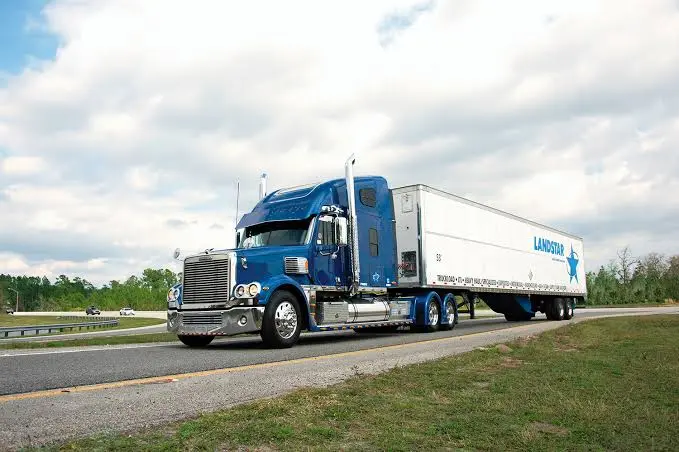
Jansson LLC is a Landstar freight agent with access to a nationwide carrier network — including experienced hazmat operators across both highway and intermodal corridors who understand tank truck specifications, DOT tank car requirements, and the logistics coordination that keeps bulk liquid hazmat moving safely and compliantly.
Contact Jansson LLC today. Let’s evaluate your bulk liquid hazmat lanes and find the mode combination that delivers the right balance of cost, safety, and service reliability.