
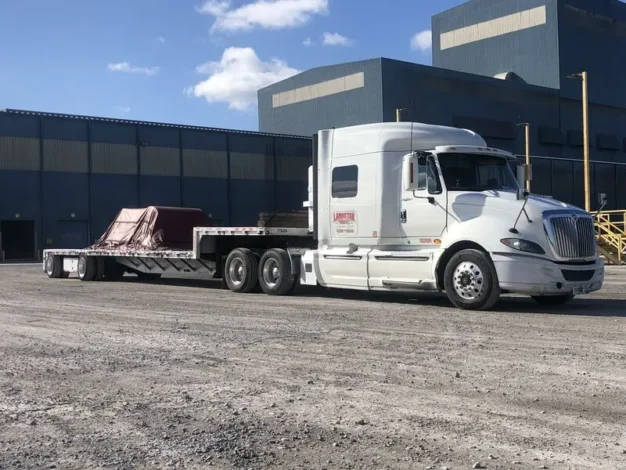
Evaluating carrier CSA scores allows shippers to uncover a trucking company’s history of moving violations or cargo securement failures before booking a trailer.
Selecting a freight partner based solely on low rates and quick availability often leads to unexpected delivery delays, damaged goods, or roadside impoundment.
Shippers who neglect safety background checks take unnecessary risks with valuable cargo and customer deadlines.
Federal Motor Carrier Safety Administration (FMCSA) safety databases publish these performance metrics online for public review. L
earning how to evaluate carrier CSA scores protects your business reputation and ensures your valuable freight arrives safely on time.
Government inspection records give you an unbiased, data-driven look at how a trucking company operates on public highways.
Understanding these government safety reports allows your logistics team to spot major operational red flags before signing high-risk shipping contracts.
Reviewing carrier risk profiles protects your company from financial loss and legal liability when moving heavy industrial products.
What a CSA Safety Rating Measures
The Compliance, Safety, Accountability (CSA) system is the federal government’s primary safety monitoring framework for commercial motor carriers.
Roadside inspection reports, accident files, and federal investigation findings feed directly into seven distinct safety categories over a rolling two-year window.
Higher numerical percentages reflect worse overall safety performance across the board.
Understanding a CSA score chart requires flipping traditional school grading metrics completely upside down.
Scoring in the 80th percentile means a trucking fleet committed more safety violations than 80% of its industry peer group
That high percentage signals serious operational problems and poor driver supervision.
A carrier sitting in the 10th percentile maintains a clean driving record that beats 90% of competing fleets.
Asking what is a good CSA score helps shippers set clear internal safety benchmarks, with lower percentile numbers always representing safer carriers.
Establishing strict cutoff numbers keeps high-risk carriers off your shipping dock entirely.
Key Intervention Thresholds and Red Flags
Federal safety officials flag carriers for official intervention whenever individual category metrics cross specific government limits.
Every category carries a defined percentile threshold designed to catch safety problems before serious accidents happen on public roads.
Category Percentile Limits
Moving violations like speeding and hours-of-service non-compliance trigger intervention at the 65th percentile threshold.
Vehicle maintenance issues and cargo securement failures trigger intervention when a carrier reaches the 80th percentile threshold.
Hazardous materials haulers face even stricter intervention standards because of the sensitive nature of their cargo.
Priority Enforcement Exposure
Crossing these intervention limits places a fleet on priority enforcement lists for official audits and roadside pull-overs.
State inspectors actively target flagged carriers at weigh stations across the country.
Severe Operational Consequences
Carriers with multiple categories above threshold limits face sudden out-of-service orders and immediate cancellation of their insurance policies.
Evaluating a carrier’s official CSA report card protects your supply chain from sudden transportation shutdowns.
Uncovering severe safety warnings early prevents your shipments from getting stuck at state inspection stations.
Evaluating Unsafe Driving and Cargo Securement Records
Shifting cargo and reckless highway driving represent the two most dangerous risks across the commercial freight industry.
Reviewing specific safety categories shows exactly where a carrier’s operational weaknesses lie.
Unsafe Moving Violations
Speeding, tailgating, improper lane changes, and distracted driving instantly push a carrier’s safety percentile into warning territory.
Highway patrol officers log moving violations directly into federal safety databases during routine traffic stops.
High percentile scores indicate that a fleet’s drivers consistently ignore basic traffic laws on public highways.
Insurance underwriters routinely apply heavy premium surcharges or drop coverage entirely when a fleet crosses the 80th percentile threshold.
Working with reckless carriers increases your exposure to costly accident lawsuits and damaged cargo claims.
Cargo Securement Failures
Vehicle maintenance records track severe cargo securement violations discovered during roadside weigh-station stops.
Inspectors examine straps, chains, winch binders, and anchor points to verify cargo stability before allowing trucks back onto the highway.
Inadequate chain counts, broken winch straps, missing edge protectors, and damaged trailer hardware lead to immediate out-of-service orders.
Hiring a flatbed shipping company with poor securement records places your machinery at severe risk of highway rollover accidents.
Broken straps and bent anchor points indicate that drivers skip basic pre-trip equipment checks.
A single flatbed trailer traveling with loose chains can ruin expensive machinery and shut down major interstate traffic lanes.
Working with a reliable flatbed truck driver who conducts thorough pre-trip inspections prevents cargo shifting during dynamic highway turns.
Professional drivers inspect tie-down tension constantly to ensure full compliance across every mile.
Spotting Historical Score Trends
Reviewing a carrier’s recent safety trends tells you if their highway performance is improving or getting worse.
Looking at single test scores without analyzing recent performance history gives you an incomplete picture of carrier reliability.
Federal scoring algorithms weight recent inspection citations far more heavily than older safety violations over a two-year window.
A rising percentile score indicates that a company’s safety standards are actively slipping across its driving fleet.
Rising numbers often signal high driver turnover, poor fleet maintenance, or weak management supervision.
Declining scores demonstrate that fleet management implemented successful driver retraining programs and maintenance upgrades.
Asking carriers to explain sudden safety score spikes reveals how seriously their management handles operational safety.
Proactive carriers explain past inspection citations openly and demonstrate clear corrective actions.
Move Freight Safely by Evaluating Carrier CSA Scores with Jansson LLC

Checking carrier CSA scores on every single load requires time and specialized industry knowledge.
Managing safety verification internally stalls your daily shipping operations and strains your logistics staff.
Partnering with Jansson LLC gives your business instant access to a pre-screened nationwide network of safe, professional drivers.
Operating as an authorized Landstar freight agent, Jansson LLC verifies carrier safety records, insurance policies, and inspection histories before matching equipment to your freight.
Their rigorous vetting process filters out high-risk carriers long before trucks arrive at your loading dock.
Protecting your valuable freight from high-risk carriers starts with one simple choice.
Connect with Jansson LLC today to secure top-tier flatbed shipping across our pre-screened driver network!
Partnering with experienced transport specialists keeps your deliveries running on schedule with zero compliance surprises.