The global marine insurance premium base reached $39.92 billion in 2025. All-risk coverage accounts for approximately 57% of total maritime cargo insurance demand.
That dominance reflects a market consensus — most shippers moving high-value or mixed-commodity freight have concluded that all-risk coverage is worth the premium differential over named perils. But that consensus does not mean all-risk is always the right choice for every shipment.
The correct coverage decision depends on your cargo type, your lane, your risk tolerance, and the specific exclusions written into each policy. A named perils policy on a low-risk bulk commodity lane can be entirely appropriate. An all-risk policy on a high-value electronics shipment through a theft-prone corridor is not optional.
Here is what each coverage type actually means — and how to decide which one your freight requires.
What All-Risk Coverage Actually Means
All-risk is the broadest available cargo coverage. Under an all-risk policy, the insurer covers all physical loss or damage from any external cause — unless that cause is specifically excluded in the policy language.
The critical phrase is “unless excluded.” All-risk is not unlimited coverage. Standard exclusions across all all-risk cargo policies include inherent vice — the natural tendency of certain goods to deteriorate — improper packaging, delay, willful misconduct, and war risks unless separately endorsed.
Under the Institute Cargo Clauses framework — the international standard used by most marine cargo underwriters — ICC A is the all-risk clause. It provides the broadest protection and the highest premium. ICC A covers all risks except those specifically excluded, including theft, accidental damage, contamination, and most handling damage scenarios.
All-risk coverage typically costs 1.5% to 3% of cargo value in 2026. For a $500,000 shipment, that translates to $7,500 to $15,000 in premium — before war risk endorsements or route-specific surcharges.
What Named Perils Coverage Actually Means
Named perils coverage is narrower by design. The policy lists the specific events it covers — fire, explosion, sinking, stranding, collision, cargo going overboard — and pays claims only when the loss matches a listed peril.
The burden of proof difference is significant. Under all-risk, the claimant demonstrates that a loss occurred. The insurer must prove an exclusion applies to deny the claim. Under named perils, the claimant must prove that the specific loss was caused by a listed peril. If the cause of loss is ambiguous or falls outside the listed categories, the claim can be denied even when the loss is genuine.
Under the ICC framework, ICC B covers named perils including earthquake, volcanic eruption, fire, explosion, and cargo going overboard. ICC C covers only the most catastrophic events — vessel stranding, sinking, collision, fire, and explosion. ICC C offers the lowest premium but leaves significant coverage gaps for most commercial shipments.
Named perils premiums run 0.5% to 1.8% of cargo value in 2026 — meaningfully cheaper than all-risk, with the trade-off being narrower protection and a higher burden of proof at claim time.
The Premium Difference and What It Actually Buys
All-risk cargo insurance typically costs 20 to 50% more than named perils insurance on equivalent shipments. On a $100,000 shipment, named perils might cost $500 while all-risk reaches $800.
That premium difference buys two things. First, broader coverage scope — the additional perils between what named perils lists and what all-risk covers are real risks that generate real claims. Theft accounts for a significant share of cargo losses — most of which would be covered under all-risk and excluded under a basic named perils policy. Second, a lower claims burden — the claimant’s job is simpler under all-risk, which reduces the probability of a denied claim on a genuine loss.
The premium differential is most defensible when the cargo is high-value, fragile, theft-attractive, or moving through a high-risk lane. It is least defensible on stable, low-risk, bulk commodity shipments where the named perils list covers the realistic universe of loss scenarios.
The Exclusions That Matter Regardless of Coverage Type
Both all-risk and named perils policies share exclusions that catch shippers off guard.
War Risk
Standard marine cargo policies — both all-risk and named perils — exclude war risk. The Strait of Hormuz crisis in 2026 drove war risk premium surcharges significantly higher on affected routes. Shippers moving cargo through high-risk maritime corridors need a separate war risk endorsement regardless of whether their base policy is all-risk or named perils.
Inadequate Packaging
Both coverage types exclude loss caused by inadequate packaging or preparation. A claim denied on packaging grounds is denied regardless of the coverage form — which is why documentation of packaging standards at origin is as important as the policy itself.
Inherent Vice
Cargo that deteriorates due to its own nature — produce that spoils, metals that corrode, rubber that degrades — is excluded under both coverage forms. Temperature-sensitive cargo requires specific endorsements beyond standard all-risk coverage.
The Decision Framework
Choose all-risk when your cargo is high-value, fragile, theft-attractive, or moving through routes with significant handling, transshipment, or security risk. Electronics, pharmaceuticals, luxury goods, precision instruments, and any cargo where partial damage claims are realistic belong under all-risk coverage.
Choose named perils when your cargo is lower-value, bulk, or moving on stable, well-characterized lanes where the realistic loss scenarios are covered by the named perils list. Bulk agricultural commodities, steel, and construction materials on established trade lanes are reasonable named perils candidates when the premium savings are meaningful relative to the cargo value.
Review the exclusions before making either decision. The coverage form is less important than understanding what your specific policy does not cover — and whether those exclusions create exposure you are not willing to accept.
How Jansson LLC Helps U.S. Businesses Navigate International Freight Risk
Insurance selection is one dimension of international freight risk management. Carrier selection, routing decisions, documentation standards, and packaging protocols are the other dimensions — and they all interact with your insurance coverage when a claim arises.
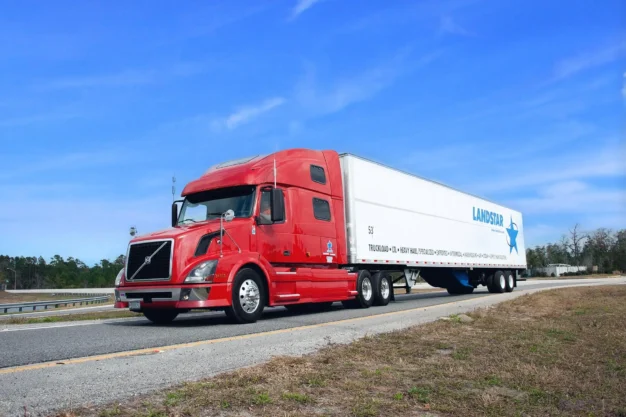
Jansson LLC is a Landstar freight agent with access to a nationwide carrier network — including experienced international freight operators who understand marine cargo risk, routing through high-risk corridors, and the freight coordination that gives U.S. businesses the information they need to make informed coverage decisions on their specific lanes.
Contact Jansson LLC today. Let’s evaluate your international freight lanes and make sure your cargo is moving with the right coverage — and the right carrier — for the risks your shipment actually faces.