
A 10% reduction in vessel speed produces a 27% drop in emissions.
That is not a green marketing claim. It is a physics relationship — engine power output is a cubic function of speed, so small speed reductions produce disproportionately large fuel and emissions savings.
Slowing an 8,500 TEU container ship from 22 to 17 knots saves approximately 43% of voyage fuel and the equivalent proportion of CO2. At 2026 carbon-adjusted bunker prices — comfortably above $800 per tonne on EU routes after the European Union’s Emissions Trading System reached 70% coverage in 2026 — that fuel saving pays back for the carrier at a break-even well below current market prices.
The trade-off is transit time. A slower vessel takes longer to arrive. And for shippers whose supply chains depend on predictable, just-in-time delivery, that longer transit is not free.
Whether the trade-off is worth it depends on your cargo type, your inventory holding cost, your sustainability commitments, and your customer’s delivery tolerance. Here is how to evaluate it.
What Slow Steaming Actually Means in Practice
Slow steaming is any deliberate reduction in vessel speed below the service speed the ship was designed to run. The categories used in the industry are slow steaming — roughly 17 to 19 knots, extra slow steaming — roughly 15 to 17 knots — and super slow steaming — below 15 knots.
Standard container ship service speed typically runs 22 to 24 knots. Modern slow steaming on the Asia-to-North America transpacific corridor might bring that to 18 to 19 knots — adding one to three days to a 14 to 18 day voyage, depending on the lane.
The IMO’s Carbon Intensity Indicator regulation requires vessels to reduce CO2 emissions per unit of transport work by 11% versus 2019 baselines in 2026, with that requirement tightening annually through 2030. Carriers that do not slow steam are degrading their CII rating every three to four years without speed reduction — which creates ongoing regulatory and commercial pressure that directly affects which ships are deployed on which lanes.
The Carbon Side of the Trade-Off
The emissions math is well-established — but the financial and regulatory implications of that math have changed significantly in 2026. Here is what the current numbers actually mean for shippers evaluating their ocean lanes.
What the Emissions Reduction Actually Looks Like
A 10% speed reduction — say from 22 to 20 knots — reduces energy required for the voyage by approximately 19% and CO2 per voyage by a similar proportion. A 20% speed reduction produces roughly 22% less CO2 when measured across consistent transport work. Extra slow steaming at 30% below full speed can achieve a 25 to 43% CO2 reduction depending on vessel type and route.
Shipping accounts for roughly 3% of global CO2 emissions. For shippers with Scope 3 emissions reporting obligations — a growing requirement under SEC climate disclosure rules and the EU’s Corporate Sustainability Reporting Directive — the carrier’s speed choice directly affects the emissions number that appears in the shipper’s own sustainability report.
The EU ETS Cost That Now Falls on Shippers
From 2025, shipping companies pay for 40% of their reported emissions under the EU ETS. That coverage rises to 70% in 2026 and 100% as of 2027.
Those costs do not stay with the carrier. They pass through to shippers — either as explicit ETS surcharges or embedded in rate increases. A shipper choosing fast transit on EU-routed ocean lanes is effectively paying a carbon premium above the freight rate. That premium is quantifiable and should factor into the mode and speed decision for any lane that touches the EU.
The Speed Side of the Trade-Off
What Slower Transit Costs in Inventory
The most direct cost of slow steaming for shippers is the inventory holding cost of goods that are in transit for longer.
A shipment worth $500,000 held in inventory for two additional days at a 6% annual holding cost rate generates approximately $165 in additional holding cost. For a shipper moving 50 containers per month on a lane where slow steaming adds two days, that is roughly $8,250 in monthly inventory holding cost — a concrete number that can be compared against the freight rate difference.
For high-value goods — electronics, pharmaceuticals, precision components — the holding cost calculation makes slower transit significantly more expensive. For lower-value bulk goods where holding cost is minimal, slow steaming’s fuel savings can exceed the shipper’s carrying cost with room to spare.
Just-in-Time Exposure
Shippers operating just-in-time production schedules have the least tolerance for transit time variability — and slow steaming inherently introduces more variability because vessels operating near the bottom of their speed range are more susceptible to weather-related delays.
Buffer stock is the practical solution — holding more safety inventory to absorb the additional transit days. That buffer has a carrying cost of its own that belongs in the trade-off calculation.
The Decision Framework
The slow-steam-vs-fast-transit decision is lane-specific and cargo-specific. It is not a single policy that applies across an entire shipping program.
High-value goods with time-sensitive delivery requirements belong on faster services — particularly when the holding cost calculation shows that inventory cost exceeds the freight premium for faster transit. Bulk or lower-value goods with flexible delivery windows are strong slow-steaming candidates — particularly on EU-routed lanes where the ETS cost of fast transit is now a significant and measurable line item.
The shipper’s Scope 3 emissions commitment is an overlay that can shift the decision. A shipper with a public 2030 net-zero commitment has a financial stake in the carrier’s CII rating and speed choice that extends beyond the immediate freight cost — because the emissions from ocean freight appear in their own sustainability report, not just the carrier’s.
How Jansson LLC Helps U.S. Businesses Optimize International Freight
The slow-vs-fast decision on ocean lanes requires both the carrier options and the cost modeling to evaluate them — and most shippers do not have access to both simultaneously.
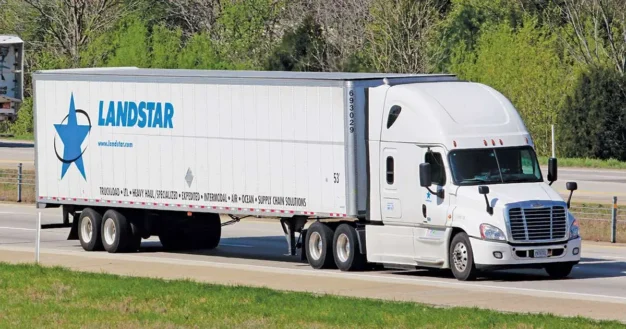
Jansson LLC is a Landstar freight agent with access to a nationwide carrier network — including experienced international freight operators who understand ocean lane economics, CII compliance dynamics, and the logistics coordination that helps U.S. businesses make mode and speed decisions that balance cost, carbon, and delivery reliability.
Contact Jansson LLC today. Let’s evaluate your ocean freight lanes and find the transit strategy that delivers the right balance of speed, cost, and carbon for your supply chain.