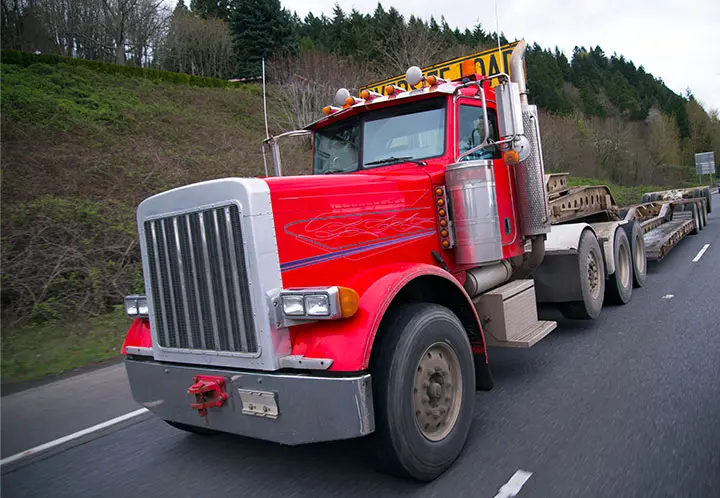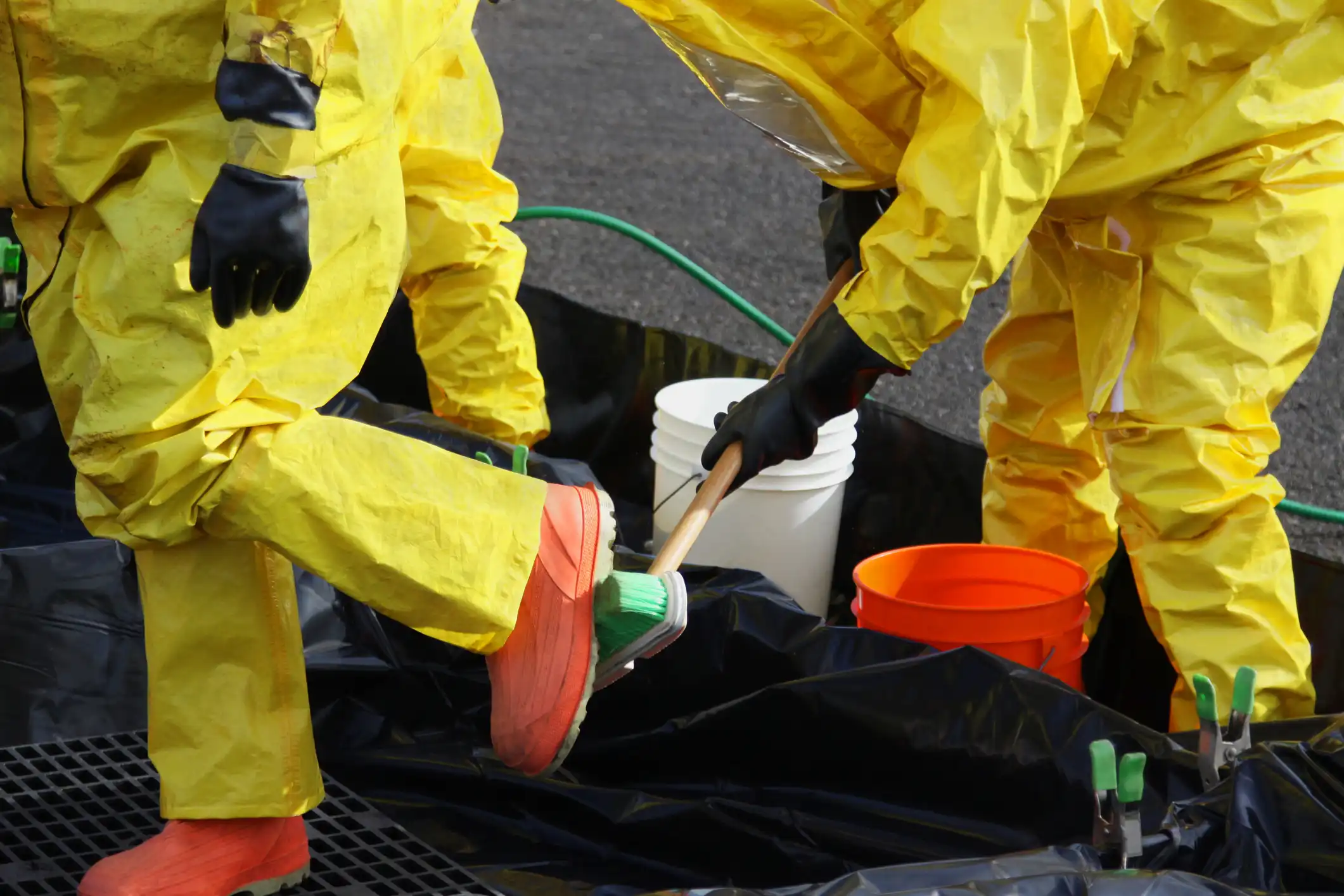
HAZMAT packaging failures do not announce themselves in advance. They show up at the carrier terminal.
Or worse, after delivery.
Your shipment leaves the warehouse looking perfect. It’s properly wrapped, stacked, and labeled.
But the situation changes quickly once it hits the road.
Suddenly, the carrier rejects the load at the terminal, or it arrives at its destination damaged, leaking, and flagged for a DOT HAZMAT violation.
The cost is not just the product.
It is the fine, the delay, the lost relationship, and the paperwork that follows.
For businesses shipping Class 3 hazardous materials—flammable liquids—this scenario is more common than most realize.
The root cause is almost always the same.
Standard palletizing procedures were followed. Hazmat packaging requirements were not.
This article breaks down what Class 3 shipments actually require and why getting it right starts before the pallet ever leaves your dock.
What Is a Class 3 Hazardous Material?
Class 3 is the U.S. Department of Transportation’s designation for flammable and combustible liquids.
According to 49 CFR 173.120, which is the federal regulation that defines this class, a flammable liquid is any liquid with a flash point of not more than 60°C (140°F).
Common examples include gasoline, acetone, ethanol, benzene, paint thinners, adhesives, and many industrial cleaning products.
If your business manufactures, distributes, or ships any of these materials, your shipments fall under the Hazardous Materials Regulations (HMR) contained in 49 CFR Parts 171–180.
According to PHMSA (or the U.S. Pipeline and Hazardous Materials Safety Administration) failure to comply with HMR requirements can result in fines or criminal prosecution.
Flammable liquids can ignite under conditions of heat, friction, or impact.
A poorly packaged shipment is not just a HAZMAT compliance problem.
It is a safety problem.
Why Standard Palletizing Falls Short for Class 3 Loads
Most warehouse teams know how to palletize freight efficiently.
The challenge is that Class 3 shipments require a different standard. One that goes significantly beyond standard commercial palletizing practices.
Here is where most businesses fall short.
Inadequate Inner Packaging
PHMSA regulations require Class 3 liquids to be shipped in UN-specification containers.
These specialized packages are tested and certified to handle the intense stresses of hazardous material transport.
Standard commercial packaging does not meet this requirement.
Using the wrong container type is one of the most common HAZMAT compliance failures in Class 3 shipments.
Missing or Incorrect Absorbent Material
Flammable liquids must be cushioned and contained in the event of a leak.
Proper hazmat packaging requires absorbent material inside the outer container capable of absorbing the entire contents of any inner packaging.
Standard palletizing does not account for this requirement.
Improper Pallet Stability for Liquid Loads
Shipping liquids is much different than shipping solid boxes. When a truck moves, the liquid inside the containers sloshes around.
This shifting weight puts extra pressure on the lids and makes the pallet unstable, which often leads to leaks.
Most people use standard plastic wrap to hold their goods in place.
While that works for solid items, it isn’t strong enough to stop heavy, moving liquids from breaking free during a bumpy ride.
Incorrect HAZMAT Labeling and Placards
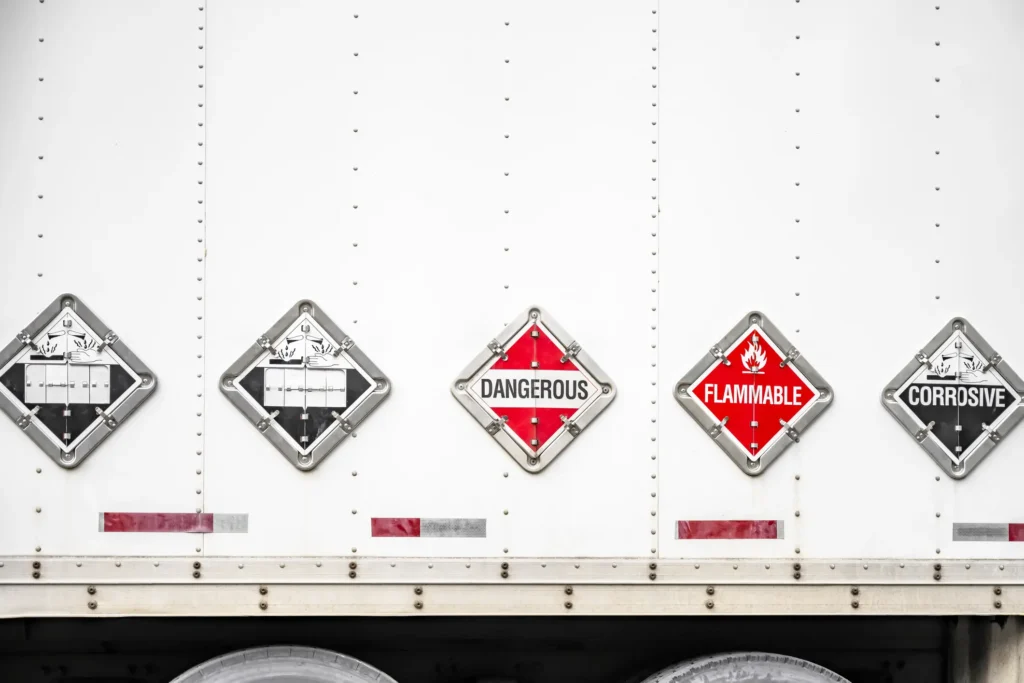
According to PHMSA, Class 3 shipments must display the correct hazard label, which is the flammable liquid diamond, on the outside of each package.
Proper marking must also include the UN identification number, proper shipping name, and packing group.
Missing or incorrect HAZMAT labeling and placards are among the most frequently cited HMR violations.
Missing Shipping Documentation
Shipping flammable liquids requires more than just a standard receipt. By law, you must provide specific hazardous materials paperwork.
These documents must list the exact name of the liquid, its hazard level, an ID number, and how much is being shipped.
You also have to include emergency contact information in case of an accident.
A basic “bill of lading” doesn’t meet these DOT rules, and using the wrong form can lead to heavy fines or rejected shipments.
What Compliant Hazmat Packaging Actually Looks Like
Getting Class 3 hazmat packaging right requires attention across five specific areas.
Each one is a federal requirement, not a recommendation.
Use UN-Specification Containers
Every inner and outer container must meet UN performance standards appropriate for the packing group of your specific material.
Packing Group I is the most dangerous and requires the most stringent packaging.
Packing Group III carries the lowest risk within Class 3 and allows for less restrictive packaging. UN certification is still required for all groups.
Include Adequate Absorbent Material
Outer packagings containing liquid inner packagings must include sufficient absorbent material to absorb the entire contents of all inner packagings.
The absorbent material must be compatible with the liquid being shipped. It cannot react with the hazardous material.
Secure the Load for Liquid Dynamics
Use blocking and bracing designed for liquid freight.
Containers must be oriented correctly (closures facing up) and secured so they cannot shift, tip, or stack in a way that compromises closure integrity during transport.
Apply Correct Labels and Markings
Each package must display the Class 3 flammable liquid diamond label.
The outer packaging must be marked with the UN identification number, proper shipping name, and packing group.
These markings must be durable, legible, and positioned correctly on the package.
Complete Hazmat Shipping Papers
Before any Class 3 shipment moves, shipping papers must be complete and accurate.
The emergency response telephone number must be active and staffed 24 hours a day.
These requirements are federally mandated under 49 CFR Part 172, not optional.
The Cost of Getting Hazmat Packaging Wrong
HAZMAT compliance violations carry serious consequences.
PHMSA can issue civil penalties for HMR violations. In cases of knowing and willful violations, criminal prosecution is possible.
Beyond regulatory penalties, a non-compliant shipment that results in a spill or fire creates liability exposure that can far exceed the value of the shipment itself.
The smarter approach is building compliant hazmat packaging procedures before a shipment ever reaches a carrier.
How Jansson LLC Solves Class 3 HAZMAT Packaging Challenges
Shipping Class 3 hazardous materials requires more than a carrier willing to take the load.
It requires a logistics partner who understands DOT HAZMAT regulations and has access to carriers qualified and equipped to handle flammable liquid freight correctly.
Jansson LLC is a Landstar freight agent with connections to a nationwide network of HAZMAT-qualified carriers.
Through the Landstar network, Jansson matches every Class 3 shipment with the right carrier.
That means a carrier with appropriate HAZMAT authority, compliant equipment, and trained drivers every time.
When Class 3 freight needs to move safely and compliantly, Jansson ensures nothing gets missed before the load departs.
Schedule a call with a Jansson LLC expert today and let’s talk about building a compliant HAZMAT shipping strategy for your Class 3 freight.