The Carta Porte is a mandatory legal document for all freight moving through Mexican territory.
Most U.S. shippers are either not executing it correctly or not fully aware of what it requires from them.
If your business moves goods across the U.S.-Mexico border, compliance is no longer optional.
Failing to meet this requirement leads to immediate consequences, such as shipment delays, costly fines, and the seizure of goods.
According to the U.S. International Trade Administration, Mexico’s Tax Administration Service (known as the SAT) first introduced the Carta Porte requirement in 2022.
It has been updated several times since, with the current version becoming mandatory in mid-2024 and applying to all modes of transport including truck, rail, air, and sea.
What Is the Complemento Carta Porte?
The Complemento Carta Porte is a mandatory digital supplement attached to a Mexican carrier’s fiscal invoice, known as a CFDI, for transportation services.
Think of it as a legally verified digital bill of lading that Mexico’s government requires for all cross-border freight moving through its territory.
In the United States, a standard Bill of Lading documents the cargo, origin, and destination.
The Carta Porte is different.
It is a fiscal and legal document tied directly to Mexico’s tax system. A U.S. Bill of Lading does not replace it.
Both documents are required.
The BOL for U.S. operations and the Carta Porte once the shipment enters Mexican territory.
The SAT’s stated objective is clear.
The Carta Porte exists to trace goods from origin to destination, verify the legal possession of merchandise, and combat contraband and tax fraud in the Mexican supply chain.
What Changed in Version 3.1
Version 3.1 introduced several important modifications in mid-2024 that affect how U.S. shippers prepare and submit documentation.
These updates were designed to refine data accuracy while streamlining certain complex fields that caused issues in earlier versions.
The impact of these changes is significant across all modes of transport.
For example, Union Pacific recently issued a formal requirement update noting that Version 3.1 is now the mandatory standard for rail operations.
They emphasize that non-compliant shipments will face immediate penalties from the Mexican government.
Stricter Data Requirements
Version 3.1 reinforces the requirement for complete and accurate data across all mandatory fields.
The shipper is responsible for providing the carrier with exact data for the identification of goods.
This includes cargo details, weight, volume, origin and destination addresses, and the tax identification numbers of both the shipper and consignee.
Incomplete or inaccurate data does not just slow down a shipment. It can stop it entirely.
Documentation Must Be Ready Before Transport Begins
According to the SAT’s official Carta Porte 3.1 technical manual, the Carta Porte must be issued before the transport begins.
The document is required to prove legal possession of goods during transit, meaning it cannot be filed after the shipment has already departed.
For U.S. shippers accustomed to same-day or post-departure documentation practices, this requirement demands a genuine operational adjustment.
Many carriers and customs brokers require documentation well in advance, often 48 hours or more.
This lead time allows them to validate all data before the load moves.
What U.S. Shippers Are Responsible For
Here is where many U.S. businesses get caught off guard.
The Carta Porte is issued by the Mexican carrier.
But the U.S. shipper bears direct responsibility for the accuracy and completeness of the information provided to that carrier.
According to Mexico’s SAT, all parties involved in the transport of goods share responsibility for the correct reporting of information.
That includes U.S. exporters sending goods into Mexico and U.S. importers sourcing goods from Mexican suppliers.
Errors in the Carta Porte can lead to immediate delays at the U.S.-Mexico border.
If that error is caused by incomplete data from the U.S. shipper, that shipper shares legal liability for the failure.
This is not a minor administrative concern. The consequences are real and immediate.
What Happens When You Get It Wrong
Non-compliance with Carta Porte requirements carries significant financial and operational consequences.
Fines for failing to exhibit the Carta Porte during transit range from approximately 760 to 14,710 Mexican pesos per infraction, which is roughly $45 to $850 USD per occurrence.
Fines for each CFDI issued without the required Carta Porte complement add further exposure on top of that.
Beyond fines, non-compliant shipments face delays at customs and potential seizure of goods during transport.
For international loads, a missing or incorrect Carta Porte can prevent the “Pedimento” (Customs Entry) from being processed. This effectively freezes the shipment at the border.
Loss of deductibility for value-added tax on affected transactions is also a consequence.
For businesses moving high-volume cross-border freight shipping, repeat failures can carry wider consequences.
This includes suspension of import or export program eligibility.
What You Need to Provide Before Every Load
To ensure your Mexican carrier can generate a compliant Carta Porte for every shipment, your team must provide accurate and complete information before the load departs.
Shipper and receiver names, tax identification numbers, and full addresses are all required.
Cargo descriptions, weight, volume, and applicable product codes must be accurate.
While your Mexican carrier is responsible for inputting the specific vehicle type, license plate numbers, and driver identification, they can only do so once you have provided the underlying cargo data.
For road shipments, vehicle type, license plate numbers, and driver identification are mandatory.
Origin and destination points must include full addresses, not just city names.
Every piece of this information must be correct.
Even small discrepancies between the Carta Porte and the physical shipment can trigger inspection, delay, or penalty at the US-Mexico border.
Navigating Carta Porte: How Jansson LLC Supports US-Mexico Cross-Border Freight
Navigating Carta Porte compliance on every load requires a specialized logistics partner.
You need a team that understands both the strict documentation requirements and the operational coordination needed to execute them consistently.
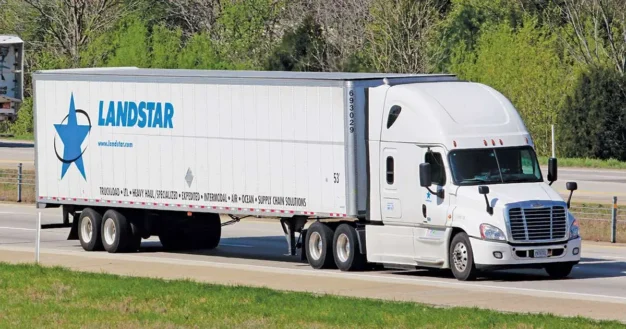
Jansson LLC is a Landstar freight agent with deep experience in US-Mexico cross-border shipping.
Through the Landstar network, we connect U.S. businesses with carriers equipped to manage every detail of the current Carta Porte framework.
This ensures your documentation, timing, and compliance are handled professionally from start to finish.
When requirements are this specific—and the stakes are this high—experience matters.
Partnering with a knowledgeable logistics expert ensures your shipments cross the border correctly, consistently, and without compliance surprises.
Ready to take the guesswork out of the border? Reach out to Jansson LLC today.
Let’s build a US-Mexico freight strategy that replaces Carta Porte confusion with a system built for 100% compliance and zero surprises.