Shipping reactive chemicals safely is one of the most demanding challenges in U.S. freight logistics.
It’s also one of the most consequential when things go wrong.
Most freight can tolerate a delay, like a missed pickup window or an unexpected reroute. Even a few hours sitting at a terminal.
But reactive chemicals cannot.
Temperature-sensitive hazardous materials demand a different standard of care.
Industrial solvents, organic peroxides, unstabilized chemicals, and thermally reactive compounds can all become dangerous with even a small shift in temperature.
Every compliance gap is a potential federal violation. Getting it wrong does not just mean a rejected shipment or a late delivery.
It can mean fires, chemical releases, injuries, and regulatory penalties that threaten a business’s operating authority.
Understanding what makes reactive chemical logistics so complex is essential for any U.S. business operating in this space.
Additionally, it’s important to know exactly how a qualified logistics partner helps.
What Are Reactive Chemicals?
Reactive chemicals are materials that can undergo dangerous chemical reactions under certain conditions.
Temperature is one of the most common triggers.
Some reactive chemicals decompose when they get too warm and will release heat, gas, or flame in a chain reaction that is difficult to stop.
Others become dangerously unstable when they get too cold.
Some react violently when exposed to moisture, air, or incompatible materials during transport.
Common examples include organic peroxides, which are widely used in plastics manufacturing.
Thermally unstable monomers like styrene and vinyl acetate also fall into this category.
So do certain pesticide intermediates and industrial chemicals used in pharmaceuticals, agriculture, and specialty manufacturing.
Under DOT HAZMAT regulations, which are contained in 49 CFR Parts 100-180, PHMSA enforces strict rules for these materials.
Many of them require specific temperature controls before they can legally move.
Specialized packaging and dedicated documentation are also required.
The Three Layers of Complexity in Reactive Chemical Logistics
Temperature-controlled logistics for reactive chemicals involves three layers of complexity that standard freight simply does not face.
Each one requires dedicated expertise and attention before a load ever departs.
Temperature Maintenance Throughout Transit
Temperature-controlled hazmat shipments require continuous monitoring.
Not just at origin and destination, but throughout the entire journey.
A refrigerated trailer that loses power for two hours during a terminal stop can compromise an entire load of thermally sensitive reactive chemicals.
Equipment selection matters enormously. So does routing.
Lanes that minimize transit time reduce the window during which temperature excursions can occur.
Carriers must have the right equipment and a contingency plan for when something goes wrong.
HAZMAT Compliance at Every Touchpoint
According to the Federal Motor Carrier Safety Administration, violations of the Hazardous Materials Regulations can result in civil and criminal penalties.
For reactive chemicals, the HAZMAT compliance requirements are particularly detailed.
Packaging must meet UN performance specifications appropriate for the specific material and packing group.
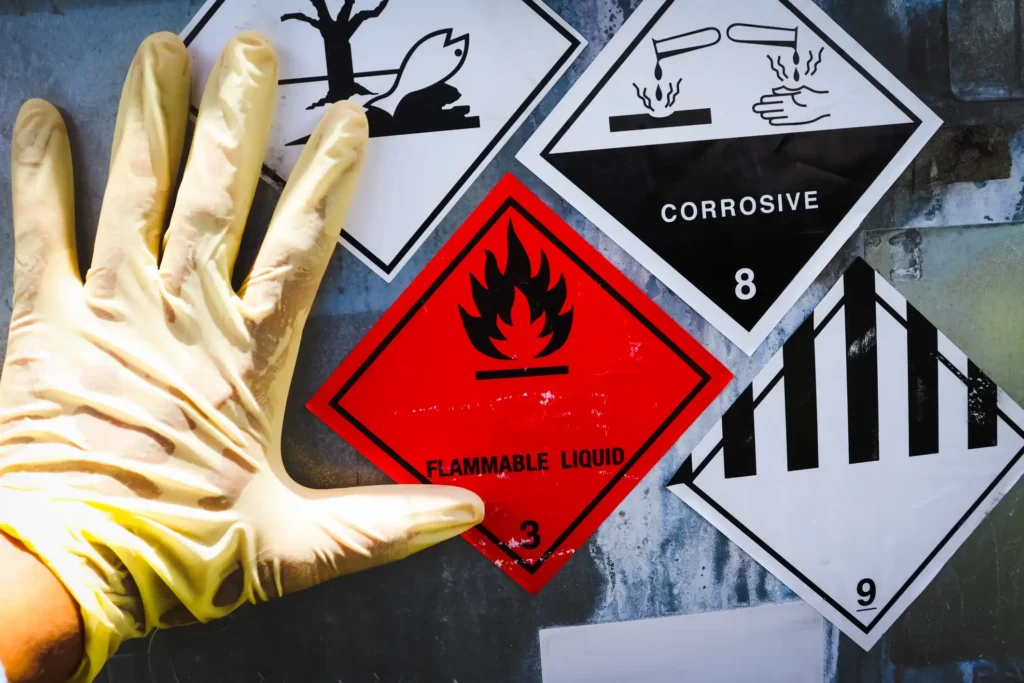
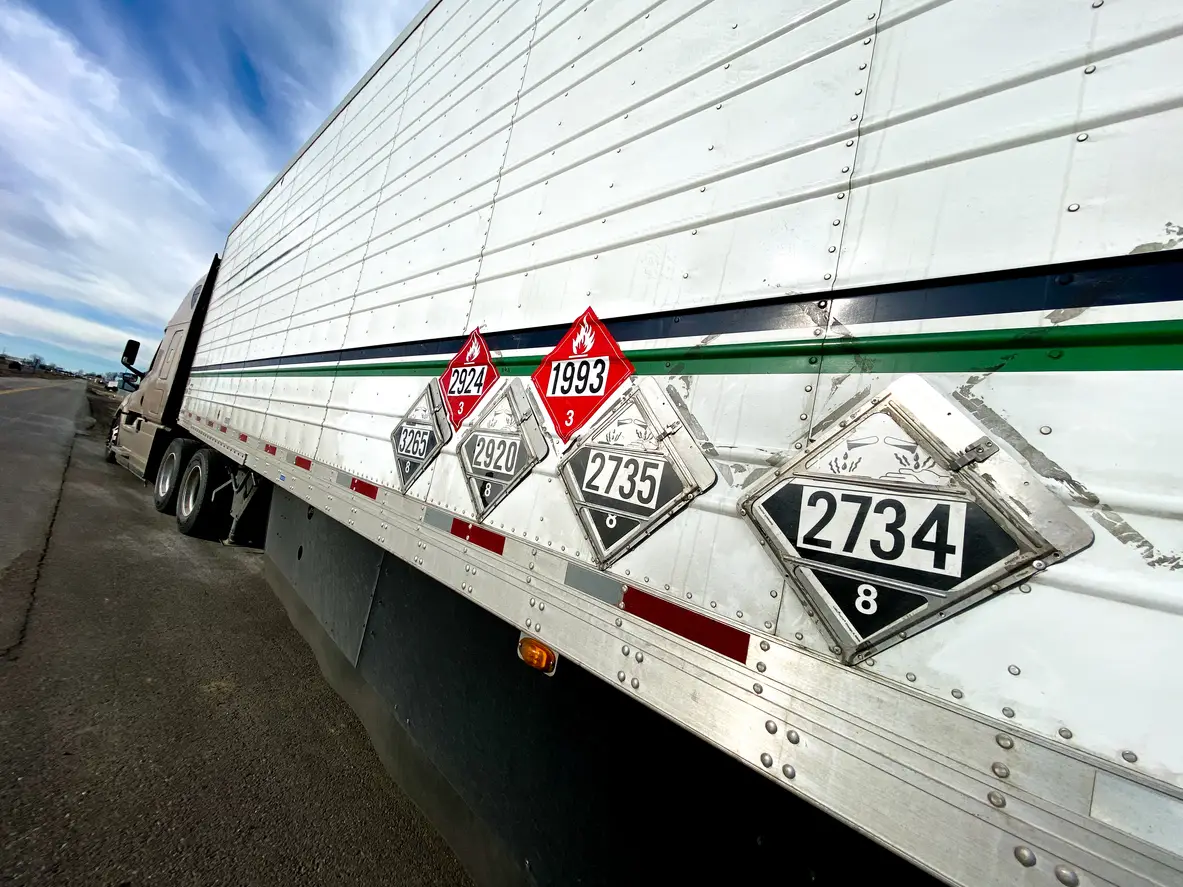
HAZMAT labeling and placards must correctly identify the hazard class.
Shipping papers must include the proper shipping name, UN number, hazard class, packing group, quantity, and emergency contact information.
For temperature-controlled materials, the control temperature and emergency temperature must also be documented on shipping papers.
Missing any of these requirements—even a single field on a shipping document—is a compliance failure that can result in shipment rejection, fines, or worse.
Segregation and Incompatibility Management
Reactive chemicals often cannot travel alongside other materials.
Certain hazard classes react dangerously when exposed to each other.
Improper segregation during loading or terminal handling can create exactly the conditions that cause incidents.
Carriers must understand segregation requirements, and terminal staff must enforce them.
Shippers must verify that their documentation clearly communicates any segregation requirements before the freight moves.
What Can Go Wrong and Why It Matters
The consequences of failures in reactive chemical logistics are not abstract.
PHMSA tracks hazardous materials incident data across all modes of transportation.
The records are serious.
Incidents involving reactive or temperature-sensitive chemicals can cause fires and toxic releases.
Equipment gets damaged. Handlers and first responders get injured. Environmental contamination can follow.
A single serious incident does not just create an immediate safety problem.
A mistake can trigger regulatory investigations, damage carrier relationships, and create liability costs that far exceed the shipment’s value.
For manufacturers, formulators, and agricultural suppliers that depend on reliable reactive chemical inputs, a failed shipment is not just a cost.
It can halt production and disrupt commitments to customers downstream.
What Qualified Temperature-Controlled Logistics Actually Looks Like
Shipping reactive chemicals safely is not about finding any carrier willing to take the load.
It requires a carrier with the right equipment, the right training, and the right HAZMAT transport documentation practices.
Here is what that qualification process actually involves before a load moves.
Temperature Monitoring and Equipment Verification
Before a temperature-controlled hazmat load moves, the carrier’s equipment must be verified and the monitoring system must be confirmed active.
Control temperatures and emergency temperatures need to be communicated clearly and documented correctly on all shipping papers.
Routing for Minimum Transit Time
Every unnecessary hour in transit is an additional window for temperature excursion.
Qualified logistics partners route temperature-sensitive reactive chemical shipments to minimize transit time.
This means selecting lanes and carriers that can complete the move within the required window.
Complete and Accurate Documentation
All shipping documentation must be 100% correct before the load departs.
This means including the proper shipping name, UN number, hazard class, and packing group.
You must also list an emergency contact and any required control temperatures.
A logistics partner who understands HAZMAT regulations catches documentation gaps before they become compliance violations.
Carrier Qualification and Verification
Not every carrier with HAZMAT authority is equipped for temperature-controlled reactive chemicals.
Carrier selection requires verification of equipment capability, driver training, and the specific HAZMAT compliance authority needed for the materials being shipped.
How Jansson LLC Manages the Risks of Reactive Chemicals
Shipping reactive chemicals is not simple. The regulatory requirements are strict, and the operational complexity is real.
Both need a logistics partner who truly understands them.
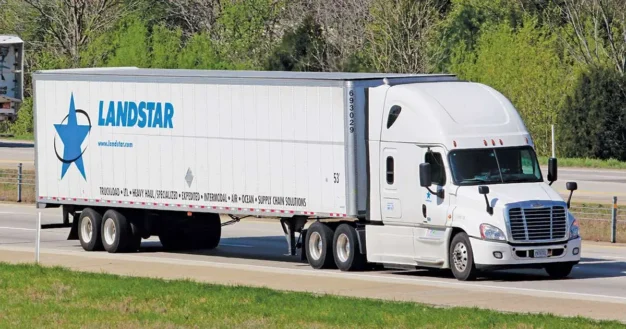
Jansson LLC is a Landstar freight agent. Through the Landstar network, Jansson connects U.S. businesses with a nationwide network of HAZMAT-qualified carriers.
Every carrier is matched to the specific reactive chemical shipment. That means the right equipment, the right training, and the right documentation practices every time.
When reactive chemicals need to move safely and compliantly, Jansson steps in early.
Every requirement gets addressed before the freight leaves the dock. Not after something goes wrong.
Talk to Jansson LLC expert today and let’s talk about building a compliant temperature-controlled logistics strategy for your reactive chemical freight.