Fuel price is one of the most powerful forces shaping freight costs in 2026.
Every time diesel spikes, your freight budget feels it through higher surcharges, tighter carrier capacity, and rising spot rates.
In early 2026, U.S. diesel prices climbed sharply amid global energy disruptions, including restrictions at the Strait of Hormuz.
For businesses shipping long-haul freight by truck, those numbers show up fast on your invoices.
So here is the question every logistics manager and CEO should be asking right now.
At what fuel price does it stop making sense to move long-haul freight exclusively by truck?
That answer has a name.
It is called the pivot point and for most U.S. businesses, 2026 may already be past it.
Why Fuel Price Changes the Math
Trucking and intermodal shipping do not compete equally at all fuel levels. The relationship shifts as diesel climbs.
Here is the core reason.
Rail is far more fuel efficient than trucking.
According to the International Council on Clean Transportation, one gallon of fuel moves one ton of cargo 413 miles by rail.
By truck, that same gallon covers just 155 miles. That is nearly three times the efficiency.
When fuel is cheap, that gap matters less.
Trucking’s speed and flexibility can justify the higher fuel cost for many shippers.
When fuel is expensive, the gap becomes a financial argument that is hard to ignore.
What Is the Pivot Point?
The pivot point is the fuel price at which intermodal rail freight becomes the clearly cheaper option.
It varies by lane distance, shipment volume, and delivery urgency. But the principle holds across most long-haul scenarios.
Distance Matters a Lot
Intermodal becomes more competitive as distance increases. For freight moving under 500 miles, trucking usually wins.
The drayage costs at each end of an intermodal move eat into the rail savings at shorter distances.
For freight moving 750 miles or more, intermodal rail consistently outperforms trucking on cost, especially when fuel prices are elevated.
At current diesel levels, that 750-mile threshold covers a very large share of U.S. long-haul freight lanes.
The Fuel Surcharge Problem Most Shippers Miss
Trucking fuel surcharges are calculated as a percentage of your base rate.
When diesel rises, the surcharge rises too. And that is top of a base rate that may already be climbing due to tighter carrier capacity.
Those two costs multiply each other.
Intermodal rail does not carry the same surcharge structure. That difference becomes increasingly significant as fuel price keeps moving up.
What the Market Looks Like Right Now
The data confirms what the math suggests.
Trucking spot rates are up significantly year over year in early 2026.
Capacity has tightened due to federal CDL licensing changes and carrier exits from the market.
Meanwhile, intermodal capacity remains plentiful and intermodal rates remain near cycle lows.
The rate spread between trucking and intermodal on long-haul lanes has rarely been wider.
Shippers who move now can lock in that advantage before intermodal rates catch up, which analysts expect to happen within the next six to twelve months.
The window is open. It will not stay open indefinitely.
When Intermodal Makes Sense and When It Does Not
Intermodal shipping is not the right answer for every shipment. Knowing the fit is what matters.
Where Intermodal Rail Wins
Intermodal rail is a strong fit when your freight moves 750 miles or more. It also works well for high-volume lanes with predictable schedules.
And if your shipments can absorb one to two extra transit days, the cost savings are hard to beat.
Where Trucking Still Wins
Trucking remains the best choice for short hauls under 500 miles. It is also ideal when you need same-day or next-day delivery.
Finally, choose over-the-road transport if your cargo requires specialized handling that rail cannot provide.
The smartest freight strategies do not pick one mode and apply it everywhere.
They match the mode to the shipment—lane by lane.
Navigating Fuel Price Volatility: Finding Your Intermodal Pivot Point with Jansson LLC
Knowing when intermodal shipping makes sense requires a logistics partner with access to both modes and the data to analyze your specific lanes.
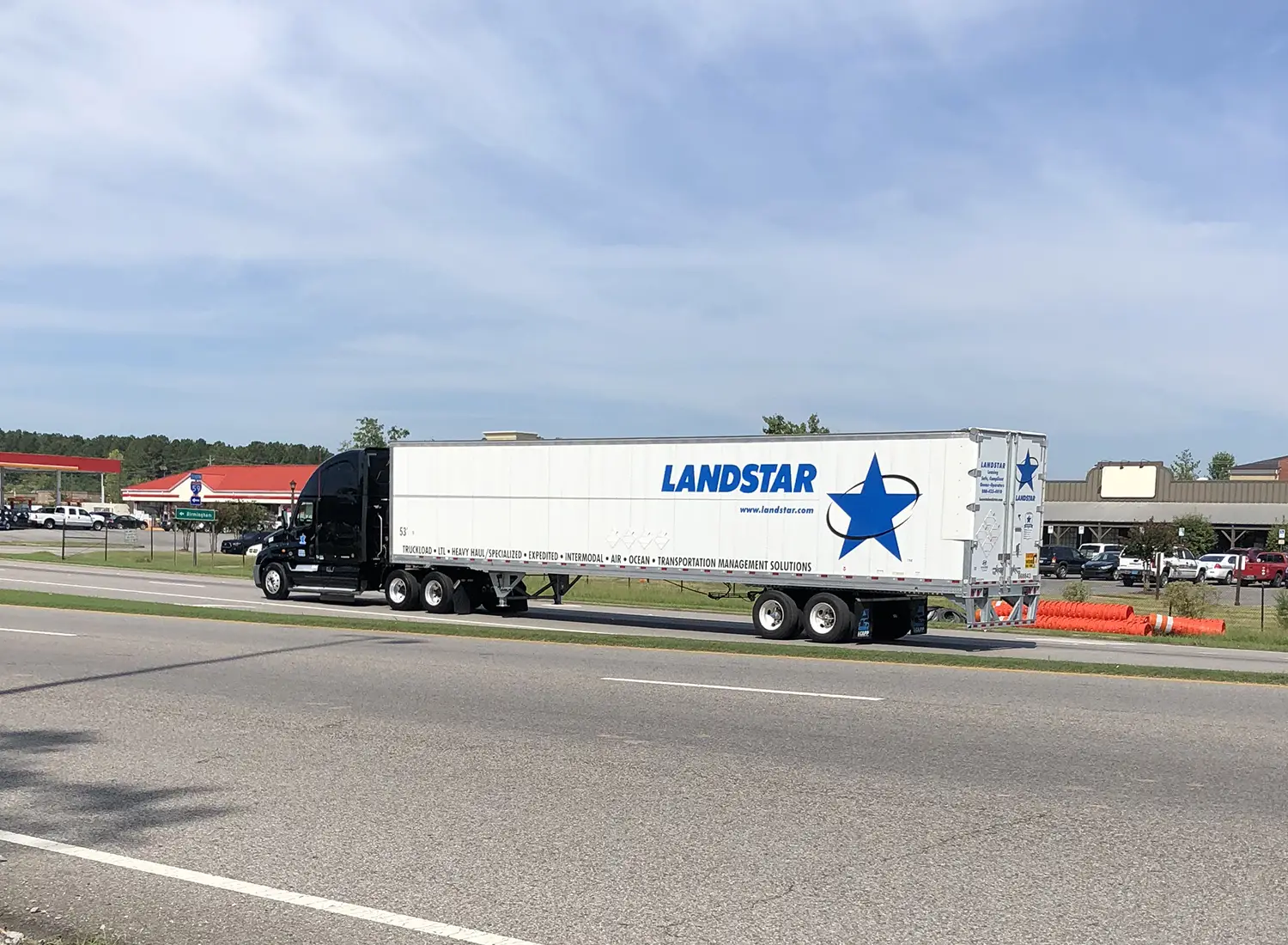
Jansson LLC is a Landstar freight agent with connections to every major U.S. Class I railroad and a broad network of qualified over-the-road carriers.
Jansson uses the Landstar network to help U.S. businesses find the best lanes for intermodal rail.
We secure capacity at current rates now. This protects you before the market tightens.
What That Looks Like in Practice
Your freight lanes get reviewed for intermodal suitability.
Cost comparisons get run between your current trucking rates and available intermodal options.
Capacity gets locked in.
And real-time visibility keeps you informed throughout every shipment.
The pivot point is not a theoretical concept. It is a real calculation.
And right now, for most businesses shipping long-haul freight, the fuel price math strongly favors intermodal.
Schedule a call with a Jansson LLC expert today and let’s run the numbers on your lanes before the window closes.