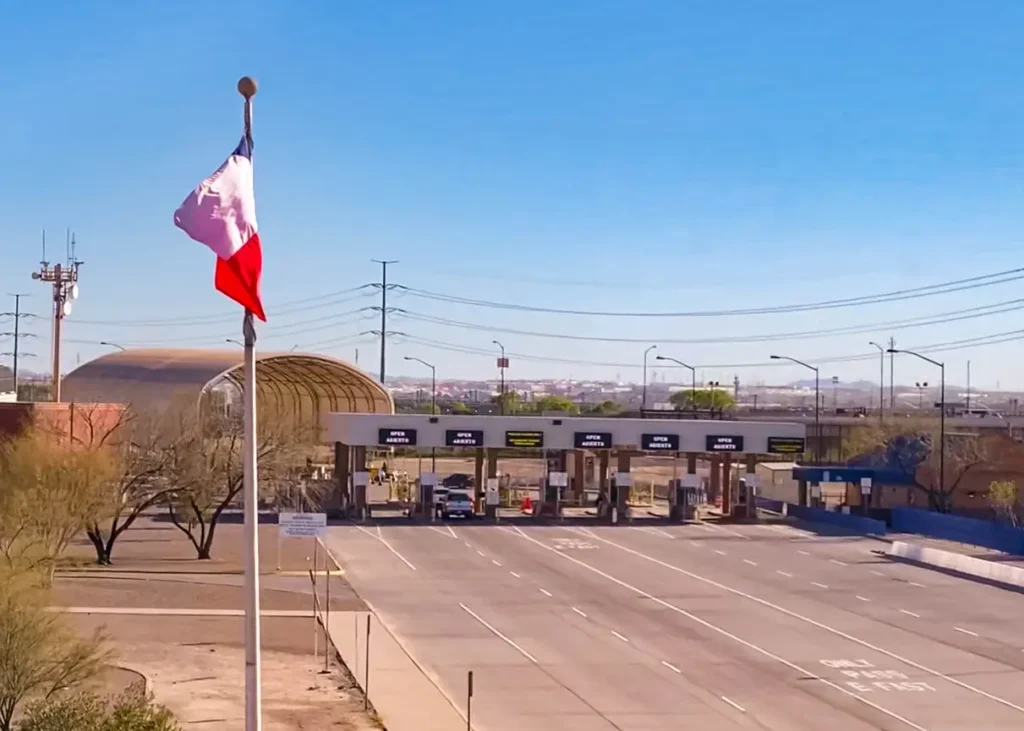
The 2026 customs law reform changed how liability works at the U.S.-Mexico border.
And most U.S. importers have not adjusted their operations to account for it.
According to the U.S. International Trade Administration, Mexico published a sweeping reform to its Customs Law in the Official Federal Gazette on November 19, 2025..
The reform took effect on January 1, 2026, and it affects every U.S. business that ships goods across the border in either direction.
Import duties have increased. Documentation standards are tighter. Liability has expanded. New digital traceability requirements are now mandatory. Cross-border freight cannot be managed the same way it was in 2025.
For U.S. businesses importing from Mexico or exporting to Mexican buyers, the compliance stakes have changed significantly.
The old rules allowed room for error, but the new rules do not.
What Changed and Why It Matters
The 2026 customs law reform touches several areas of Mexico’s customs framework.
Three changes carry the most immediate risk for U.S. businesses engaged in cross-border freight shipping.
Here is what you need to understand before your next shipment moves.
Joint and Several Liability Is Now the Law
This is the most significant change for U.S. importers. Previously, customs brokers carried most of the compliance responsibility.
If an error occurred based on inaccurate documentation provided by the importer, the broker was often shielded from certain penalties.
That protection is gone.
According to Alvarez & Marsal, the Customs Law will no longer relieve customs brokers and agencies from liability when clients provide false or inaccurate information.
Joint and several liability now applies across the entire chain. This includes importers, exporters, and customs brokers who are all legally responsible for the accuracy of every customs declaration.
In practical terms, a U.S. importer can now be held directly liable for errors in tariff classification, valuation, and documentation.
Even if those errors were made by the broker handling the clearance.
Penalties Have Increased Dramatically
The financial consequences of non-compliance have escalated significantly under the 2026 customs law reform.
Imported goods must meet specific non-tariff measures, such as technical standards and licenses.
According to DLA Piper, failing to comply can result in fines ranging from 250% to 300% of the item’s commercial value.
These fines apply in addition to any customs duties, taxes, and surcharges. Seizure of goods and cancellation of import programs are also possible outcomes.
For a business importing $500,000 worth of goods, a compliance failure could generate a fine of $1.25 million to $1.5 million, on top of the value of the shipment itself.
Documentation Standards Are Tighter
The reform significantly raises the bar for documentation accuracy across all cross-border shipping services.
U.S. exporters shipping to Mexico must now provide flawless documentation.
All invoices, technical sheets, and certificates of origin must be complete and perfectly consistent with the physical goods being shipped.
Discrepancies between invoices and physical goods are no longer treated as administrative errors.
They are treated as violations, which trigger delays, storage fees, and reassessment by Mexican customs authorities.
Digital Traceability Is Mandatory
Mexico’s National Customs Agency now requires real-time digital traceability across the customs process.
Interoperable inventory systems and video surveillance are now mandatory at all bonded facilities.
Companies operating under the IMMEX program face additional electronic monitoring requirements.
If a supply chain passes through Mexico, documentation systems must generate audit-ready records.
Maintaining this level of detail is the only way to ensure a seamless cross-border process.
What This Means for U.S. Businesses at the Border
The 2026 customs law reform does not just affect Mexican importers.
It directly affects any U.S. business that ships goods across the US-Mexico border in either direction.
Here is how the changes apply depending on your specific situation.
For U.S. Exporters to Mexico
Your Mexican buyer’s customs clearance process now reflects directly on you.
Financial penalties apply to both the exporter and the importer when paperwork fails.
Even unintentional errors in your documentation can trigger these fines under the joint liability rules.
Every export shipment to Mexico now requires meticulous preparation before it moves.
For U.S. Importers From Mexico
Goods manufactured in Mexico and imported into the U.S. often involve IMMEX program operations.
The reform tightens controls on IMMEX significantly.
This includes reduced temporary import periods and enhanced documentation requirements for manufactured goods.
Errors in this process carry serious financial and operational consequences.
For USMCA-Qualified Shipments
Goods qualifying for preferential treatment under the United States-Mexico-Canada Agreement are not subject to the new non-preferential tariff increases.
However, USMCA qualification requires accurate certificates of origin and documentation that meets the agreement’s rules of origin requirements.
The new documentation standards make this verification more critical than ever.
The Practical Risk for Businesses That Are Not Prepared
Most U.S. businesses that rely on cross-border shipping services trust their customs brokers to manage compliance.
Under the 2026 customs law reform, that reliance is no longer sufficient.
The importer is now a full legal participant in every customs declaration with direct financial exposure for every error.
Risk levels have shifted dramatically since 2025.
Companies that fail to update their documentation or verify broker relationships are now operating in a much more dangerous regulatory environment.
The margin for error has essentially been eliminated.
How Jansson LLC Supports U.S.-Mexico Freight Under the 2026 Customs Law Reform
Success in today’s regulatory environment requires more than just a truck.
Shippers need a logistics partner who masters both the operational movement of goods and the complex compliance rules of every load.
As a Landstar freight agent, Jansson LLC provides the deep experience necessary for coordinating seamless U.S.-Mexico border freight.
This partnership connects U.S. businesses to the Landstar network, which is a vast system of carriers and services specifically equipped for the 2026 customs framework.
Significant rule changes in 2026 have made the “old way” of shipping a liability.
By partnering with Jansson LLC, you ensure every shipment moves correctly and every document is perfectly coordinated.
Most importantly, it prevents your supply chain from absorbing the devastating costs of compliance failures.
Talk to Jansson LLC expert today and let’s talk about building a U.S.-Mexico freight strategy that is fully ready for the 2026 compliance environment.