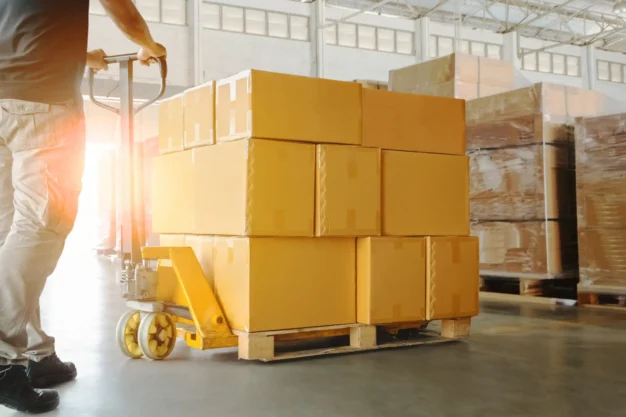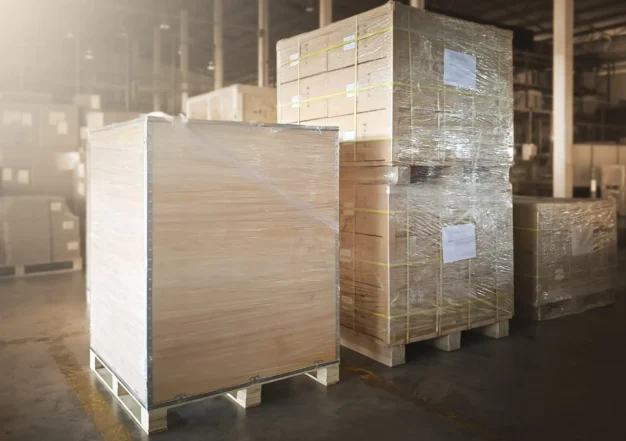
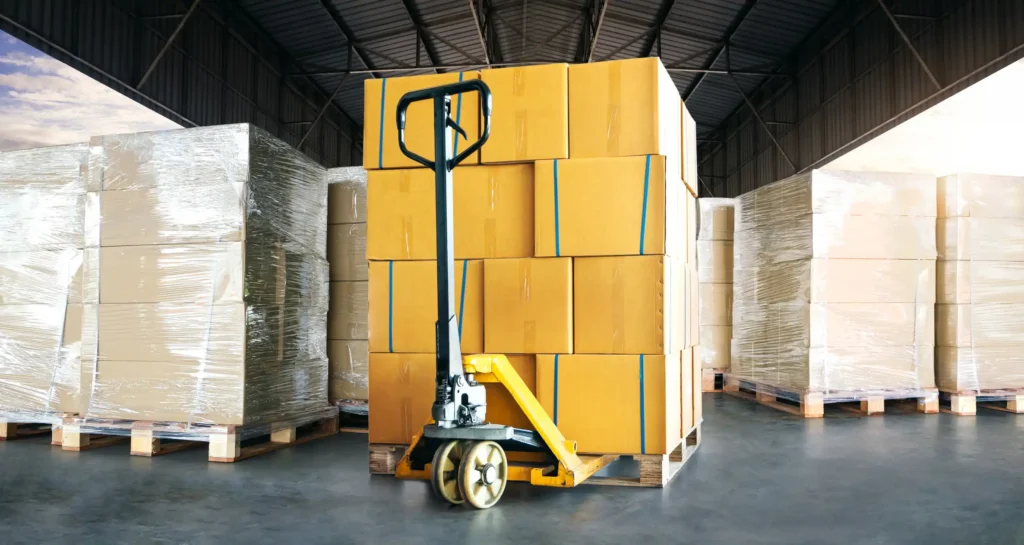
Improper stacking that leads to pallet overhang can ruin your cargo during transit. Pushing boxes just one inch past the wooden edge cuts carton strength by a third.
Corrugated boxes need solid deck boards underneath to hold heavy loads.
Cartons crush easily under normal weight when edges hang out in empty air. Building supported pallet loads protects your products from expensive freight claims.
Protecting your cargo requires looking at how freight moves through shipping networks.
Rough roads and trailer vibrations put heavy stress on stacked boxes. Forklift handling also jars freight at busy transfer hubs.
Cartons that sit squarely on wooden boards absorb road shocks without buckling. Following proper packaging rules saves your business time and money.
What Is a Pallet Overhang?
Many shipping managers ask, “What is a pallet overhang?” when an inspector flags their freight on the dock.
This packaging error happens whenever cartons extend beyond the outer edges of the wooden pallet.
Boxes Pushing Beyond the Deck Edge
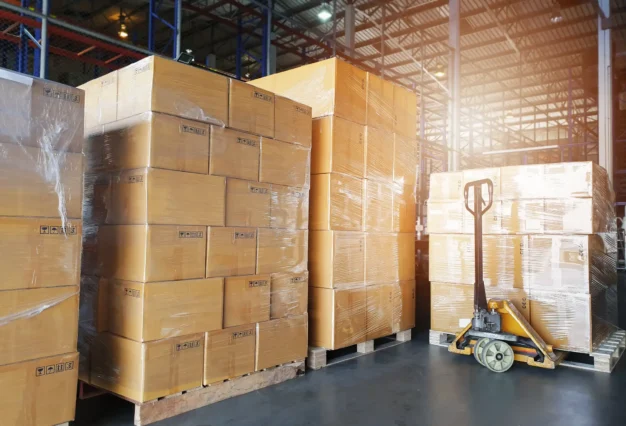
Standard shipping pallets measure forty-eight inches by forty inches across the top deck. Cartons should fit cleanly inside these boundaries so the wood carries the weight.
An overhang pallet struggles to carry top weight when boxes stick out on any side.
Drivers spot this issue right away because the cargo bulges past the platform.
Loss of Vertical Corner Support
Shipping pallets provide a flat base that spreads weight evenly. Hanging boxes over the edge removes that firm wooden support.
Outer parts of the box hover over empty air without floor contact.
Downward force causes the bottom flaps to sag, bend, and weaken.
How Much Pallet Overhang Is Acceptable?
Shippers frequently ask carriers how much pallet overhang is acceptable during freight pickup.
The straightforward answer from packaging engineers is that zero overhang is the only safe standard.
The Golden Rule of Zero Overhang
Keeping every single box inside the pallet edge is the best way to prevent transit damage.
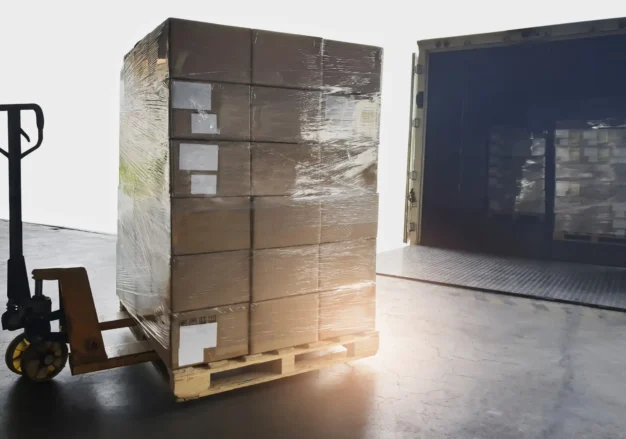
Professional packaging guidelines state that cargo should align flush with the deck boards.
Flush stacking guarantees that every box corner rests on solid wood.
Aligning your cartons protects your goods from scrapes, rips, and crushing during transit.
Why One Inch Cuts Box Strength by a Third
Testing by packaging laboratories reveals shocking drops in container strength from tiny errors.
Hanging a carton just one inch past the wooden edge reduces its compression strength by thirty-two percent.
A two-inch gap can wipe out nearly half of what the box can carry. Stretch film cannot fix this structural loss because plastic wrap cannot replace solid wood.
Why Does Overhang Cause Box Corners to Collapse?
Corrugated boxes get most of their strength from their upright corners. Losing contact with the pallet surface ruins that natural vertical support.
The Critical Role of Box Corners
Cardboard boxes rely on four rigid corners to carry most of their stacking weight. Vertical flutes inside the paper line up to form stiff pillars at each corner.
Weight presses straight down into the pallet deck when a box sits completely on the wood.
Firm wooden bases allow boxes to hold heavy products safely during transit.
Crushing and Sideways Bending Stress
Pushing a box corner past the pallet edge leaves that crucial pillar floating in the air. Downward weight from upper layers cannot transfer into the wooden pallet.
Instead, the force bends the cardboard sideways along the unsupported bottom edge.
Corrugated paper folds easily under sideways bending. That unsupported corner quickly buckles, causing the entire stack to tilt.
How Tall Can a Pallet Be for Shipping with LTL?
Warehouse crews often ask how tall can a pallet be for shipping with LTL before drivers refuse the load.
Standard freight trailers have clear height limits that shippers must obey.
Standard LTL Height Limitations
Most motor carriers allow pallets to stand between seventy-two and eighty-four inches tall, including the wooden base.
Anything over ninety-six inches physically cannot clear the roll-up doors of a standard commercial trailer.
Keeping shipments under seventy-two inches allows carriers to double-stack pallets safely.
Shorter pallets save trailer space and reduce the chance of freight tipping over.
The Danger of Top-Heavy High Pallet Loads
Tall stacks become unstable very quickly if they suffer from a pallet load overhang. The center of gravity shifts toward the weak side when high boxes stick out past the base.
Normal highway turns and sudden braking cause tall, overhanging stacks to lean and collapse.
Keeping loads compact and level prevents catastrophic freight spills on the road.
Why Does LTL Freight Increase the Risk of Damaged Boxes?
Pallet durability matters far more in hub-and-spoke networks than in dedicated truckloads. Understanding how LTL freight travels helps explain why weak pallets fail so often.
Frequent Cross-Dock Handling
Standard LTL shipping moves your freight through multiple regional sorting terminals between pickup and final drop-off.
Forklift operators lift, move, and reload your pallets three to five times during a normal trip.
Each transfer creates sharp vibrations and sudden jolts. Weak, overhanging edges that survive the first dock often collapse completely by the third transfer.
Denied Claims for Packaging Failures
Motor carriers inspect damaged shipments carefully before approving insurance payouts.
If an adjuster discovers that an overhang pallet caused the collapse, the carrier will deny your claim.
Tariffs clearly state that shippers must package goods securely to withstand ordinary transport.
When boxes stick out past the wood, the carrier classifies the loss as shipper packaging error.
When Should Shippers Choose a Partial Truckload Shipment?
Large pallet orders with bulky dimensions do not always belong in standard shared networks. Shifting your cargo to a partial truckload shipment offers better protection for fragile or wide items.
Dedicated Space Without Cross-Docking
Partial truckload service keeps your cargo on a single truck from your loading dock to the customer.
Drivers do not transfer your pallets through multiple cross-dock terminals along the way.
Less handling means fewer chances for forklifts to hit overhanging edges or topple tall stacks.
Shippers get reliable transit times and significantly lower damage risks.
Flexible Sizing for Odd Dimensions
Carriers in volume networks charge based on linear trailer space rather than strict pallet limits.
Bulky items that slightly overhang standard platforms travel much more safely when they do not share tight trailers.
Choosing volume transport gives your warehouse team the breathing room needed to pack freight safely.
How Does Jansson LLC Help Shippers Prevent Pallet Overhang Damage?
Eliminating expensive freight claims requires an experienced logistics partner who reviews your cargo before dispatch.
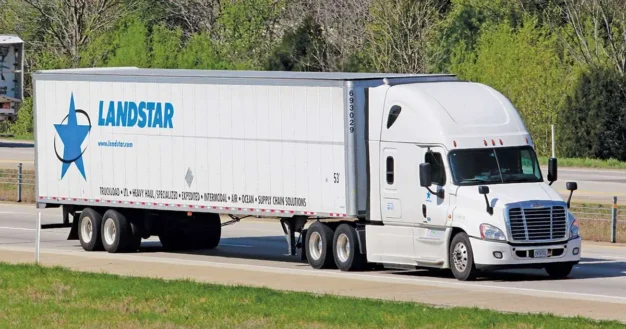
As an authorized Landstar freight agent, Jansson LLC connects your company with top-tier motor carriers across North America.
Our specialists carefully evaluate your pallet dimensions, stacking patterns, and total weight to catch risky packaging mistakes early.
We help your warehouse team choose the safest transport method, whether that means standard LTL freight or a partial truckload shipment.
Having a dedicated logistics advocate protects your balance sheet and keeps your supply chain running smoothly.
Send your upcoming load specifications to our freight specialists today to ensure every pallet arrives intact and claim-free.