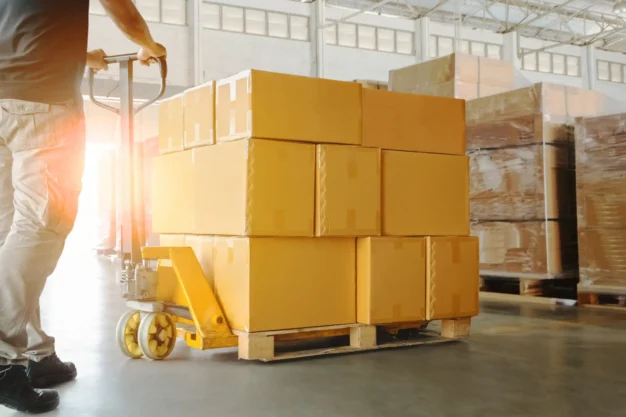
Mastering safe pallet stacking is the most effective way to eliminate crushed boxes and stop expensive cargo claims before trucks ever leave the dock.
Shippers who neglect basic warehouse loading techniques often watch their hard work get destroyed during rough highway travel.
Commercial LTL freight damage claims across the trucking sector average thousands of dollars per incident.
Standard LTL shipping exposes pallets to constant handling because cargo moves between several cross-dock terminals, forklifts, and trailers.
Every extra transfer creates a fresh opportunity for loose boxes to tumble or crush underneath heavier freight.
Carriers regularly reject damage claims when cargo shows signs of poor preparation, leaving your business to absorb the entire loss.
Learning proactive packaging steps ensures your goods arrive intact, on time, and fully protected.
Why Does Overhang Destroy Box Strength in Transit?
Corrugated cardboard boxes receive up to eighty percent of their vertical stacking strength from their four structural corners.
Setting a carton evenly on wooden boards distributes downward weight smoothly through all four corner edges.
Pushing boxes past the wooden pallet edge by even a single inch strips away vital corner support. Weakened cartons collapse rapidly once terminal crews stack additional freight on top during cross-docking.
Drivers and terminal operators immediately notice when tipping boxes lean out into warehouse forklift aisles.
Federal liability rules under the Carmack Amendment allow trucking companies to deny freight claims caused by improper shipper packaging.
Keeping cartons completely flush with or inside the wooden perimeter is the only way to protect your products and your legal rights.
What Is the Correct Way to Stack Pallets?
Understanding what is the correct way to stack pallets begins with treating the wooden platform like the foundation of a tall building.
Foundational Weight Distribution
Heavy cartons must sit directly on the bottom wooden deck boards to establish a solid, steady center of gravity.
Medium-weight items belong in the middle layers, while fragile or lightweight packages should always ride on top.
Inverting this order crushes delicate items underneath heavy machinery or bulk liquids during sudden highway stops.
Following an organized pallet stacking guide prevents warehouse workers from guessing how to distribute weight safely.
Level Tiers and Flat Surfaces
Flat top layers are equally critical because terminal staff often stack general freight pallets to maximize trailer space.
Pyramid-shaped stacks with pointed tops invite instant crushing because upper boxes take concentrated weight without adequate support.
Inserting cardboard sheets or “dunnage” pads between uneven carton layers creates a sturdy, level surface across the entire unit.
Practicing proper pallet stacking ensures that each tier supports the next layer without buckling or leaning.
Consistent layer heights make the entire pallet much easier to secure tightly with industrial stretch film.
What Are the Rules of Stacking Pallets?
Asking what are the rules of stacking pallets reveals simple safety standards that eliminate shipping disasters.
Pallet Base Quality Checks
Warehouse staff must inspect wooden pallets for broken stringers, protruding nails, or missing boards before loading products.
Damaged wood splinters easily under heavy weight, causing the entire stack to tilt during transit.
Strict Overhang Boundaries
Cartons must never hang over the outside edges of the pallet base under any circumstances. Allowing boxes to extend past the rim strips away perimeter support and exposes packaging to tearing against trailer walls.
Height and Balance Limits
Keeping overall stack heights within standard carrier limits, usually sixty inches or less, keeps cargo balanced during travel.
Taller stacks wobble violently when trucks take sharp turns or hit highway potholes at full speed.
Non-Stackable Labeling and Liability
Labeling fragile shipments clearly on all four sides alerts dock workers if freight cannot support other cargo on top.
Noting non-stackable status on the official bill of lading protects fragile items from getting crushed beneath unrelated shipments.
Shippers must remember that ignoring these basic rules represents bad pallet stacking, which voids carrier insurance coverage immediately.
How Do Pallet Stacking Configurations Change Load Safety?
Selecting between different pallet stacking configurations determines how well your cartons endure road shocks and vertical pressure.
Column stacking aligns carton corners directly on top of each other from the wooden deck up to the top layer.
This upright alignment preserves maximum vertical compression strength, making it ideal for shipping heavy, uniform boxes.
Interlocked arrangements alternate carton directions like brickwork on a building wall to create lateral stability.
While interlocking stops boxes from shifting sideways, it creates weak hollow spots across the center of underlying cartons.
Comparing various pallet stacking patterns helps warehouse teams choose the best layout for specific carton sizes and product weights.
Combining straight vertical columns with sturdy corner board protectors offers the highest compression resistance for long-distance LTL freight.
Plastic edge boards reinforce carton corners and shield package rims against tight strapping bands.
Why Is Proper Stretch Wrapping Essential for Unitizing Freight?
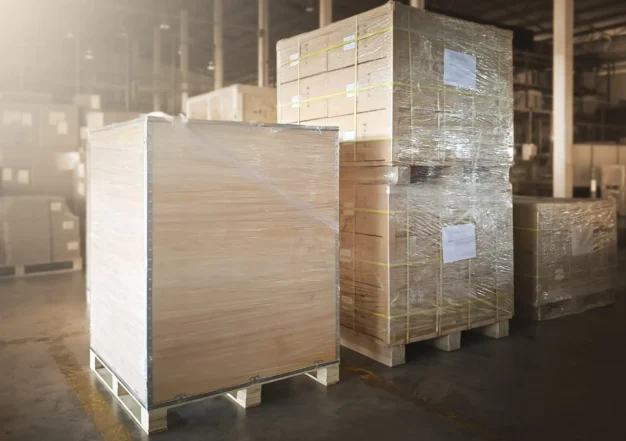
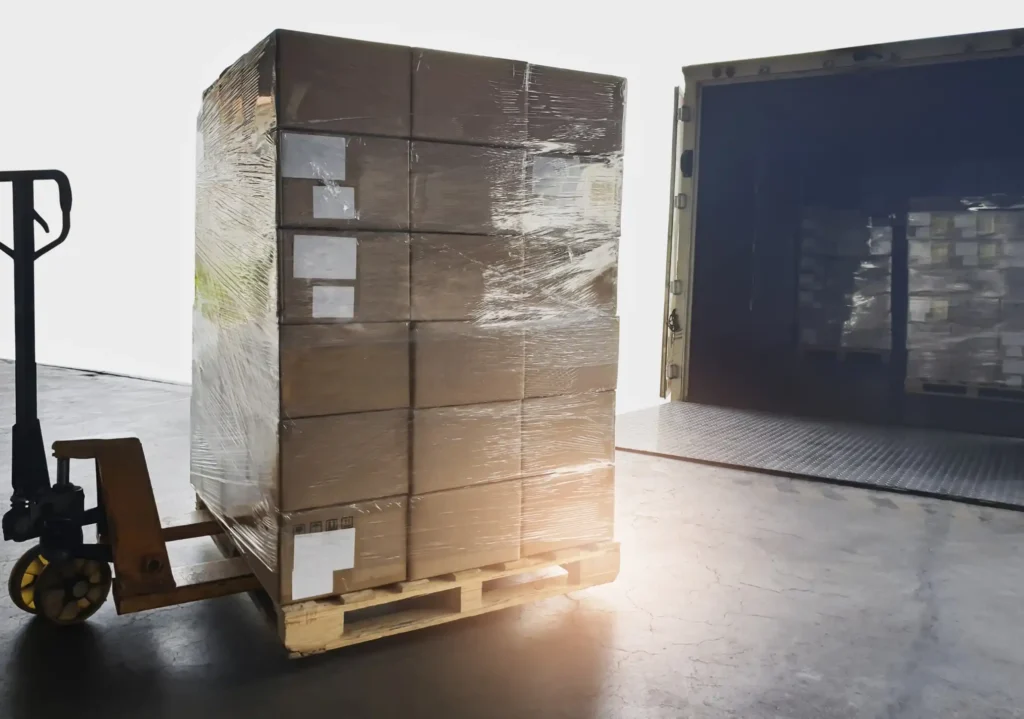
Applying industrial stretch film transforms loose, separate boxes into a single solid shipping unit. Wrapping cartons without anchoring the plastic directly to the wooden base accomplishes almost nothing.
Freight easily slides off smooth wooden decks during sudden braking if plastic film only covers the upper boxes.
Operators should make at least three or four tight wrap passes around the wooden pallet deck before moving upward.
Maintaining a fifty-percent overlap on every continuous plastic spiral keeps the entire stack bound together tightly.
High-quality plastic wrap also shields corrugated cartons from dirt, rain moisture, and warehouse dust during cross-dock transfers.
Completing your pallet stacking process with durable film binding stops packages from shifting when forklift drivers lift the pallet.
How Does Jansson LLC Help You With Pallet Stacking to Prevent Shipping Damage?

Eliminating transit damage requires pairing diligent dock preparation with dependable freight carriers.
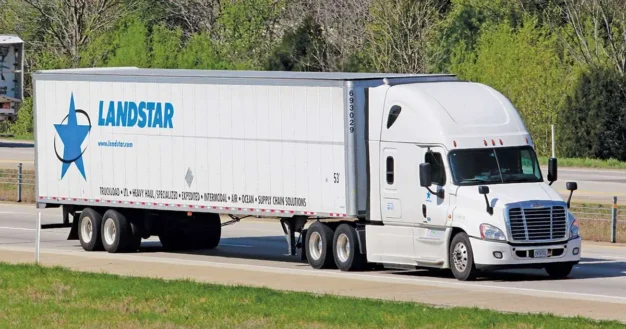
Operating as an authorized Landstar freight agent, Jansson LLC connects commercial shippers with an elite nationwide transportation network.
Experienced logistics coordinators evaluate carrier safety ratings, claims histories, and terminal handling practices before booking your loads.
Choosing carriers who value freight safety ensures that your carefully stacked goods receive the gentle handling they deserve.
Protecting your cargo from dock to destination keeps customer relationships strong and prevents frustrating insurance claims.
Stop risking valuable cargo with careless freight carriers!
Reach out to the freight team at Jansson LLC to build a damage-free LTL shipping plan that keeps your shipments safe from dock to destination.