
Managing corporate freight expenses requires a close watch on the weekly LTL fuel surcharge that trucking companies tack onto every pallet shipment.
Your contracted line-haul rate might remain completely unchanged on paper, yet your actual invoice total swings up or down every single week because of this extra fee.
Most logistics managers spend weeks negotiating annual contracts with freight carriers to lock in low base rates.
Uncontrollable fuel fees adjust fifty-two times every single year, meaning your transportation budget faces constant price volatility.
National diesel prices have hovered at elevated levels, pushing these extra charges up to fifty or sixty percent of the base line-haul bill.
Calculating the LTL fuel surcharge accurately prevents companies from paying inflated freight bills.
Ignoring this fluctuating fee means letting a massive cost driver eat away at your profit margins without any oversight.
Why Does Your Freight Cost Fluctuate When Contract Rates Stay Fixed?
Shippers often assume that signing a long-term transportation agreement protects them from unexpected billing spikes. Reality proves quite different once weekly invoices arrive at your accounting desk.
Motor carriers separate overall shipping costs into two primary categories: base line-haul charges and variable fuel fees.
While base rates cover routine driver wages and trailer maintenance, the fuel surcharge absorbs the erratic swings of retail diesel prices.
Operating commercial trucks burns tremendous amounts of fuel across cross-country highways.
Passing retail fuel cost increases directly onto shippers protects freight lines from sudden bankruptcy during global energy spikes.
Because this percentage recalculates on a rolling weekly schedule, the price you paid to ship a pallet on Monday rarely matches the price you pay the following Friday.
Unmonitored fee adjustments add up quickly, quietly distorting your projected shipping budget over the course of a fiscal quarter.
How Does the Government Diesel Index Control Your Weekly Invoices?
Every carrier sets their weekly fuel rate using official numbers gathered by federal government researchers.
The U.S. Energy Information Administration (EIA), which operates under the Department of Energy, monitors retail diesel pumps across the entire nation every Monday afternoon.
Publishing this weekly average establishes the official DOE diesel index used across the commercial transportation sector.
Trucking dispatchers run internal formulas on Tuesday morning to update their billing rates based on that government update.
Changes take effect the following Sunday, determining the exact surcharge applied to all incoming loads through the next Saturday.
Rising pump prices on Monday afternoon guarantee that your LTL freight bills will climb higher the very next week.
Dropping diesel prices offer temporary financial relief, lowering your weekly freight charges without requiring any new negotiations.
Relying on an independent federal metric ensures that both carriers and shippers reference an objective standard rather than arbitrary guesses.
Understanding the LTL fuel surcharge process helps shippers verify that carrier bills align with official energy reports.
Why Are Today’s Surcharge Percentages Climbing to Record Highs?
Historical tariff tables used by regional carriers were originally constructed when diesel hovered around three to four dollars per gallon.
Modern economic pressures, refinery disruptions, and international conflicts have pushed pump prices far beyond those historical baselines.
Carrier tariffs rely on graduated pricing bands, where the fee percentage steps up every time diesel prices increase by just two cents.
Because fuel prices climbed into the upper tiers of these tables, the current LTL fuel surcharge percentage has surged to unprecedented heights.
Paying fifty or sixty percent on top of your line-haul rate means that fuel expenses often rival the base transportation cost itself.
Shifting just twenty cents at the fuel pump adds roughly two percent to your overall freight invoice.
Multiplying that extra charge across hundreds of monthly shipments drains thousands of dollars from your operating capital.
Shippers operating with tight profit margins cannot afford to let these high percentage bands go unmonitored.
How Can Shippers Model Carrier Fuel Bands to Avoid Overpaying?
Shippers cannot alter national diesel markets, but they can definitely choose which carrier tariff structures fit their budget best.
Different freight carriers construct unique fuel surcharge tables with contrasting trigger thresholds and rate increments.
Carrier Tariff Structure Comparisons
Comparing two trucking lines with identical base rates often reveals drastically different total costs once you calculate their individual fuel formulas.
One carrier might charge fifty-four percent at a specific diesel price point, while a competing carrier demands sixty percent for the exact same lane.
Evaluating these subtle formula differences prevents unexpected budget overruns across high-volume shipping routes.
Strategic Lane and Scenario Modeling
Selecting a carrier with a lower LTL fuel surcharge table can save thousands on high-volume lanes.
Modeling various fuel scenarios across your top shipping routes uncovers which partners offer the most forgiving pricing bands.
Testing potential diesel price increases against carrier tables gives logistics teams a clear financial road map before signing long-term agreements.
Weekly Index Tracking and Budget Forecasting
Tracking the weekly government index allows your logistics staff to forecast upcoming transportation bills before invoices land on your desk.
Proactive financial modeling protects your company from unexpected freight cost spikes when planning quarterly inventory budgets.
Smart businesses treat LTL shipping carrier selection as a comprehensive fuel strategy rather than a simple rate negotiation.
How Does Jansson LLC Help You Manage an Unpredictable LTL Fuel Surcharge?
Managing volatile fuel indexes across multiple regional carriers requires dedicated market intelligence and constant oversight.
Partnering with Jansson LLC gives your business access to an experienced freight management team that monitors tariff tables continuously.
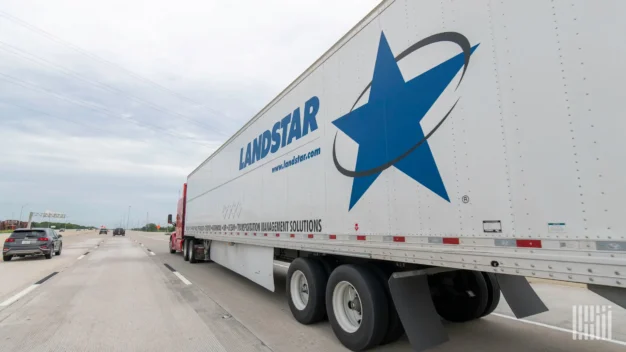
Operating as an authorized Landstar freight agent, Jansson LLC evaluates total all-in shipping expenses, including line-haul rates and fuel percentages, before booking any cargo.
Experienced logistics professionals review carrier billing practices to verify that your LTL fuel surcharge calculations match actual market rules.
Catching billing discrepancies early prevents surprise overcharges from eating away at your quarterly operating margins.
Take control of your transportation budget and protect your bottom line from unexpected fuel fee spikes!
Contact Jansson LLC today to secure transparent rate structures and reliable support for all your specialized LTL freight shipments.