Your shipment arrives. The box looks fine. The driver gets a clean signature and leaves. You open the packaging — and find broken product inside.
This is a concealed damage claim — and it is one of the hardest freight claims to win. Not because the carrier is not responsible. Because the clock started the moment the driver left, and most shippers do not know it.
You must file within five business days of discovery and provide strong evidence that the damage occurred while in the carrier’s possession. This includes photos of the intact exterior packaging and the damaged contents.
Miss that five-day window and most carriers will deny the claim outright. Freight claims cost U.S. shippers an estimated $50 billion or more annually — yet most operations teams are still processing them with spreadsheets, carrier portals, and institutional memory. Here is how to protect yourself before the next concealed damage event hits.
Why Concealed Damage Is Harder to Win Than Visible Damage
LTL denial rates are the highest of any mode, consistently running 50 to 60% in surveys of mid-market shippers. The core problem is that LTL freight changes hands multiple times between pickup and delivery — each transfer point is an opportunity for documentation to break down.
Concealed damage claims face the highest carrier denial rate. The carrier argues that the damage occurred after delivery because the packaging showed no signs of impact at the time of receipt.
The carrier’s position is straightforward: the driver delivered an intact package, the consignee signed for it without exception, and any damage discovered afterward could have happened after delivery. Your job is to prove otherwise — with documentation, timing, and evidence.
The critical insight is that most denied claims are process failures, not evidence failures. The freight was damaged. The documentation exists. But the claim was lost to a missed deadline, wrong addressee, or missing notation.
The 5-Day Rule — and Why It Is Non-Negotiable
Concealed damage or shortage claims must have notification given to the carrier within 5 business days of delivery. NMFTA Rules state you must notify the carrier within 5 business days of delivery of the concealed damage or shortage.
Five business days. Not five calendar days. Not five days from when you get around to unpacking. Five business days from the moment of delivery — regardless of when you opened the box.
Every day that passes after this 5-day window can lead to a reduced settlement percentage. This is because the longer the delay in reporting the damage, the more difficult it becomes to prove that the damage occurred during transit rather than after delivery. If you notice concealed damage but wait 10 days to notify the carrier, the chances of any settlement at all are significantly reduced.
The practical implication is clear. Any shipment that arrives must be inspected immediately — not when it is convenient, not when the warehouse gets around to it, but the same day if possible.
What to Do the Moment You Find Concealed Damage
Time is the most important variable in a concealed damage claim. Every hour that passes after discovery makes the claim harder to win and easier for the carrier to dispute. Work through these steps in order — and do not skip any of them.
Step 1: Stop and Photograph Everything
Do not move the product further. Do not discard the packaging. It is absolutely imperative that you file your claim quickly and allow the carrier to inspect the product before any further handling or movement occurs.
Photograph the exterior packaging from all angles — showing it is intact. Photograph the interior packaging before removing anything. Photograph the damaged product in place. Photograph the shipping label and any carrier markings. Date and timestamp everything.
Step 2: Preserve All Packaging
Freight must be kept for inspection or pickup by the carrier until the claim is resolved. Carriers have the right to inspect and take ownership of the claims freight for salvage.
Do not throw away boxes, inner packaging, or packing materials. The carrier will want to inspect them. Disposing of packaging before the carrier inspects is one of the fastest ways to have a concealed damage claim denied.
Step 3: Notify the Carrier in Writing Within 5 Business Days
Verbal notification is not enough. Put it in writing — email with confirmation, carrier portal submission, or written notice. Document the date, the shipment PRO number, the nature of the damage, and the estimated value of the loss.
Avoid vague or general notations like “subject to inspection,” as they can dilute the strength of your claim later on. Be specific. Describe exactly what was damaged and how.
Step 4: File the Formal Claim With Complete Documentation
To support your freight claim, always include the original Bill of Lading, paid freight bills, inspection reports, notifications of loss, copies of inspection requests, invoices, and waivers. Some carriers may also require photographic evidence of the damage. The more detailed the information you provide, the stronger your claim.
The formal written claim must be filed within 9 months of delivery under the Carmack Amendment — but do not wait. File as quickly as possible after notifying the carrier.
What Determines Whether You Win
Shippers win concealed damage claims by demonstrating that the packaging was intact, the damage pattern is consistent with transit handling, and the discovery occurred promptly after delivery.
Three elements. Intact packaging. Damage pattern. Prompt discovery. Every piece of documentation you gather goes toward proving all three.
If carriers do pay out on concealed damage claims, they will generally pay one-third of their standard liability — following the logic that damage could have occurred in any third of the move: loading, transit, or after unloading. Strong documentation shifts that outcome in your favor.
What Carriers Will Check
Standard carrier limits of liability range from $0.50 to $25 per pound depending on the commodity class and shipment type. For high-value items, this matters enormously. A $7,000 item that weighs 150 pounds is only covered for $300 if the carrier’s liability is capped at $2 per pound.
Check your carrier’s limits of liability before you ship — not after something breaks.
How Jansson LLC Helps U.S. Businesses Manage LTL Claims Risk
Concealed damage happens. Working with experienced carriers who handle freight carefully and maintain strong claims resolution records reduces the frequency — and working with the right logistics partner means you are not navigating the claims process alone when it does.
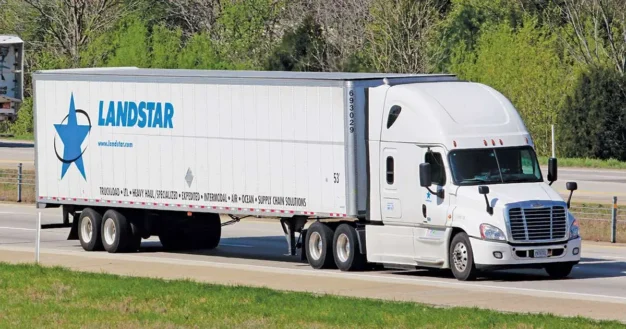
Jansson LLC is a Landstar freight agent with access to a nationwide carrier network — including experienced LTL operators with strong safety and claims records across all 48 contiguous states.
Through the Landstar network, Jansson helps U.S. businesses select carriers based on claims performance, not just rate, coordinate documentation requirements before freight moves, and navigate the claims process when damage occurs.
Contact Jansson LLC today. Let’s make sure your LTL freight is moving with carriers who handle it right — and that you are protected when something goes wrong.