A bill of lading error does not just slow down a shipment. It can stop it entirely — triggering customs holds, carrier rejections, and fines that dwarf the cost of getting it right in the first place.
The BOL is one of three crucial documents used in international trade to ensure exporters receive payment and importers receive merchandise. It serves three simultaneous functions: a receipt confirming the carrier accepted the goods, a contract of carriage defining the terms of transport, and in many cases a document of title that transfers ownership of the goods in transit.
Get any element wrong and any one of these three functions breaks down. In 2025, penalties for BOL errors can exceed $50,000 per violation depending on the nature of the error. Customs authorities can detain shipments. Carriers can refuse pickup. Banks can reject payment documentation.
Here is what every U.S. exporter needs on a flawless BOL — and where the most common errors appear.
What Makes a BOL Legally Binding
A BOL must be signed by an authorized representative of the carrier, shipper, and consignee to be valid. It must also be consistent with the shipper’s commercial invoice, packing list, and booking information. If these documents do not match, customs may hold the cargo, incur penalties, or refuse it to the consignee.
That consistency requirement is the source of most BOL errors. Not because individual fields are wrong — but because they do not match the corresponding field in another document.
The Non-Negotiable Elements
A BOL is only as strong as its weakest field. Each element below is required by either FMCSA regulations, carrier tariff requirements, or customs authority mandates — and each one has a specific, predictable way of going wrong when it is rushed or treated as a formality.
Shipper and Consignee Details
Full legal names and complete addresses for both the shipper and the consignee are required on every compliant BOL. These details enable carriers to confirm pickup and delivery locations without callbacks — and they are what customs authorities use to verify the parties to the transaction.
Partial addresses, abbreviated company names, or outdated contact information are among the most common and most avoidable BOL errors. A consignee name that does not match the commercial invoice is enough to trigger a customs hold.
Commodity Description
The cargo description on the BOL must specifically identify what is being shipped — not a generic category, not a commercial trade name, but a description that supports freight classification and customs review.
Vague terms like “merchandise,” “gifts,” or “assorted goods” create immediate red flags with customs authorities. The description must match what is on the commercial invoice and packing list. For export purposes, it must also support the HTS classification being declared.
Incorrect or incomplete descriptions are the leading cause of BOL-related customs delays — and for hazardous materials shipments, a misdescription can trigger PHMSA penalties on top of customs consequences.
Weight and Quantity
Accurate gross weight and quantity measurements are required — and they must match the packing list exactly. These figures determine freight class, influence carrier liability calculations, and are verified at multiple points between origin and destination.
Weight discrepancies discovered at a terminal or port of entry trigger reclassification events that delay the shipment and generate additional fees. For ocean freight, inaccurate weight declarations can also trigger penalties under SOLAS regulations requiring verified gross mass for all packed containers.
Freight Class and NMFC Code
For domestic and intermodal freight, the correct NMFC freight class must be declared on the BOL. This locks in the agreed transportation rate and prevents reclassification disputes during transit.
Since the NMFC moved to a density-based classification system in July 2025, freight class errors have become more common — and more expensive. A class that was accurate under the old commodity-based system may no longer be correct under the new density rules.
Special Handling Instructions
Any cargo that requires specific handling — temperature-controlled, fragile, hazardous, over-dimensional, or orientation-sensitive — must have those requirements explicitly noted on the BOL.
Missing special handling instructions expose cargo to mishandling and damage. For hazardous materials, they are a regulatory requirement. A hazmat BOL that does not include the proper shipping name, hazard class, UN or NA identification number, packing group, and shipper’s certification is non-compliant under 49 CFR 172 — regardless of whether the cargo itself is correctly packed and labeled.
Carrier Information and Chain of Custody
Complete carrier identification establishes the chain of custody from pickup through delivery. For multi-leg international shipments — which move through multiple carriers, ports, and modes — the BOL documentation must establish clear responsibility at each handoff point.
Missing carrier information creates disputes about liability when cargo is damaged or lost — and in legal proceedings, the BOL is the primary evidence of what was agreed and by whom.
Notify Party
The notify party is the entity that should be contacted when the shipment arrives at the destination — typically the customs broker, freight forwarder, or the consignee themselves. In regions with specific customs requirements, including GCC countries now requiring 12-digit HS codes on all BOLs, the notify party must be a properly licensed entity.
An incorrectly listed notify party means the shipment arrives without anyone prepared to clear it through customs — adding days of storage and demurrage charges while the situation is resolved.
The Consistency Rule That Most Exporters Underestimate
Every field on the BOL must match the corresponding field in every other document in the shipment package. Commercial invoice, packing list, booking confirmation, and BOL must all tell the same story about the same shipment.
When they do not, the discrepancy creates a compliance event — regardless of which document has the error. Customs authorities do not investigate which document is correct. They hold the shipment until the inconsistency is resolved.
Building a pre-shipment document review process — comparing all documents against each other before the load moves — is one of the highest-return compliance practices any exporter can implement.
How Jansson LLC Helps U.S. Exporters Move Freight Without Documentation Surprises
The BOL is where cross-border freight compliance starts — and where errors most commonly create costly downstream problems.
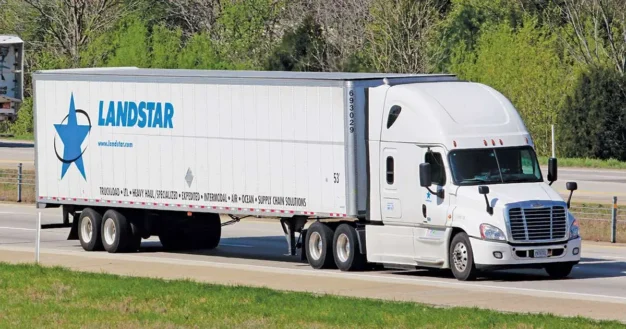
Jansson LLC is a Landstar freight agent with access to a nationwide carrier network — including experienced cross-border operators who understand BOL requirements for domestic intermodal, cross-border Mexico and Canada freight, and international export shipments across all 48 contiguous states.
Through the Landstar network, Jansson helps U.S. businesses ensure that documentation requirements are understood and met before freight moves, coordinate with carriers on BOL completion and accuracy, and move export freight safely and in full compliance — without the documentation surprises that stop shipments at the border.
Contact Jansson LLC today. Let’s make sure your next export shipment has the documentation it needs to move without interruption.