The Hazardous Materials Regulations cover most situations shippers encounter. But not all of them.
When your hazmat load involves a situation the standard regulations did not anticipate — a new packaging technology, an operational necessity, or an emergency circumstance — a DOT Special Permit may be the only legal path forward.
Understanding when special permits apply, how they work, and what they require from shippers and carriers is essential for any business moving hazardous materials regularly. Here is what you need to know.
What a DOT Special Permit Actually Is
A special permit is a document issued by the Associate Administrator under the authority of 49 USC 5117 permitting a person to perform a function that is not otherwise permitted under the Hazardous Materials Regulations.
In plain terms: a special permit is formal authorization from PHMSA to do something with hazmat that the standard rules prohibit.
Typical hazmat special permit applications are requests to allow an alternative packaging or packaging orientation to be used, allow shipping or transportation of hazmat in ways normally prohibited, or modify or expand on an existing special permit — for example, to add a material, packaging type, or mode of transportation.
Special permits were formerly called exemptions. You may still encounter older documents marked with the “E” prefix — these remain valid until they expire or are renewed, at which point they are reissued as special permits with the “SP” prefix.
When Does Your Load Need One?
Most hazmat shipments do not require a special permit. The HMR covers the vast majority of commercial hazmat transportation scenarios.
A special permit becomes necessary in specific situations.
Your Packaging Is Not Listed in the HMR
The HMR specifies approved packaging types for each hazardous material. If your product requires packaging that is not currently authorized — because the technology is newer than the regulation, or because your operational requirements cannot be met by any listed packaging — a special permit allows the alternative packaging to be used legally.
The Quantity or Configuration Exceeds Standard Limits
Some hazmat materials have strict quantity limits per package or per vehicle. If your operational reality requires quantities or configurations that exceed those limits — and you can demonstrate equivalent safety — a special permit can authorize the variance.
You Need to Ship in a Normally Prohibited Way
Certain hazmat materials are prohibited from specific transport modes, configurations, or routes under standard HMR. A special permit can authorize movement that would otherwise be illegal — provided the applicant demonstrates that safety is not compromised.
You Are Using an Innovative Technology
PHMSA understands that in some situations a hazardous material may be transported safely even when not in compliance with the HMR due to technological advancement, additional safety precautions unforeseen by PHMSA, or an emergency situation such as war or natural disaster that may require temporary relief from the full HMR.
If your industry has developed a safer approach than what the current regulations require, a special permit is the pathway to using it legally.
How the Application Process Works
Special permit applications are submitted to PHMSA under the requirements of 49 CFR 107 Subpart B.
The application must include evidence that the special permit will achieve the same safety level of the HMR or is consistent with the public interest — meaning the benefit to the public of the special permit outweighs the risk.
PHMSA reviews your compliance history as part of the evaluation. A shipper with recent violations is unlikely to receive a special permit for related activities.
Processing times vary. Standard applications can take several months. Emergency special permits — for situations requiring immediate action — can be processed faster under 49 CFR 107.117, but the emergency threshold is high.
Once granted, special permits are typically valid for two years and must be renewed. Some permits are granted to a single company. Others are party permits — where multiple companies can apply to become authorized to operate under the same permit, without each needing to file a separate application.
What Special Permits Require From You
A special permit is not a blanket authorization to ignore the HMR. It is a targeted variance that comes with its own compliance obligations.
Anyone who uses a special permit in the transportation of a hazardous material must provide additional function-specific training to their hazmat employees on the specific requirements of the special permit.
This training requirement is separate from and in addition to the standard 49 CFR 172.704 hazmat employee training. It applies to every person in your operation who handles, prepares, or transports materials under the special permit.
The special permit must also be carried on the vehicle or vessel during transport — and must be available for inspection by DOT enforcement officials. Failure to carry the permit is itself a violation.
SP-92 Specifically: What It Covers
SP-92 is one of the most widely used and longest-standing special permits in U.S. hazmat transportation. It authorizes the transportation of certain Division 1.4 explosive articles — primarily small arms ammunition and similar consumer products — under conditions that differ from standard HMR requirements for Class 1 materials.
SP-92 is a party permit — meaning individual companies can apply to become a party to the existing permit rather than filing their own separate application. This makes it more accessible for shippers of qualifying ammunition and small explosive articles than the standard special permit process.
If your business ships Division 1.4 explosive articles regularly, understanding whether SP-92 covers your specific products — and whether joining as a party is appropriate — is an important compliance step.
How Jansson LLC Helps U.S. Businesses Move Hazmat Safely
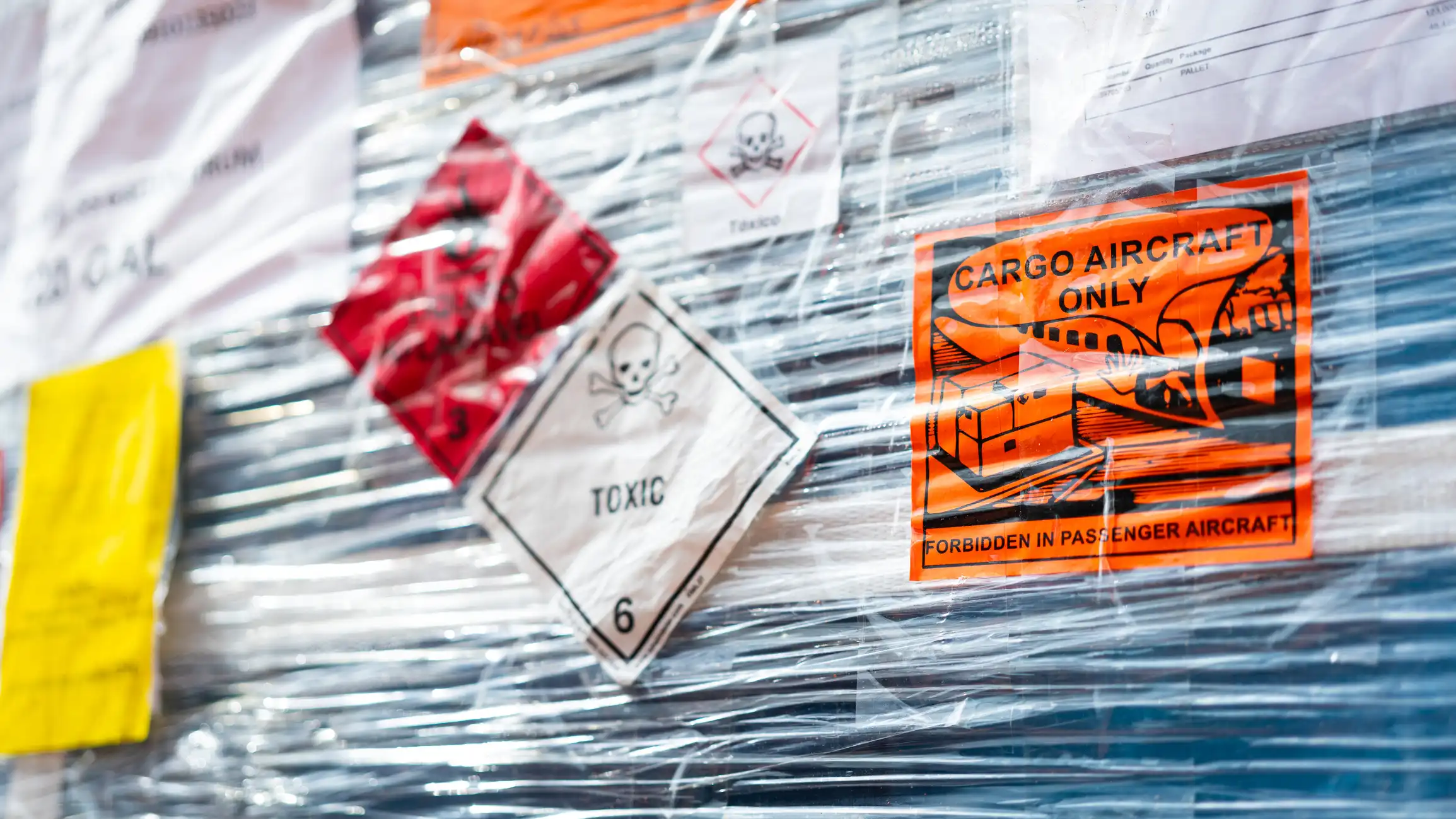 Whether your hazmat shipment operates under standard HMR requirements or a special permit, working with carriers who understand the applicable regulations is non-negotiable.
Jansson LLC is a Landstar freight agent with access to a nationwide carrier network — including experienced hazmat operators across flatbed, dry van, temperature-controlled, and specialized equipment for all hazard classes across all 48 contiguous states.
Through the Landstar network, Jansson helps U.S. businesses confirm that their hazmat freight is moving with carriers who are registered, trained, and equipped for the specific materials being transported — whether under standard HMR or a special permit authorization.
Contact Jansson LLC today. Let’s make sure your hazmat freight moves safely, compliantly, and with the right carrier for every load.