Most U.S. businesses that ship hazardous materials know their product falls into a hazmat category. Fewer understand the full nine-class system well enough to catch their own errors — or to recognize when a product they assumed was routine actually triggers significant compliance obligations.
That gap is expensive. Every downstream requirement in hazmat shipping — packaging, labeling, placarding, carrier eligibility, and documentation — flows from a single decision: the hazard class. Get it wrong once and every requirement built on top of it is also wrong.
Here is what each class actually means — in plain language — and why it matters for your operation.
Class 1: Explosives
Class 1 covers materials or articles that can rapidly release gas, heat, or pressure through chemical reaction. It has six divisions — from 1.1 (mass explosion hazard) through 1.6 (extremely insensitive detonating articles).
Most commercial shippers encounter Class 1 in the form of airbag inflators, flares, ammunition, or fireworks. Carrier requirements for Class 1 freight are among the most restrictive in the system — and not all carriers are registered to transport all divisions.
Class 2: Gases
Class 2 covers compressed, liquefied, or dissolved gases. Division 2.1 covers flammable gases like propane and hydrogen. Division 2.2 covers non-flammable, non-toxic gases like nitrogen and helium. Division 2.3 covers toxic gases like chlorine and ammonia.
Industrial cylinders — welding gases, medical oxygen, refrigerants — are the most commonly shipped Class 2 materials. Temperature management during transit is a key compliance variable across all three divisions.
Class 3: Flammable Liquids
Class 3 is one of the most prevalent hazmat categories in U.S. freight. It covers liquids with a flash point at or below 60°C (140°F) — including gasoline, ethanol, acetone, paints, adhesives, and many cleaning chemicals.
Flammable liquids are assigned to Packing Groups I, II, or III based on flash point and boiling point. The packing group determines packaging stringency. Misassigning the packing group is one of the most common Class 3 compliance errors found in PHMSA audits.
Class 4: Flammable Solids, Spontaneously Combustible, and Dangerous When Wet
Class 4 covers three distinct hazard profiles across three divisions. Division 4.1 covers flammable solids that can ignite through friction or heat retention. Division 4.2 covers spontaneously combustible materials that can ignite on contact with air. Division 4.3 covers materials that become flammable or generate toxic gas when they contact water.
The “dangerous when wet” designation in Division 4.3 creates segregation requirements that many shippers underestimate — particularly for metal powders and certain industrial chemicals.
Class 5: Oxidizers and Organic Peroxides
Division 5.1 covers oxidizers — materials that promote combustion in other materials by supplying oxygen. Pool chemicals, agricultural fertilizers, and hydrogen peroxide commonly fall here. Division 5.2 covers organic peroxides — thermally unstable materials that can undergo self-accelerating decomposition.
Temperature control is mandatory for many Division 5.2 sub-types. PHMSA regulations prescribe specific control temperatures and emergency temperatures that must not be exceeded during transport.
Class 6: Toxic and Infectious Substances
Division 6.1 covers toxic materials that pose a hazard through inhalation, ingestion, or skin absorption. Division 6.2 covers infectious substances containing pathogens capable of causing disease.
Category A infectious substances — capable of causing permanent disability or life-threatening disease — require specialized triple packaging and UN-certified containers. This is one of the most technically demanding packaging requirements in the entire HMR.
Class 7: Radioactive Material
Class 7 covers materials that emit ionizing radiation spontaneously. Classification is based on radioactivity levels and is jointly administered by PHMSA and the Nuclear Regulatory Commission.
Most commercial shippers encounter Class 7 in limited contexts — smoke detectors, medical equipment, and certain scientific instruments. Packaging requirements are technically complex and highly specific to the material’s activity level.
Class 8: Corrosives
Class 8 covers materials that destroy living tissue or degrade metals through chemical action. Battery acid, sodium hydroxide, hydrochloric acid, and many industrial cleaning compounds are common examples.
The primary compliance considerations are packaging integrity — preventing leaks that damage adjacent cargo — and segregation from incompatible materials, particularly food and Class 6.1 substances.
Class 9: Miscellaneous Hazardous Materials
Class 9 is the catch-all class — covering materials that present a hazard during transportation but do not fit within Classes 1 through 8. Lithium batteries, dry ice, magnetized materials, and certain environmentally hazardous substances fall here.
Lithium batteries are among the most heavily regulated Class 9 materials in 2026. Updated IATA DGR restrictions and IMDG Amendment 42-24 have changed quantity limits, packaging requirements, and documentation standards for both domestic and international shipments — catching many shippers off guard.
Why Getting the Class Right Is Non-Negotiable
Classification is not the starting point of hazmat compliance. It is the entire foundation.
Every packaging specification, every label, every placard, every shipping paper requirement flows from the hazard class assigned to the material. If the class is wrong, every downstream decision built on it is also wrong — and each error is a separate citable violation at up to $102,348 per occurrence under current PHMSA penalty schedules.
Classification errors are also the leading cause of carrier rejection at the dock. A carrier who identifies a mismatch between the declared class and the actual material characteristics is required to refuse the shipment — or accept the same compliance exposure as the shipper.
How Jansson LLC Helps U.S. Businesses Move Hazmat Safely
Understanding the classification system is essential. Working with carriers who understand it equally well is what makes compliant hazmat shipping operationally reliable.
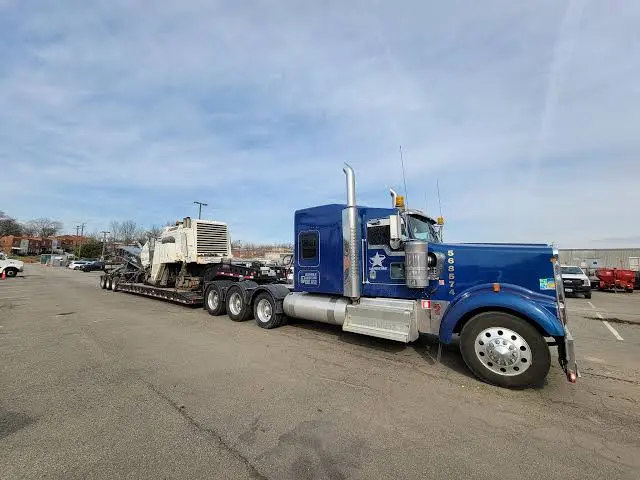
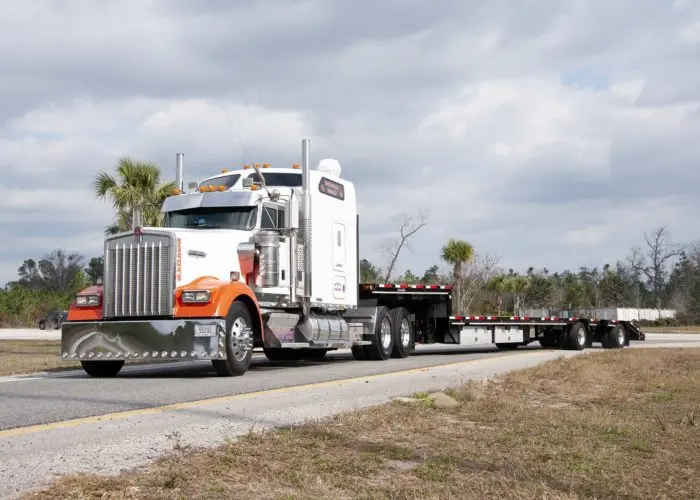
Jansson LLC is a Landstar freight agent with access to a nationwide carrier network — including experienced hazmat operators across flatbed, dry van, temperature-controlled, and specialized equipment for all nine hazard classes across all 48 contiguous states.
Through the Landstar network, Jansson helps U.S. businesses confirm that hazmat freight is moving with properly registered and trained carriers, that documentation requirements are met before loads move, and that the right equipment is matched to the right class for every shipment.
Contact Jansson LLC today. Let’s make sure your hazmat freight is classified correctly and moving safely — every load, every time.