Every long-haul shipment is a race against two clocks — the delivery deadline and the federal hours-of-service limit. When route planning fails to account for both, freight stops moving and compliance problems begin.
FMCSA Hours of Service regulations under 49 CFR Part 395 are the most frequently violated set of rules in commercial trucking. HOS violations carry civil penalties up to $16,000 per violation, 7 CSA points per major violation, and can immediately place drivers and vehicles out of service at the roadside.
For shippers, a driver placed out of service means freight sitting until the driver completes the required rest period. That is not a carrier problem in isolation — it is a supply chain disruption that affects your delivery commitments and your customer relationships.
Understanding how HOS regulations shape transit timelines — and working with carriers who plan routes around them — is one of the most practical ways to protect your freight schedule on long-haul lanes.
The HOS Framework Every Shipper Should Understand
You do not need to know every nuance of HOS regulations. But understanding the core limits helps you set realistic expectations and work more effectively with your logistics partner.
The Core Daily Limits
Drivers can be on duty for up to 14 hours a day, with 11 hours spent driving. The remaining three on-duty hours can be used for vehicle inspection, loading, unloading, border crossing, and other non-driving work tasks.
Once the 14-hour window closes, the driver must stop — regardless of how many driving hours remain. A driver who spends two hours waiting at a shipper’s dock has two fewer hours of productive driving time that day.
The 30-Minute Break Requirement
Drivers must take a 30-minute break after 8 hours of driving time. The break can be satisfied by any non-driving period — off-duty, sleeper berth, or on-duty not driving. This break is mandatory and cannot be skipped.
Weekly Cumulative Limits
Drivers may not exceed 70 on-duty hours in any 8-day period — the standard for most long-haul carriers. A 34-hour reset resets the 7 or 8-day cycle back to zero.
A driver approaching their 70-hour weekly limit cannot simply keep driving because there is a load to deliver. The clock wins.
The 2026 Enforcement Update
The 2026 CSA SMS overhaul doubled the severity weight of out-of-service violations — meaning HOS-driven OOS findings now hit carrier scores twice as hard as they used to. Carriers with strong safety ratings actively manage driver hours to avoid OOS orders. The carriers who manage HOS well are the ones whose freight keeps moving.
How HOS Shapes Long-Haul Transit Times
The practical implication of HOS regulations is straightforward: a driver covering 600 miles at an average of 55 mph needs approximately 11 hours of drive time. That is exactly the legal daily maximum — with no margin for traffic, construction, fuel stops, or loading delays.
Any friction in the day — a two-hour dock wait, an unexpected weigh station queue, urban traffic during peak hours — consumes on-duty time without producing miles. The result is a delivery that falls short of its projected distance, a driver who must stop sooner than planned, and a shipment that arrives later than scheduled.
Route planning that anticipates these friction points — and builds buffers around them — is what separates predictable long-haul transit from chronic schedule slippage.
What Smart Route Planning Actually Looks Like
Smart HOS route planning is not just about finding the shortest distance. It is about structuring the trip so that driving hours are used efficiently and mandatory rest periods align with natural stopping points.
Timing Departures Around Traffic Windows
Routing a driver through a major metro area during peak traffic hours consumes on-duty time without producing proportional miles. Smart route planning staggers departure times to hit urban corridors during off-peak windows — protecting both drive time and transit speed.
Pre-Positioning Rest Stops
A driver who reaches the end of a 14-hour window in a location without adequate truck parking faces a compliance problem and a safety risk. Route planning that identifies approved rest locations — truck stops, rest areas, and private facilities — at logical points in the drive cycle keeps drivers compliant without forcing last-minute scrambles.
FMCSA is currently testing Split Duty Period and Flexible Sleeper Berth pilot programs that would give long-haul drivers more flexibility in structuring their rest periods. These programs are not yet universal rules — but carriers who understand the evolving regulatory landscape can structure routes to take advantage of available flexibility within current rules.
Accounting for Dock Time in the Drive Cycle
Loading and unloading time counts against the 14-hour window. A driver who arrives at origin and spends three hours waiting to be loaded has three fewer hours for productive driving that day.
Shippers who prioritize fast loading — pre-staged freight, efficient dock scheduling, minimal driver wait time — directly contribute to on-time delivery performance on their own shipments. Every hour saved at the dock is an hour available for driving.
Using the Adverse Conditions Exception Correctly
FMCSA hours of service rules allow drivers to extend the 11-hour driving limit and 14-hour duty window by up to 2 hours if they encounter weather or traffic conditions that could not have been anticipated before the trip began. This exception provides a buffer for genuinely unexpected conditions — but it is not a planning tool. It cannot be used to compensate for poor route planning or aggressive scheduling.
How Jansson LLC Helps U.S. Businesses Move Long-Haul Freight on Schedule
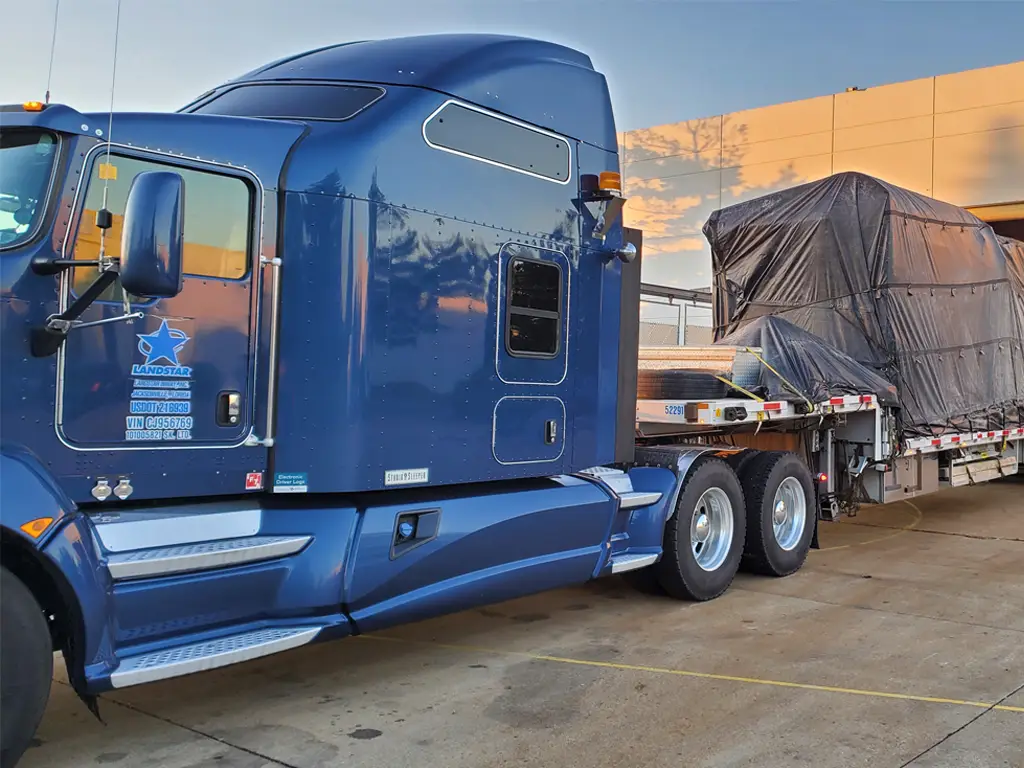
HOS compliance is the carrier’s responsibility — but schedule predictability is a shared outcome. Working with a logistics partner who selects carriers with strong safety ratings, realistic transit planning, and disciplined HOS management is how shippers protect their delivery commitments on long-haul lanes.
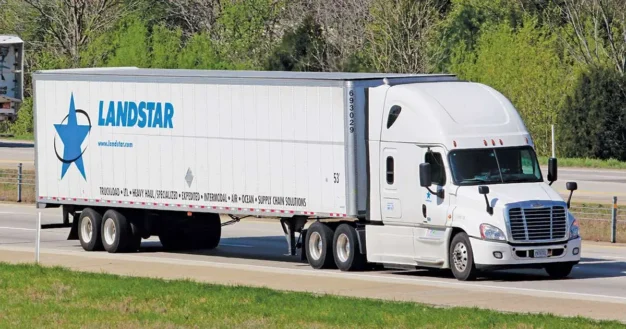
Jansson LLC is a Landstar freight agent with access to a nationwide carrier network — including experienced long-haul OTR operators who manage HOS proactively, plan routes around mandatory rest requirements, and maintain the compliance records that keep freight moving without enforcement interruptions.
Through the Landstar network, Jansson helps U.S. businesses identify the right carrier for their specific lane and timeline, build realistic transit schedules that account for HOS constraints and driver rest requirements, and move long-haul freight with the predictability that comes from working with compliant, experienced operators.
Contact Jansson LLC today. Let’s build the long-haul freight strategy that keeps your shipments moving — on schedule and in full compliance.