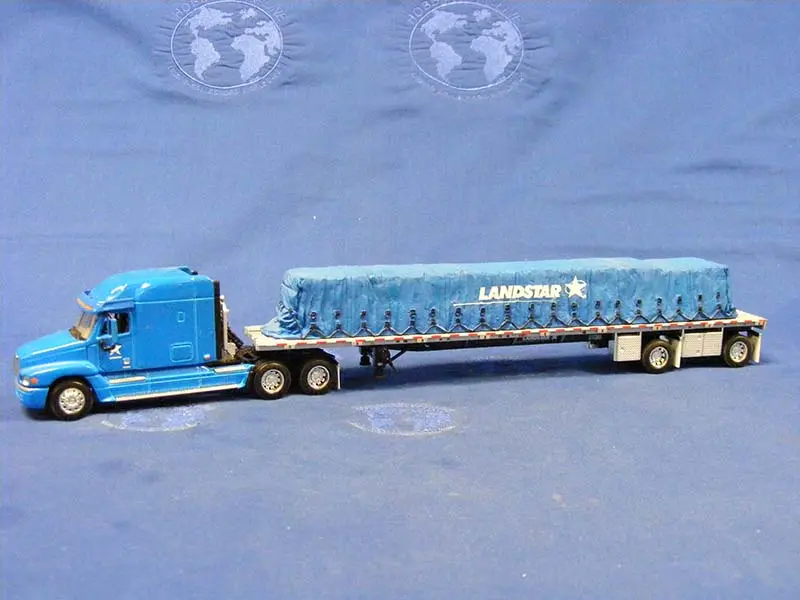
Choosing the right trailer for industrial freight is not always straightforward — and side-kit trailers are one of the most misunderstood options in the flatbed category.
Side kit trailers are essentially flatbeds equipped with removable side panels and tarp systems, providing a unique combination of protection and adaptability. Their modular design allows logistics providers to handle loads that are too large, irregularly shaped, or delicate for standard trailers.
For U.S. businesses shipping loose bulk materials, moisture-sensitive industrial goods, or awkwardly shaped equipment, understanding when a side kit is the right call — and when it is not — can prevent costly mismatches between cargo and equipment.
What a Side-Kit Trailer Actually Is
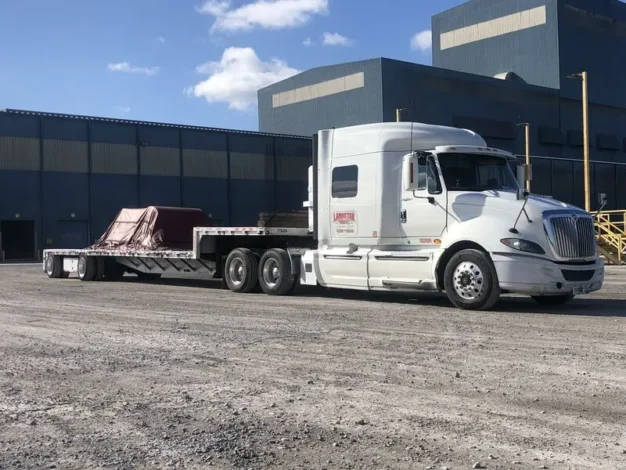
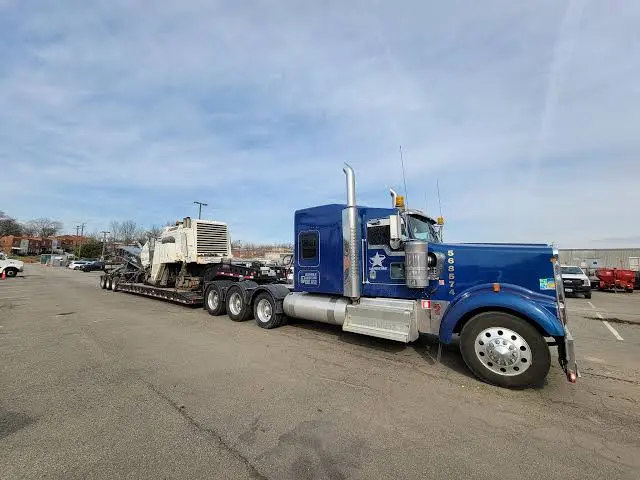
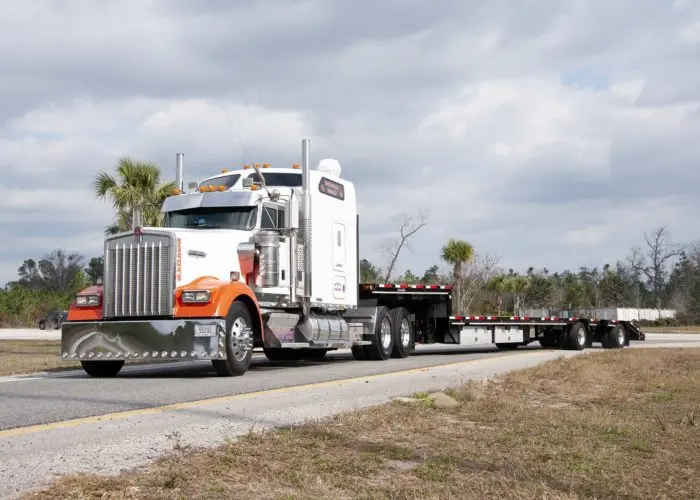
Side kit trailers start with a standard flatbed chassis, typically 48 to 53 feet long with a width of about 8.5 feet. Removable side panels, usually made of wood, fiberglass, or metal, attach to vertical posts in stake pockets.
These walls, usually 4 to 5 feet high, can be installed or removed depending on the cargo’s needs. The tarpaulin is then used to cover the top of the trailer, securing the cargo and providing further protection from weather conditions.
The panels take about an inch of flatbed on each side, so the width available for cargo on an 8-foot-6-inch flatbed trailer is about 8 feet 4 inches. Most side kit trailers are rated to hold a maximum freight weight of 42,000 to 45,000 pounds.
The defining characteristic is modularity. The side panels go on when the load needs containment and weather protection. They come off when the load does not — turning the trailer back into a standard flatbed for the next job.
When a Side Kit Is the Right Choice
Not every load belongs on a standard flatbed — and not every load needs a fully enclosed trailer. Side kits occupy the middle ground, and they do it well for a specific set of freight types. Here is where they consistently outperform the alternatives.
Loose or Granular Industrial Materials
Side kits are generally used to haul two kinds of cargo: granular materials like powders, coal, and some crops, and irregularly shaped or extremely heavy objects that cannot — or do not need to — go into a crate.
For bulk materials that would shift or spill on a standard flatbed, the side panels provide lateral containment without the cost of a full enclosed trailer. Bagged cement, sand, fertilizer, and similar materials are well-suited to side-kit transport.
Irregularly Shaped Industrial Equipment
Heavy machinery, engine blocks, and metal coils are almost impossible to load into an everyday enclosed trailer without the aid of a forklift — but they are easy to load onto a flatbed with a side kit. Being able to load the flatbed from the side and then build the enclosure around the cargo, rather than trying to load it from one end of the trailer, is especially useful when moving heavy machinery and oversized loads.
This side-loading capability is the side kit’s single biggest advantage over enclosed trailers for industrial freight. The cargo goes on the deck however it needs to be positioned. The panels go up around it afterward.
Moisture and Weather-Sensitive Cargo
Standard flatbed tarps provide reasonable weather protection — but not for every load. Loads extra sensitive to precipitation and sun might be better off enclosed by a side kit rather than covered only in tarps. Loads could be anything from designer building materials to sensitive manufacturing equipment. If there is a need to take special precautions against moisture and sun, a side kit is usually a better option than tarps alone.
Industrial HVAC equipment, moisture-sensitive components, and packaged building materials that cannot tolerate water intrusion are strong candidates for side-kit transport.
Cargo That Cannot Be Packaged or Crated
The side-kit trailer is commonly used for carrying goods that can never be packaged or crated. When the item is too large or too irregular to go into a box but still needs protection during transit, the side kit creates a custom enclosure around whatever shape the cargo happens to be.
When a Side Kit Is Not the Right Choice
Side kits are versatile — but they are not the right answer for every situation. Knowing where they fall short saves you from booking the wrong equipment and discovering the problem at the loading dock.
Very Tall Loads
Side panels typically run 4 to 5 feet high. A load that extends significantly above that height will protrude above the panels and still require tarp coverage for the exposed portion. For loads that need full enclosure above 5 feet, a conestoga trailer with a rolling tarp system is often a better fit.
Loads Requiring Quick Turnaround at the Dock
Setting up the side panels and tarp can take time, which might extend loading and unloading processes. For high-volume distribution operations where dock time is tightly managed, the installation and removal of side kit panels adds friction that a dry van or conestoga avoids entirely.
Extremely Heavy or Tall Loads Requiring Permits
Side-kit trailers operate within standard flatbed weight and dimension limits. Loads exceeding 45,000 pounds or requiring oversize permits are better suited to step decks, RGNs, or heavy haul configurations with appropriate axle ratings.
The Decision Framework
Here is a simple way to determine whether a side kit fits your freight.
A side kit is the right call when your cargo needs lateral containment but not full enclosure, when side-loading is required because the cargo cannot enter from the rear, when the load is moisture-sensitive but not temperature-sensitive, and when the cargo is too irregular to package but fits within standard flatbed weight limits.
A side kit is not the right call when the load exceeds 45,000 pounds, when the cargo extends significantly above 5 feet and needs full overhead protection, or when dock turnaround time is a primary constraint.
How Jansson LLC Helps U.S. Businesses Move Flatbed and Specialty Freight
Matching industrial freight to the right trailer type is where logistics experience pays off — and where mismatches create delays, damage claims, and avoidable costs.
Jansson LLC is a Landstar freight agent with access to a nationwide carrier network — including experienced flatbed operators equipped with side-kit configurations, step decks, RGNs, and specialized heavy haul equipment across all 48 contiguous states.
Through the Landstar network, Jansson helps U.S. businesses identify the right trailer configuration for their specific freight, coordinate carrier selection and load planning before the truck rolls, and ensure industrial cargo arrives safely and in full compliance with FMCSA securement requirements.
Contact Jansson LLC today. Let’s make sure your industrial freight is on the right trailer — from the first call to final delivery.