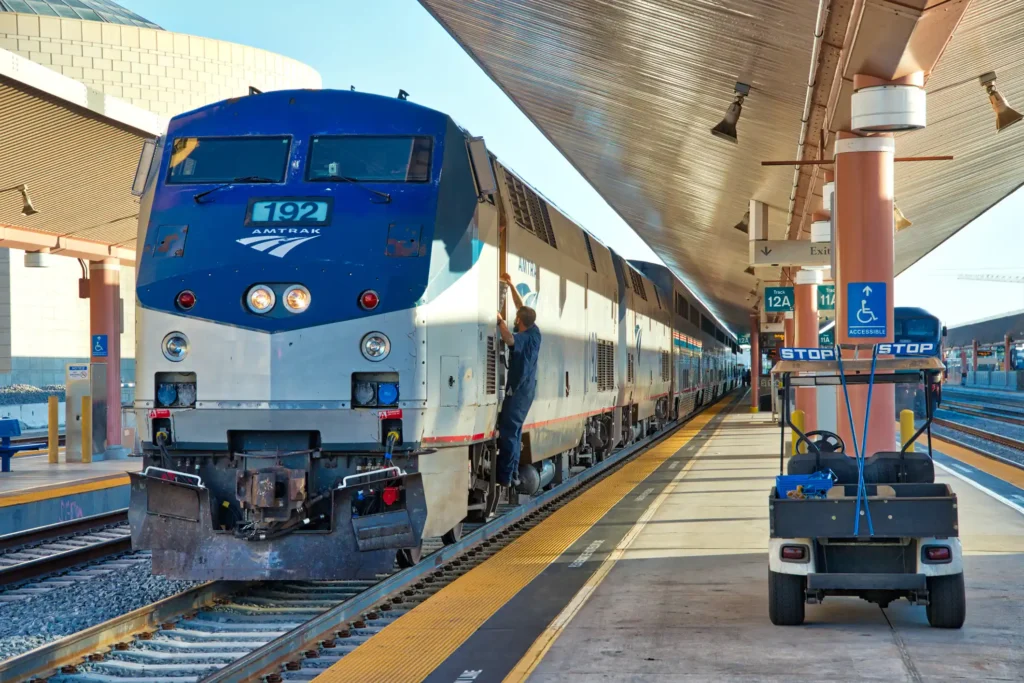
Sustainable shipping is no longer just a corporate values statement. It is a business requirement — and for most U.S. shippers, the fastest path to meaningful emissions reductions is already available on the freight network they use today.
Intermodal road-rail routes cut CO2 emissions by 30 to 60% compared with truck-only transport, according to the International Council on Clean Transportation’s October 2025 report. In some cases, the savings run even higher — Norfolk Southern’s own carbon data shows a reduction of nearly 90% compared to trucks on equivalent lanes.
The same mode shift that cuts your carbon output also cuts your freight bill. This is not a trade-off. It is a convergence of cost and sustainability goals that makes green logistics the most financially rational choice on long-haul freight in 2026.
Why Freight Emissions Are a Growing Business Risk
Logistics and freight account for roughly 7% of global greenhouse gas emissions. Trucking alone drives 57% of all freight emissions — more than air cargo and ocean shipping combined.
That concentration creates risk for shippers in three ways.
First, regulatory pressure is increasing. EPA SmartWay standards are tightening. The EU Emissions Trading System now covers maritime shipping. Carbon pricing mechanisms are expanding — and supply chains that have not started reducing emissions are likely to face compliance costs before the decade is out.
Second, customer mandates are becoming standard. Major retailers and manufacturers now require Scope 3 emissions reporting from their logistics providers. If your freight strategy cannot demonstrate a credible emissions reduction path, it may disqualify you from certain supplier relationships.
Third, carbon exposure is a financial risk. As carbon costs increase — whether through regulation, customer requirements, or internal ESG targets — a truck-heavy freight strategy becomes a liability that compounds over time.
The Intermodal Solution Is Already Built
The good news for most U.S. shippers is that a meaningful emissions reduction does not require new technology, alternative fuels, or expensive infrastructure investment. The solution is already built — it is called intermodal rail, and it runs on 140,000 miles of existing U.S. freight rail network.
Rail is three to four times more fuel-efficient than trucking on a ton-mile basis. According to AAR data, trains move one ton of freight approximately 470 miles on a single gallon of fuel. Trucks move the same ton roughly 100 to 150 miles on a gallon.
Rail also produces significantly lower emissions per unit of freight moved. The AAR’s environmental analysis puts the greenhouse gas reduction versus truck at up to 75% on comparable lanes. The ICCT’s October 2025 analysis of intermodal road-rail routes confirms 30 to 60% CO2 reductions depending on the specific lane and distance.
For businesses with Scope 3 emissions targets, intermodal rail is often the single most impactful operational change available — without any change to what is in the containers or where they need to go.
The Real-World Numbers
Ocean Spray’s experience offers a clean case study. The organization leveraged a distribution network redesign and an intermodal shift from road to rail — achieving a 20% reduction in CO2 emissions across their transportation network. No new technology. No alternative fuels. Just a modal shift on suitable lanes.
The ICCT’s research confirms this pattern across multiple industries and geographies: intermodal freight consistently delivers both the emissions reductions and the cost savings simultaneously. In many cases, intermodal saves 20 to 40% on transportation costs compared to road-only transport — making green logistics not just environmentally sound, but financially advantageous.
What Green Logistics Actually Requires
Effective green logistics is not about doing everything differently. It is about doing the right things on the right lanes.
Identify Your Long-Haul Lane Candidates
Intermodal delivers its advantage on lanes over 700 to 750 miles, where rail’s fuel efficiency and labor economics overcome the added time for terminal transfers. A business shipping freight from the Midwest to the Southeast, from California to Texas, or from the Gulf Coast to the Northeast has intermodal options on most of its highest-volume lanes.
The starting point is a lane analysis — mapping your current freight by origin-destination pair, volume, and distance to identify where intermodal delivers a clear cost and emissions benefit.
Measure Your Current Emissions Baseline
You cannot report progress without a baseline. A freight carbon calculator — using actual lane data, weights, and distances — produces the Scope 3 emissions figure your customers and stakeholders are increasingly asking for.
Rail carriers, including Norfolk Southern, offer carbon calculators that use locomotive fuel burn data to produce precise emissions metrics by lane. These tools make the comparison between truck and rail concrete rather than theoretical.
Build Modal Flexibility Into Your Freight Strategy
The most effective green logistics strategies do not replace trucking entirely. They build modal flexibility — using intermodal on long-haul, high-volume lanes where the economics and emissions case is strongest, and retaining trucking for short hauls, time-sensitive shipments, and locations without rail ramp access.
That combination produces the maximum cost reduction and emissions reduction across the full freight network — without sacrificing the transit reliability that your operations depend on.
How Jansson LLC Helps U.S. Businesses Build Greener Freight Strategies
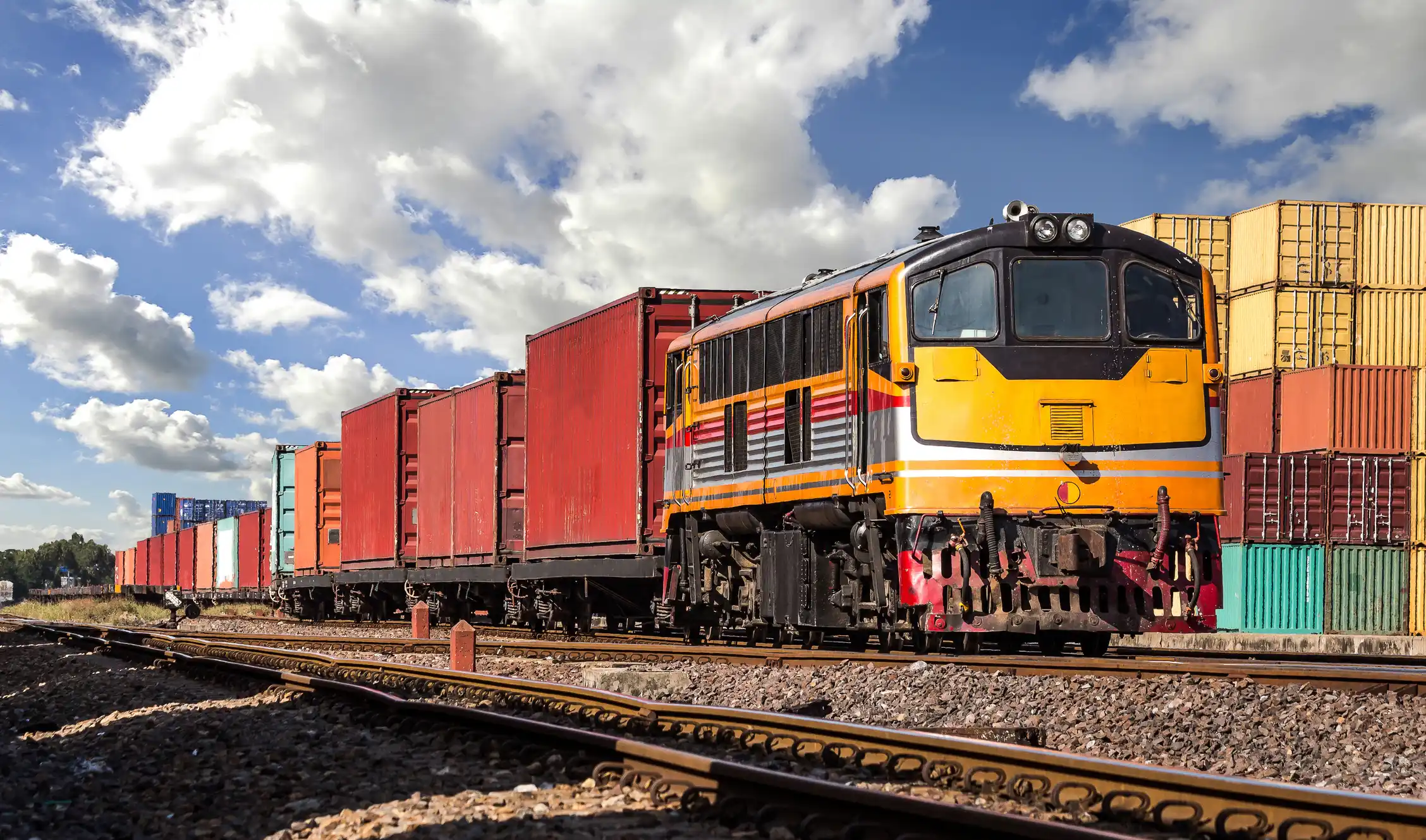
Green logistics and cost-efficient logistics are not competing priorities in 2026. They are the same priority — and intermodal rail is where they converge.
Jansson LLC is a Landstar freight agent with access to a nationwide carrier network — including intermodal rail, over-the-road trucking, flatbed, and international shipping options across all 48 contiguous states.
Through the Landstar network, Jansson helps U.S. businesses identify which lanes are the strongest candidates for intermodal conversion, evaluate the cost and emissions impact of shifting volume from truck to rail, and build freight strategies that improve both the bottom line and the carbon footprint simultaneously.
Contact Jansson LLC today. Let’s build the freight strategy that makes your supply chain greener — without making it slower.