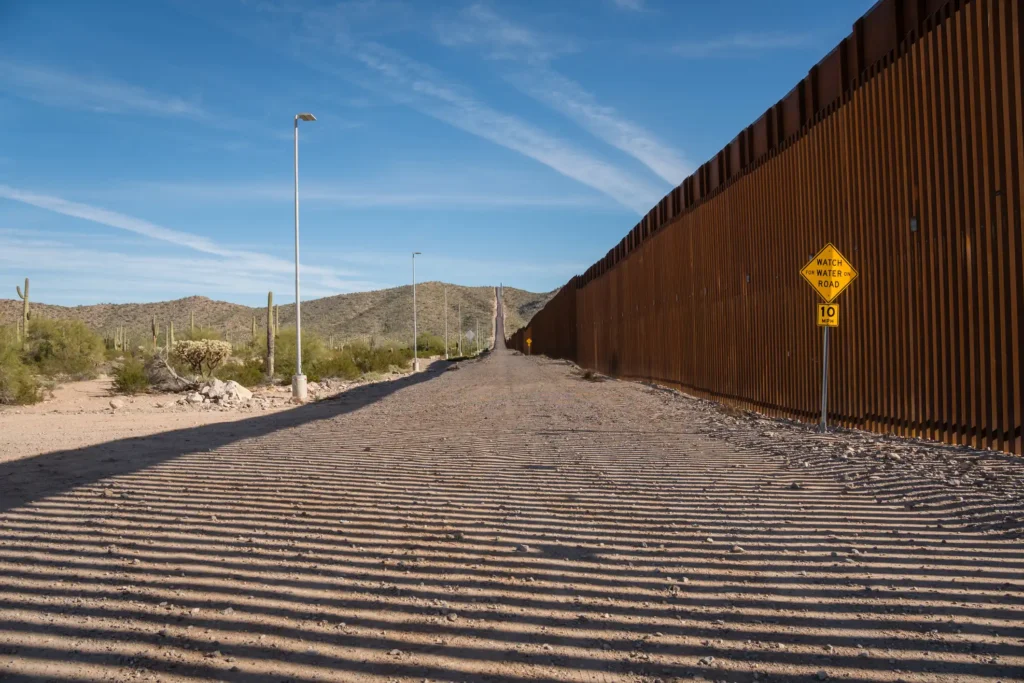
U.S.-Mexico truck freight reached $872.8 billion in 2025 — up 3.9% from the prior year — making it the largest and fastest-growing bilateral trade corridor in North America. Trucking carries 73.6% of all freight between the two countries.
For businesses shipping across that border, one of the most consequential operational decisions is how the freight actually crosses — and two fundamentally different models exist for moving full truckload freight between the U.S. and Mexico.
The first is direct through-trailer service. The second is transloading. Each solves a different set of problems. Choosing the wrong one for your freight type and lane consistently adds cost, risk, or both.
What Direct Through-Trailer Service Actually Is
Through-trailer service keeps your loaded trailer in its original sealed container as it crosses the U.S.-Mexico border, eliminating the need for handling at the border. Your goods get loaded into a sealed trailer at the origin point. At the border, customs officials have the authority to break the security seal and inspect your goods if needed, though many shipments pass with just a documentation review. After clearance, that same sealed trailer continues to the final destination with minimal delay.
This approach typically saves 6 to 24 hours by eliminating the transfer step. It also reduces handling touchpoints from four down to just two — origin load and destination unload — significantly lowering the damage risk for delicate goods.
Direct through-trailer is the right choice when cargo integrity, speed, and transit predictability are the primary concerns. Fragile products, high-value goods, temperature-sensitive freight, and time-critical shipments all benefit from the reduced handling and sealed transit that through-trailer provides.
The trade-off is cost. Through-trailer requires a carrier authorized to operate on both sides of the border — which limits the carrier pool and typically produces higher rates than transloading on equivalent lanes.
What Transloading Actually Is
In the transloading model, freight is transported to a secure border warehouse, unloaded from the originating carrier’s trailer, and reloaded onto a destination-side carrier’s trailer before continuing to final delivery.
Transloading offers a 15 to 20 percent cost savings on equipment utilization by keeping trailers within their native countries, and it provides shippers with greater capacity flexibility. However, it introduces an extra physical handling step that raises cargo damage risks and requires close operational oversight by an experienced logistics provider.
The cost savings come from a structural efficiency: trailers stay on their native side of the border. U.S. carriers do not need specialized cross-border authority. Mexican carriers do not need to enter the U.S. carrier network. The border warehouse facilitates the transfer — and the freight moves on the most efficient available carrier on each side.
Transloading is the right choice when cost efficiency and capacity flexibility are the primary concerns — particularly for non-fragile goods on high-volume lanes where the 15 to 20% savings compound meaningfully across a year of shipments.
The Decision Framework
Choosing between the two models requires honest evaluation of four variables.
Cargo Fragility and Damage Sensitivity
Through-trailer service provides end-to-end control and faster transit times, making it suitable for time-sensitive shipping of large, bulky freight. Transloading can be more cost-effective but adds handling risk and potential bottlenecks due to the transfer process.
Fragile, precision, or high-value goods belong in a through-trailer. Products that tolerate handling without damage — packaged goods, raw materials, non-precision manufactured components — are strong transloading candidates.
Transit Time Requirements
Through-trailer typically saves 6 to 24 hours by eliminating the border transfer step. For freight with flexible delivery windows, that time difference is negligible. For freight with hard delivery appointments, it can be the deciding factor.
Lane Volume and Frequency
High-volume, consistent lanes produce the most value from transloading — because the 15 to 20% cost savings compounds across every shipment. Lower-volume or irregular lanes may not produce enough aggregate savings to justify the additional coordination overhead.
Carrier Availability
Reliable trucks into and out of Mexico are hard to source, especially for Canada-Mexico freight. Border congestion at Laredo adds cost and unpredictability to nearly every shipment. Data shows Laredo handles nearly 40% of all truck traffic entering the U.S. from Mexico, making it a consistent pressure point in the network.
On congested lanes during peak periods, transloading can actually improve capacity access — because the shipper is drawing from two separate carrier markets rather than one constrained cross-border pool.
The Laredo Factor
Most U.S.-Mexico truck freight moves through Laredo — and Laredo’s congestion characteristics affect both strategies differently.
During peak periods, border wait times extend significantly. Through-trailer shipments wait in the commercial queue with the trailer intact. Transloaded shipments wait at the border warehouse, where freight is staged and transferred as capacity becomes available.
Understanding which approach performs better on your specific lane — based on the time of year, the freight type, and your delivery window — is where experienced cross-border logistics partners add meaningful value.
How Jansson LLC Helps U.S. Businesses Navigate Cross-Border Freight
The right cross-border strategy depends on cargo characteristics, lane economics, and carrier relationships — variables that look different for every shipper and every lane.
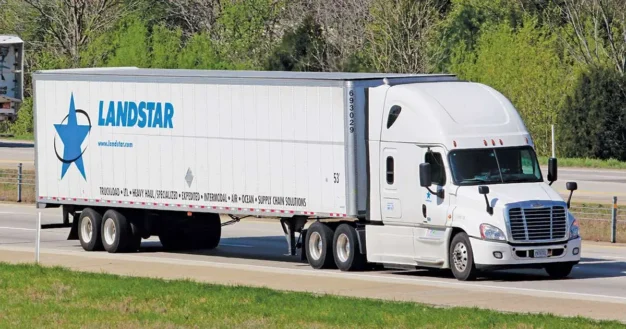
Jansson LLC is a Landstar freight agent with access to a nationwide carrier network — including experienced cross-border operators on both U.S.-Mexico and U.S.-Canada corridors who understand direct through-trailer service, transloading operations, and the documentation requirements that keep cross-border freight moving without delays.
Contact Jansson LLC today. Let’s evaluate your cross-border lanes and build the strategy that moves your freight efficiently — on the right side of the cost-versus-service trade-off.