Proper flatbed securement is a huge priority for anyone shipping large cargo, but it is also incredibly easy for businesses to get wrong.
Many company leaders assume that tying down a load is only the truck driver’s job.
However, federal safety laws say that shippers share this big responsibility too.
If your heavy cargo shifts while moving fast on the highway, it will destroy your items.
Even worse, loose freight creates a terrible road hazard for everyday drivers.
This helpful guide breaks down exactly how to protect your goods using smart flatbed securement habits.
Why Open Trailers Need Extra Safety Attention
Standard dry van trailers feature strong aluminum walls, a tough roof, and an enclosed floor to keep boxes safely contained inside.
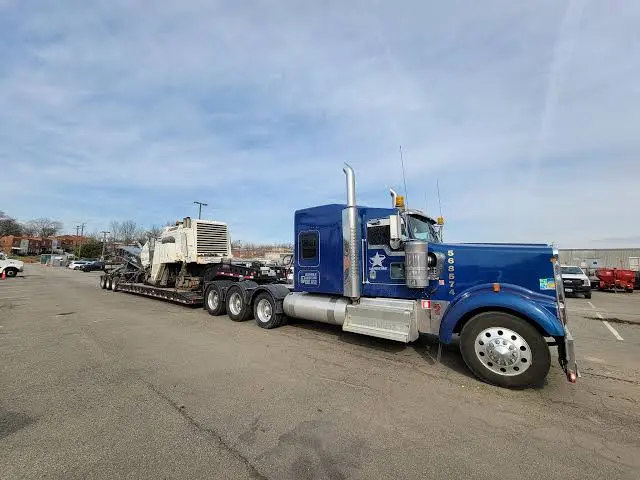
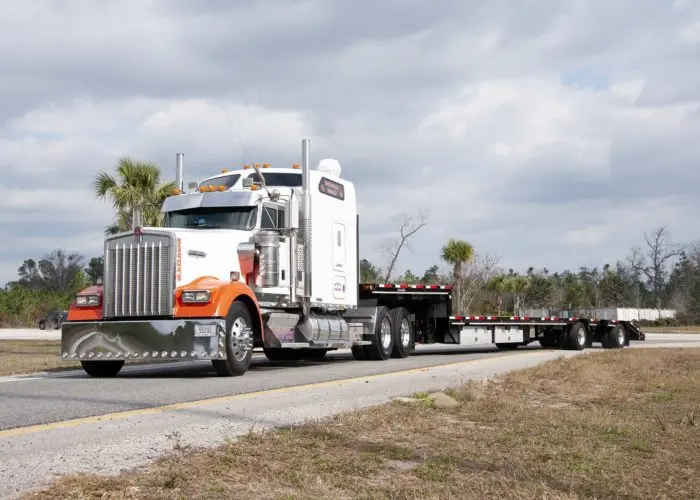
By contrast, a flatbed trailer has absolutely none of those protective boundaries.
Every single piece of open cargo sits out in the wind completely exposed to the elements.
The only thing keeping your heavy machinery from falling off the truck bed is a high-quality tie-down system.
Because of this danger, the Federal Motor Carrier Safety Administration (FMCSA) enforces strict rules under a law called 49 CFR Part 393.
Government regulations state that your freight must be completely locked in place so it cannot slide, spill, or blow away.
The total number of tools required for your flatbed transportation depends on the length and weight of the items.
Additionally, your flatbed tie down straps or steel chains must meet specific strength ratings to handle the pressure.
Getting your flatbed securement wrong will cause major safety issues for the driver and everyone sharing the road.
The Rule That Governs Everything: Working Load Limit
Before you choose any specific flatbed hauling tools, you must understand a mathematical concept called the Working Load Limit (WLL).
Federal motor carrier laws state that the combined WLL of all your equipment must equal at least half the total weight of your cargo.
Imagine your company is organizing the flatbed shipping of a massive 40,000-pound industrial machine.
Your total network of chains or straps must be strong enough to hold at least 20,000 pounds.
This mathematical rule applies to every single open-air journey, no matter what tools you choose.
Inspectors also look closely at what safety experts call the weakest link rule.
For example, a worker might use a heavy steel chain rated for 6,600 pounds.
If they connect it to a metal binder rated for only 4,000 pounds, the strength of that whole line drops to 4,000 pounds.
Every single hook, binder, and strap in the system must match the heavy weight of your flatbed freight.
Chains vs. Straps: Which One Does Your Flatbed Load Need?
The specific tools you need for flatbed securement depend entirely on the physical properties of the items you are moving.
Picking the wrong equipment will ruin your inventory and result in expensive police fines.
When to Use Chains
Heavy metal chains are the perfect choice for rough, sharp, or highly abrasive cargo.
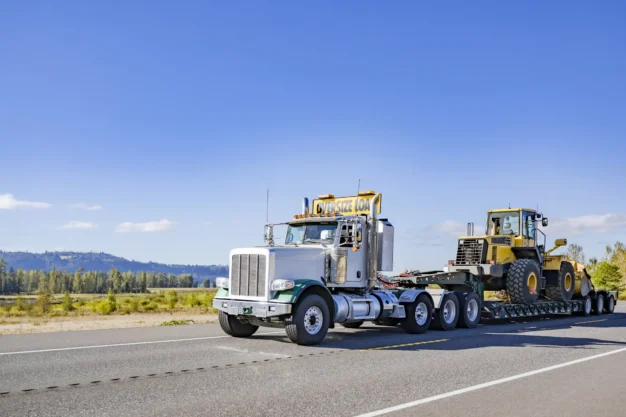
This includes industrial steel coils, thick metal sheets, large construction bulldozers, and heavy engine blocks.
Steel is incredibly durable, does not stretch under pressure, and can handle sharp corners that would slice right through fabric.
Government rules require a minimum of four independent chains for any piece of heavy machinery over 5,000 pounds.
If your cargo is longer than 10 feet, workers must add one extra chain for every additional 10 feet of length.
Drivers must also use ratcheting binders to lock these chains tightly to the flatbed truck bed.
When to Use Straps
Synthetic webbing straps are an excellent choice for lighter, fragile, or highly sensitive items.
You should use them for painted vehicles, bundles of lumber, stacked crates, and small cargo under 5,000 pounds.
Webbing distributes tension evenly across a wider area, which keeps delicate surfaces from getting crushed or scratched.
These straps are also very lightweight and fast to use, which helps your warehouse team speed up daily loading times.
Synthetic materials have one major weakness: sharp metal edges can slice through them like a knife.
Continuous highway vibrations can destroy a webbed strap in minutes, leaving your cargo completely unsecured.
Essential Flatbed Securement Safety Tips You Cannot Ignore
Plastic corner guards are an absolute necessity whenever a strap passes over a sharp edge.
Skipping this protection is a serious legal violation that will get your truck pulled off the road instantly.
Corner protectors are cheap tools that sit between the strap and the cargo to absorb friction.
Can you use steel chains and fabric straps at the same time on a flatbed truck?
Yes, and combining both tools is often the smartest strategy for complex machinery.
Experienced loaders use chains to hold the heavy structural frame and straps to secure the painted exterior parts.
The main goal is making sure your total WLL numbers satisfy federal minimum requirements.
Drivers must also stop and inspect their cargo within the first 50 miles of a trip.
After that initial check, they must inspect the load every 150 miles or every three hours.
Cargo naturally settles, straps stretch out in the wind, and chains can rattle loose.
What felt tight at the loading dock might become incredibly dangerous after climbing a steep highway ramp.
How Jansson LLC Mastered Safe Flatbed Securement and Logistics
Successful flatbed logistics starts long before a truck backs up to your warehouse dock.
It requires choosing a reliable partner who knows the exact flatbed trailer dimensions and equipment your cargo needs.
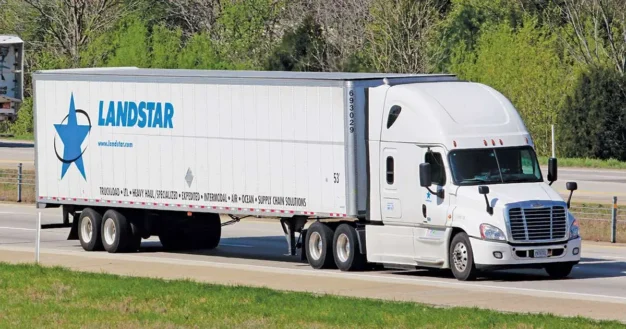
Jansson LLC is a trusted Landstar freight agent with instant access to a massive nationwide network of certified truck drivers.
We work with experienced owner-operators who master FMCSA safety laws and handle oversized freight every day.
Through our deep connection to Landstar, we help American businesses find the perfect flatbed truck types for their unique shipments.
Our team coordinates every single detail with precision so you can avoid costly compliance penalties and transit delays.
Whether you are hauling raw steel, manufacturing machinery, or building materials, the right logistics provider changes everything.
Let’s build a bulletproof safety plan for your heavy freight. Connect directly with a Jansson LLC logistics specialist today to secure your next load.