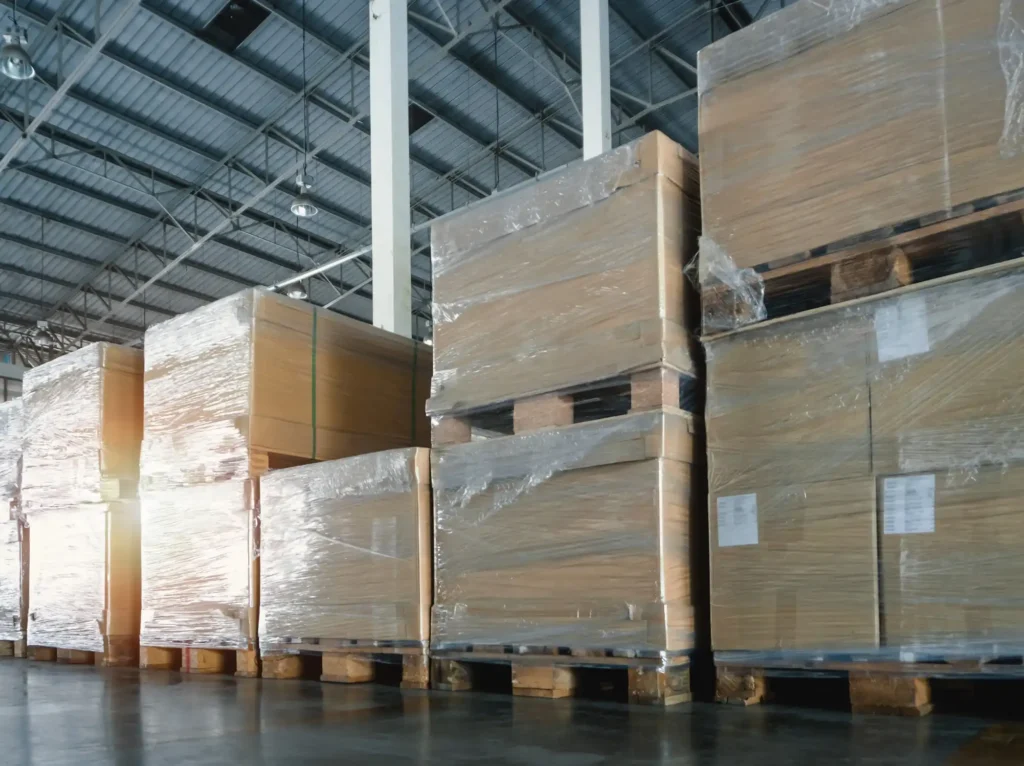
Pallet stacking is one of the most overlooked cost-control tools during less-than-truckload (LTL) shipping.
Since the National Motor Freight Traffic Association overhauled its classification system in July 2025, this setup has never mattered more.
Most U.S. shippers focus all their energy on trying to find better carrier rates from trucking companies.
One of the biggest opportunities to reduce LTL freight shipping costs actually has nothing to do with the carrier.
Savings start right on your loading dock before the transportation truck even arrives at your building.
Under the current rules, the specific way you pack your boxes directly affects your final invoice.
Moving from a high freight class to a lower one can reduce your shipping rates by 30% to 40%.
For an average company shipping 1,200 pounds weekly, a single class improvement saves roughly $3,700 per year.
This excellent cash savings starts with smart habits like proper pallet stacking.
Why Pallet Stacking Affects Your Freight Class
Under the modern rules for pallet packaging, your freight class is calculated entirely based on density.
This math measurement represents weight divided by cubic feet.
To calculate the total cubic feet, you must multiply length by width by height in inches and then divide by 1,728.
Dividing the total weight by that number gives you the exact pounds per cubic foot.
When measuring, you must use the full dimensions of the shipped unit.
This total size includes the wooden base, all packaging wrap, and anything that hangs over the edge.
A poorly done job of pallet stacking creates an item that is taller, wider, or bulkier than necessary.
This mistake lowers your overall density calculation and pushes your items into a much more expensive freight class.
Careful packing is not just about keeping your boxes from falling over.
It is about controlling your density so you can keep more money in your corporate budget.
10 Pallet Stacking Tips That Save You Money
These tips are simple and highly practical for your warehouse crew.
You do not need special tools or a massive team to apply them.
Consistency is what matters most because the financial savings add up across every single shipment you send.
1. Always start with a quality pallet.
A damaged or warped wooden board creates an unstable base for your items.
Use standard 48 x 40-inch platforms that are in excellent condition.
Check for broken pieces, protruding nails, and soft spots before loading your goods.
2. Stack the heaviest items on the bottom.
Put your heaviest boxes on the lowest layer. Lighter items belong on top of those heavy containers.
This method keeps the center of gravity low and prevents top-heavy loads from tipping over during bumpy transit.
3. Keep the load within the pallet’s footprint.
Do not let boxes hang off the edges of the wood. Overhang increases your measured dimensions on LTL shipments.
This mistake directly alters your density calculation and can push you into a higher freight class.
4. Interlock your layers like brickwork.
Avoid stacking your boxes in straight vertical columns. Offset each new layer so the boxes overlap like bricks in a sturdy wall.
This configuration spreads weight evenly across more surface area and makes the entire unit stable.
5. Keep the stack as uniform as possible.
Try to use boxes of similar sizes on each individual platform where possible.
Mismatched sizes create dangerous gaps and uneven surfaces.
If you must mix sizes, place the largest items on the bottom layer.
6. Do not exceed the pallet height limit.
Most carriers have a maximum allowable height of 84 inches.
Going over that height limit can result in extra charges or outright refusal from the driver. Tall stacks are also harder to store in a trailer.
7. Use stretch wrap all the way down.
Heavy plastic wrap holds your entire load together as one solid unit. Wrap tightly around the entire stack, including the wooden base itself.
Start from the bottom and work your way up while overlapping each layer.
8. Use corner boards on fragile or heavy loads.
Corner boards are L-shaped protectors that fit over the edges of your stack. They prevent stretch wrap from crushing boxes under pressure.
These tools also add structural strength to fragile freight.
9. Label every side of the pallet clearly.
Your cargo will be handled multiple times by forklifts at different transit hubs.
Labels can easily get covered, torn, or turned away from view. Place your shipping papers on at least two sides of the unit.
10. Measure after packing, not before.
Many shippers make the mistake of estimating dimensions before they finish pallet stacking.
Always measure the physical height and weight after everything is wrapped.
This final measurement is the official number you must write on your paperwork.
What Happens When Pallet Stacking Goes Wrong
Carriers use automated laser scanners at their terminals to measure incoming freight.
If your declared dimensions do not match their scans, your shipment gets reclassified.
A reclassification fee can run $30 to $75 per shipment. You will also face a sudden rate increase of 20% to 50%.
Those extra fees add up fast over time.
This is especially true when mistakes repeat across dozens of LTL shipments per month.
The good news is that these fees are preventable with consistent warehouse habits.
How Jansson LLC Optimizes Your Pallet Stacking for Smarter Shipping
Getting your physical pallets organized is only step one. Having an expert logistics partner to guide your company is step two.
Jansson LLC is a trusted Landstar freight agent with access to a massive nationwide carrier network.
This provides U.S. businesses with excellent LTL shipping options, carrier selection, and freight coordination across multiple states.
Through this network, our team helps businesses verify freight classifications before trucks ever move.
We find cost-effective routing options for your specific lanes to avoid surprises.
Good pallet stacking protects your freight class. The right logistics partner protects your budget.
Ready to stop worrying about unexpected shipping fees?
Reach out to Jansson LLC right now to secure a smarter shipping plan and protect your corporate budget on every single truckload.