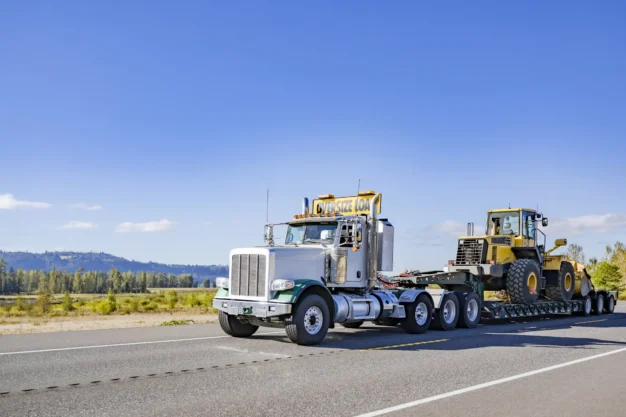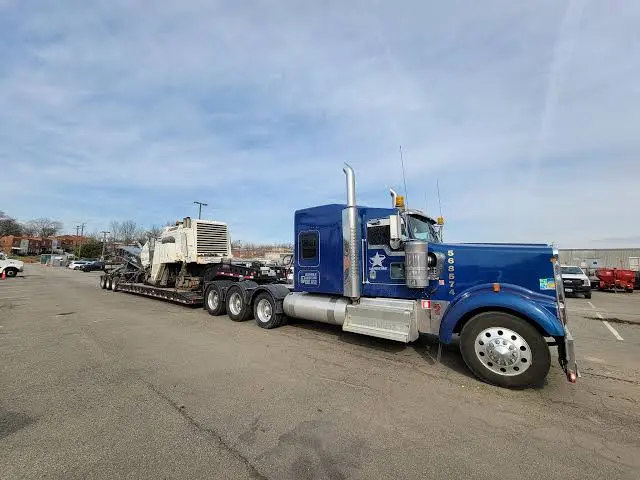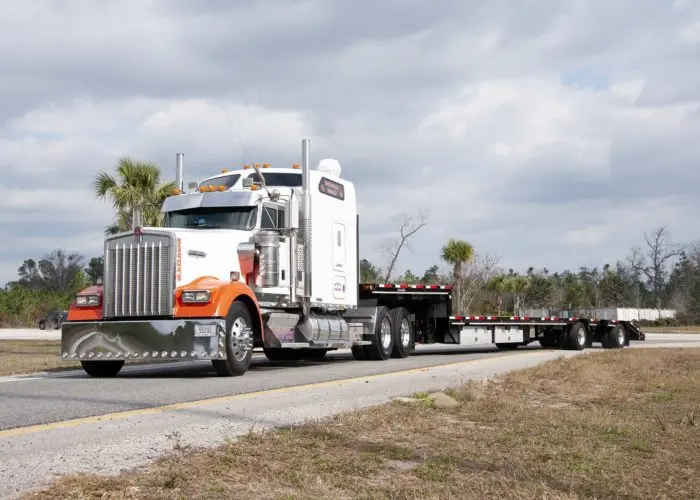
Cargo shift is one of the most dangerous and most preventable events in commercial freight.
In 2025, CVSA recorded 18,108 violations for cargo not secured to prevent leaking, spilling, blowing, or falling — plus another 16,054 for unsecured vehicle components and dunnage. That is more than 34,000 securement citations in a single year. And cargo securement was named the 2026 Roadcheck vehicle inspection focus area — meaning enforcement scrutiny is higher right now than it has been in years.
The consequences are real. A violation under 49 CFR Part 393 can result in fines up to $18,000 per violation. An out-of-service order stops the truck until the issue is corrected. And a cargo shift event at highway speed creates liability exposure that far exceeds any citation.
The good news is that cargo shift is almost entirely preventable — through the correct application of three complementary securement techniques: blocking, bracing, and friction pads.
What the FMCSA Performance Standard Actually Requires
Before understanding the tools, it is important to understand what they are measured against.
Under 49 CFR 393.102, every cargo securement system must prevent movement under three force conditions: forward shift under 0.8g deceleration — equivalent to hard emergency braking — rearward shift under 0.5g deceleration, and lateral shift under 0.5g sideways force.
The 50% rule applies to the aggregate working load limit of all tiedowns — the combined WLL of every strap, chain, and device must equal at least half the weight of the cargo being secured.
Blocking and bracing devices must prevent cargo from shifting in all directions — forward, rearward, and laterally — and they supplement rather than replace tiedowns in most applications. This is the foundational distinction: tiedowns restrain cargo from above. Blocking and bracing restrain it from the sides and ends.
Blocking: Filling the Void Spaces
Blocking prevents cargo from moving by filling void spaces between the cargo and the vehicle structure — or between adjacent cargo units.
What Blocking Does
When cargo is not in direct contact with a structural surface — the front wall of a trailer, a headboard on a flatbed, or another piece of cargo — a void exists through which the cargo can move under braking or lateral force. Blocking fills that void with a material strong enough to absorb the impact force without crushing or shifting itself.
Blocking Materials and Requirements
Wood is the most common blocking material — typically hardwood lumber of sufficient cross-section to handle the load force. The blocking must be secured to the vehicle or to adjacent cargo so it cannot itself shift and lose contact with the cargo it is restraining.
For flatbed loads — particularly steel, lumber, and machinery — front-end blocking against the headboard or stake pocket is the primary defense against forward shift under braking. The 0.8g forward deceleration standard is the highest force in the performance standard precisely because emergency braking produces the largest forces on the cargo.
Blocking that is too small for the cargo weight, made from inadequate material, or not itself secured to the vehicle fails the performance standard regardless of how many tiedowns are in place.
Bracing: Direct Contact With the Vehicle Structure
Bracing provides direct contact between the cargo and the vehicle structure — transferring forces directly into the vehicle frame rather than relying on tiedowns to absorb them.
What Bracing Does
Where blocking fills a void, bracing spans a gap. A cargo bar — also called a load lock — is a telescoping metal bar that extends horizontally across a trailer interior, pressing against the walls to create a friction-based brace point. Under FMCSA regulations, load locks are considered a blocking and bracing device rather than a tiedown. They must prevent shift in all directions without the device itself being attached to a rated anchor point.
Bracing for Flatbed Cargo
On flatbed trailers, lumber cradles, coil racks, and pipe bunks are commodity-specific bracing devices that prevent lateral movement for cargo types that cannot be effectively restrained by straps alone. Steel coils are one of the most challenging cargo types — their round shape means they can roll and their density creates enormous inertia. FMCSA’s steel coil requirements under 49 CFR 393.120 specify dedicated securement methods precisely because standard flatbed tiedown protocols are insufficient for this commodity.
Friction Mats: Reducing the Number of Tiedowns Required
Friction mats are rubberized or textured mats placed between the cargo and the deck to increase friction and supplement tiedown capacity. When friction mats are used properly, they can reduce the number of tiedowns required to meet the performance standard.
How Friction Mats Work
By increasing the coefficient of friction between the cargo and the trailer deck, friction mats reduce the tendency of cargo to slide under lateral or braking forces. A load that would require four tiedowns on a smooth steel deck may require only three with friction mats properly positioned — because the mats themselves are absorbing a portion of the lateral and forward force.
Important Limitations
Friction mats supplement — they do not replace — tiedowns and blocking. A load secured only with friction mats and no tiedowns fails the performance standard. Friction mats must also be in good condition — worn, torn, or compressed mats provide reduced friction and should not be relied upon as effective securement components.
The 50-Mile Re-Inspection Requirement
Cargo often settles during the first portion of a trip as it adjusts to road vibration and load distribution. FMCSA requires a re-inspection of cargo securement within the first 50 miles of a trip — and again after any change of duty status, or after three hours or 150 miles of driving.
A driver who cannot demonstrate compliance with the 50-mile re-inspection requirement can receive a violation even if the cargo is properly secured at the time of inspection. Documentation of the re-inspection on the Driver Vehicle Inspection Report is the only acceptable evidence.
How Jansson LLC Helps U.S. Businesses Move Cargo Without Securement Surprises
Blocking, bracing, and friction pad protocols are the carrier’s responsibility at the trailer level — but the shipper has a direct interest in working with carriers who apply them correctly. A cargo shift event creates liability, customer relationship damage, and delivery failure that affect the shipper regardless of where the legal fault falls.
Jansson LLC is a Landstar freight agent with access to a nationwide carrier network — including experienced flatbed and specialized freight operators who understand FMCSA cargo securement requirements, commodity-specific protocols, and the loading practices that keep freight compliant from the dock to the destination.
Contact Jansson LLC today. Let’s make sure your freight is moving with a carrier whose securement practices match the standard your cargo — and your customers — require.