Steel coils are one of the most hazardous cargo types in commercial flatbed freight — and one of the most commonly mishandled.
Their round shape means they can roll. Their density means a single coil can weigh 20,000 to 50,000 pounds or more. A steel coil that breaks free at highway speed does not just damage property. It kills people.
In 2025, FMCSA recorded 18,108 citations for cargo that leaked, spilled, blew, or fell in transit, plus 16,054 citations for dunnage, chains, straps, tarps, or components that were themselves not secured to the vehicle. Steel coil securement violations are among the most commonly cited commodity-specific failures — because the rules are detailed, non-negotiable, and frequently misapplied by carriers who do not specialize in this freight type.
For steel shippers, understanding what proper coil securement actually requires — and demanding that standard from every carrier you work with — is not just a compliance issue. It is a liability issue.
Why Steel Coils Have Their Own Securement Rules
FMCSA has adopted separate, more detailed rules for metal coils that override the general cargo securement standard entirely. When a commodity-specific rule applies, it overrides the general rule, not the other way around.
This matters practically. A driver who knows the general tie-down count rules cold can still receive a citation hauling steel coils — because the general rules do not apply. FMCSA’s steel coil requirements in 49 CFR 393.120 specify different configurations based on whether coils are transported with their eye horizontal or vertical.
That orientation distinction is where most securement errors begin — and where most violations are written.
Coil Racks and Beveled Dunnage: The Foundation of Safe Coil Transport
Before any chain is attached or any strap is tensioned, the coil must be properly supported and positioned on the trailer deck. The equipment used at this foundational stage determines whether everything built on top of it will actually hold — and whether the load will survive an emergency braking event without shifting.
What Coil Racks Do
Coil racks or beveled dunnage rated for the coil’s weight are required equipment for steel coil transport. A coil rack — also called a coil bunk or cradle — is a structural device that holds the coil in position on the trailer deck, preventing it from rolling under the forces generated by braking, acceleration, and cornering.
The rack must be rated for the weight of the coil it is supporting. An undersized coil rack that collapses under load is a securement failure — regardless of how many chains are attached above it.
Eye-Vertical vs. Eye-Horizontal Configuration
Eye-vertical coils require specific blocking or cradles to prevent rolling and direct securement through the eye with chains. Eye-horizontal coils require securement against rolling and shifting. Mixing configurations in a single load requires each coil to meet the requirements for its specific orientation.
For eye-vertical coils — the most common configuration — the coil sits upright on the trailer deck. The coil rack prevents lateral rolling. Chains pass through the eye from left and right, secured forward and rearward to prevent shift in all four directions.
For eye-horizontal coils — loaded on their side — the coil rests in a cradle that prevents rotation. The securement pattern addresses the tendency for the coil to roll forward or rearward under braking and acceleration forces.
The 50% Working Load Limit Rule
Every steel coil shipment is subject to the aggregate working load limit requirement under 49 CFR 393.102. Every coil requires securement equal to 50% of its weight. A 40,000-pound coil needs 20,000 pounds of working load limit from your straps and blocking combined.
This calculation applies to the aggregate — the combined WLL of every chain, strap, and securement device used. A driver who uses four chains rated at 4,700 pounds WLL each is providing 18,800 pounds of aggregate WLL for a 40,000-pound coil — below the 20,000-pound minimum. That is a citation regardless of how the load looks visually.
Most operations use four to six straps rated at 5,400 pounds working load limit each, plus proper blocking. The blocking contribution to the aggregate WLL calculation makes the coil rack selection directly relevant to whether the securement system meets the legal standard — not just the chains.
Friction Pads and High-Friction Mats
High-friction mats, chocks, and corner and edge protectors are required equipment for coil securement. Friction pads placed between the coil and the trailer deck or coil rack increase the coefficient of friction — reducing the tendency of the coil to slide under lateral and braking forces.
This matters because the FMCSA performance standard requires the securement system to prevent movement under 0.8g forward deceleration — equivalent to hard emergency braking — and 0.5g lateral force. Without adequate friction at the coil-to-deck contact surface, the chain and strap system bears the full force of those events, which can exceed the WLL of properly sized securement equipment.
Friction pads supplement the chain and strap system — they do not replace it. A coil secured with friction pads and no chains fails the performance standard. A coil secured with chains on a non-friction surface is more likely to produce a WLL-exceeding event than one where friction pads are correctly positioned.
The Pre-Trip Checklist That Prevents Most Violations
Under-preparation causes more coil securement failures than bad technique does. A pre-trip checklist catches problems before they become violations.
The checklist for every steel coil load should confirm coil rack or beveled dunnage rated for the coil weight, high-friction mats positioned correctly, chains or straps with aggregate WLL meeting the 50% standard, proper eye orientation and configuration-specific securement pattern, weather protection for moisture-sensitive coils, and confirmed coil weight and dimensions before loading.
Confirming the coil’s exact weight and dimensions before loading is essential so you select correctly rated equipment. A carrier who arrives at your dock without knowing the coil dimensions is a carrier who cannot confirm their equipment is correctly rated before loading begins.
What to Ask Every Carrier Before a Steel Coil Move
The questions that reveal whether a carrier is qualified to haul your steel coils are specific. Do they carry coil racks or beveled dunnage rated for your coil weights? What chains do they use — Grade 70 or Grade 80 — and what is the WLL per chain? How do they calculate aggregate WLL before loading? Have their drivers received commodity-specific training on 49 CFR 393.120?
A carrier who cannot answer these questions confidently has no business hauling steel coils. A carrier who answers them specifically — with equipment ratings, securement calculations, and a clear pre-trip protocol — is demonstrating the competency that your freight requires.
How Jansson LLC Helps U.S. Businesses Move Steel Safely
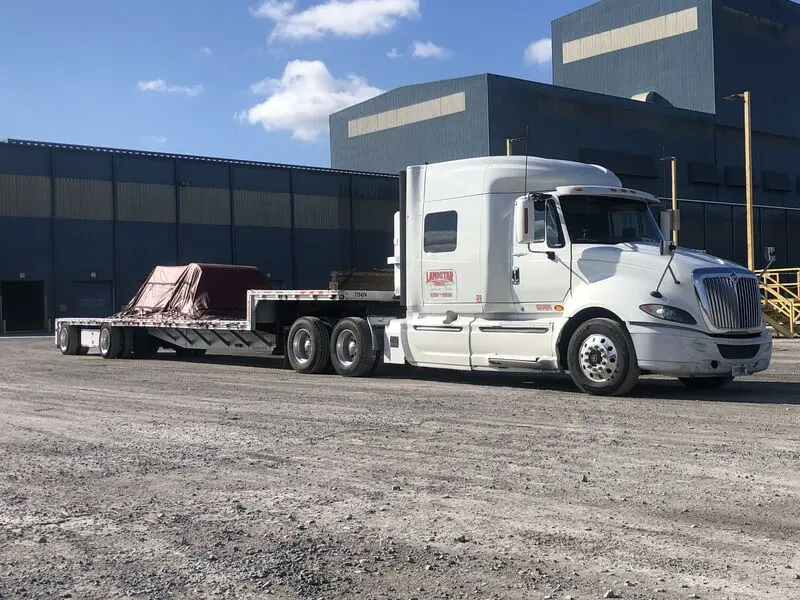
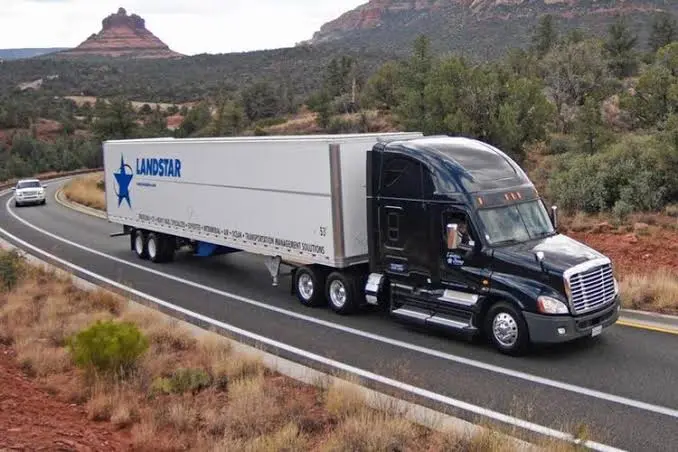
Steel coil securement is a specialized discipline that requires carriers with the right equipment, the right training, and the right pre-trip protocols on every load.
Jansson LLC is a Landstar freight agent with access to a nationwide carrier network — including experienced steel and flatbed operators who understand 49 CFR 393.120 requirements, coil rack specifications, and the commodity-specific securement standards that keep steel coils where they belong throughout transit.
Contact Jansson LLC today. Let’s make sure your steel is moving with a carrier who knows the standard — and meets it on every load.