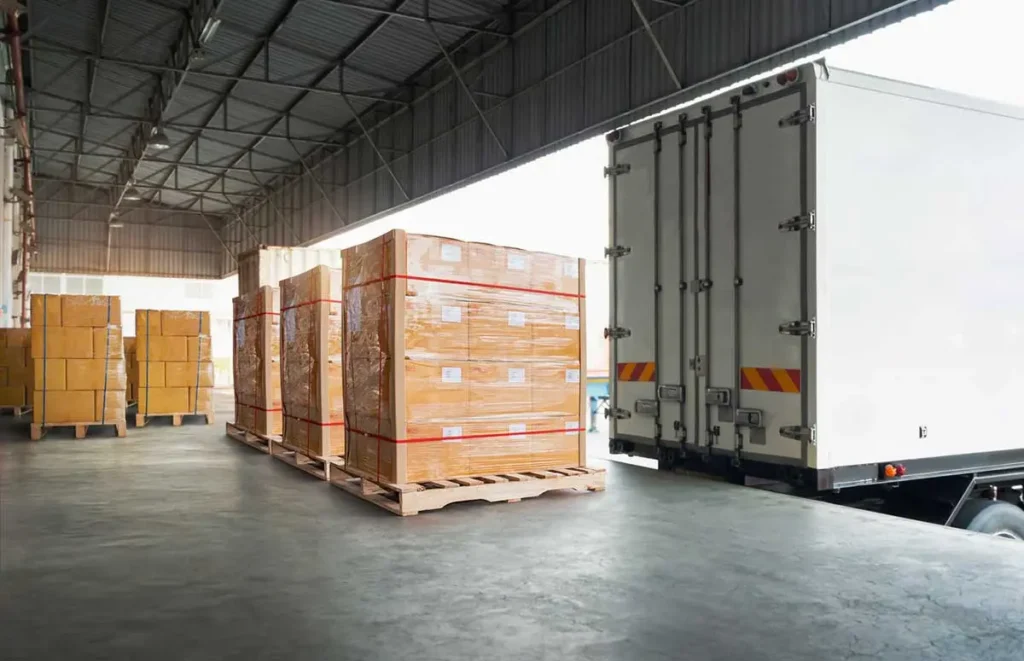
A typical LTL shipment travels through multiple weather patterns, seasons, and climate zones before reaching its destination. It passes through four to five terminal handling events. It is loaded and unloaded by forklifts, moved by conveyor, and stacked adjacent to other freight it has never met.
Most freight survives this journey. Fragile freight that is not packaged correctly does not.
LTL freight damage rates run 2 to 5% across all commodity types — but for fragile goods without proper interior protection and exterior packaging, those rates are significantly higher. And when a carrier denies a claim because packaging was inadequate, the shipper absorbs the entire loss.
The NMFC changes that took effect on July 19, 2025 made packaging more consequential than ever — affecting how freight is classified, how much you pay, and whether your damage claims get approved or denied. Here is what proper fragile freight packaging actually requires.
Why LTL Is Harder on Freight Than FTL
Understanding why LTL creates more packaging demand than full truckload is the starting point for understanding the standards.
In a dedicated full truckload, your freight is the only freight. It loads once at origin and unloads once at destination.
In LTL, your freight shares the trailer with multiple other shippers. It loads at origin, transfers through at least one cross-dock terminal, reloads on a linehaul trailer, transfers through a destination terminal, and delivers from there. Each transfer is a handling event where your freight encounters forklifts, pallet jacks, conveyor systems, and other freight being loaded against it.
Load shift brings freight into uncontrolled contact with adjacent loads, trailer walls, decking beams, and cargo straps — causing abrasion, puncture, or structural damage to packaging and product. Horizontal forces are cumulative across the journey — each braking and turning event works against stretch film containment force, strapping tension, and blocking integrity.
Packaging that survives a dedicated truckload move may not survive four LTL terminal transfers. That is the baseline reality your packaging choices must account for.
Crating Standards for Fragile Freight
Not all fragile freight requires a crate — but when it does, the crate is the primary line of defense against every handling event between your dock and the final delivery. Choosing the wrong container at this stage means everything else you do to protect the freight is working on a compromised foundation.
When a Crate Is Required
Fragile items are best wrapped in protective material like bubble wrap inside a crate — not a cardboard box — when the item cannot withstand the compression, impact, and stacking forces of standard LTL handling.
Wooden crates are best used to help organize and protect freight. Separate fragile and non-fragile items into their own crates to avoid parts of your shipment hitting or scratching each other during transit.
A wooden crate provides three things a cardboard carton cannot: structural rigidity that resists compression from stacked freight, surface hardness that resists forklift tine damage, and interior volume that allows adequate cushioning material around the item.
Crate Construction Requirements
For fragile items, validate crate construction via a four-foot drop test — the industry standard for confirming that packaging can survive the real-world drop events that occur during terminal handling. A crate that cannot survive a controlled drop test will not survive four terminal transfers.
Custom crate options are available through carriers for non-standard shapes and sizes. If your freight cannot be secured in a standard crate, contact the carrier before shipping to confirm the right solution. Some carriers offer specific shipping options for large flat items and unusual configurations — these may cost more than the standard LTL rate but are worthwhile to ensure items arrive intact.
Labeling Fragile Crates
Make sure fragile items are in boxes or crates labeled appropriately so the carrier knows they must be handled with care. If items must be kept in a specific orientation, label this clearly on all four sides — not just the top.
A “THIS SIDE UP” label on one face is not sufficient. A label on all four vertical faces ensures the orientation requirement is visible regardless of how the crate is positioned in the terminal.
Shrink-Wrapping Standards
Shrink wrap is the first external layer of protection on any palletized LTL load — and it is the layer most commonly applied incorrectly. Too loose and the load shifts. Too tight and crushable items compress. Applied without bonding to the pallet and the load separates at the first terminal. Here is the correct approach.
The Three-Pass Minimum
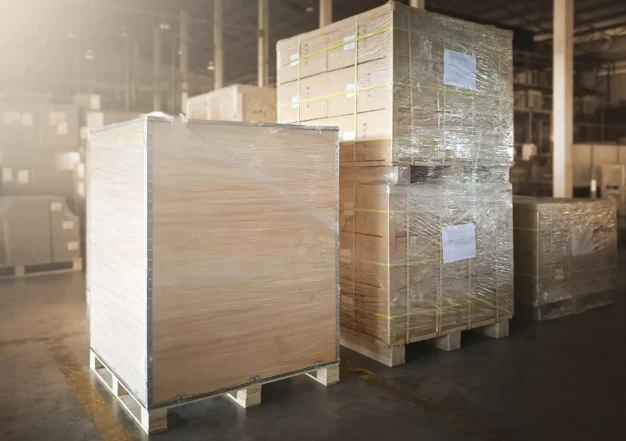
Wrap all four sides of the load from the base of the pallet to the top of the freight in at least three complete passes. The wrap should be tight enough to prevent any shifting but should not compress soft or crushable items.
Begin at the pallet base with approximately 50% overlap per pass. Crisscross corners for stability. Bond the wrap to the pallet on the final pass so the load and pallet move as a single unit rather than separating during handling.
For tall or heavy loads, add a fourth pass and follow with two bands of polypropylene strapping to prevent tipping. Strapping bands go over the stretch wrap — not in place of it.
Corner Boards
Corner boards should be applied on all four vertical corners when shipping fragile, glass, or stackable goods. Corner boards distribute compression from stretch wrap and banding evenly — and they protect the corners of boxes and cartons that would otherwise crush under the weight of stacked freight.
This is one of the most commonly skipped packaging steps in LTL freight — and one of the most consistently cited causes of denied damage claims. A corner board costs cents. A denied claim costs everything the freight was worth.
Strapping Standards
Strapping is the final structural layer — the component that keeps the load from shifting or tipping when stretch wrap alone is not sufficient. The requirements vary by load weight and configuration, and applying the wrong standard for your specific load type is as much a packaging failure as skipping it entirely.
Strapping Requirements by Load Type
For loads under 200 pounds, stretch wrap alone may be sufficient on a properly palletized load. For loads over 200 pounds, or for any load where items could shift independently of each other, strapping is required.
Use polypropylene or steel strapping rated for the load weight. Apply strapping over corner boards — never directly over packaging that could be cut by strap tension during transit.
Two horizontal bands are the minimum for tall or heavy loads. For very tall loads or loads with high center-of-gravity risk, add vertical strapping that loops under the pallet and over the top of the load.
The Forklift Access Requirement
Every palletized load must have forklift access on at least two sides. A load wrapped so tightly that forklift tines cannot reach the pallet openings will be handled incorrectly at the terminal — because the handler cannot do otherwise.
Inadequate forklift access is one of the most common causes of terminal damage to packaged freight. Verify access before the load leaves the dock.
The Claim Denial Risk
When a carrier denies a damage claim, one of the most common grounds is inadequate packaging. Carriers enforce weight and dimension limits and follow NMFTA/NMFC rules for minimum packaging. If your freight does not meet those minimums, the carrier’s liability is limited regardless of how the damage occurred.
Keep photos of every load before departure — showing the packaging, the stretch wrap, the corner boards, and the strapping. Those photos are your primary evidence when a claim is disputed.
How Jansson LLC Helps U.S. Businesses Move Fragile LTL Freight
Packaging protects your freight. Carrier selection determines how it is handled. Both matter.
Jansson LLC is a Landstar freight agent with access to a nationwide carrier network — providing U.S. businesses with LTL routing options, carrier selection, and freight coordination across multiple lanes and regions.
Through the Landstar network, Jansson helps U.S. businesses select LTL carriers based on damage claims performance and terminal handling standards — not just rate — ensuring fragile freight moves with carriers who handle it right.
Contact Jansson LLC today. Let’s make sure your fragile freight is packaged correctly and moving with a carrier whose handling standards match what your cargo requires.