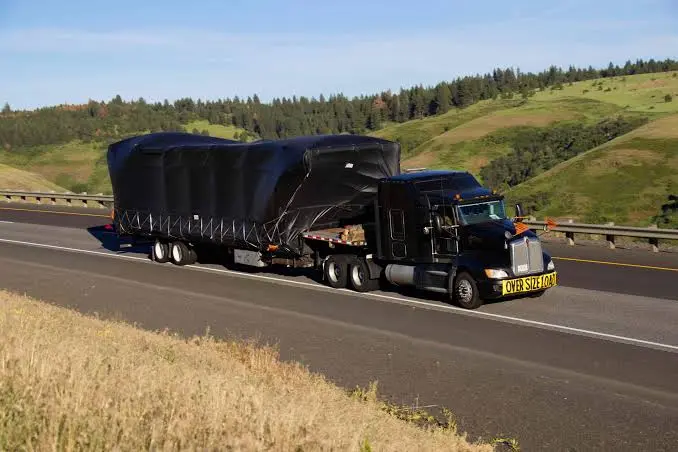
When freight is too big for a dry van but too sensitive for an open flatbed, most shippers default to a standard flatbed with tarps. There is a better option — and it is worth understanding before your next sensitive load moves.
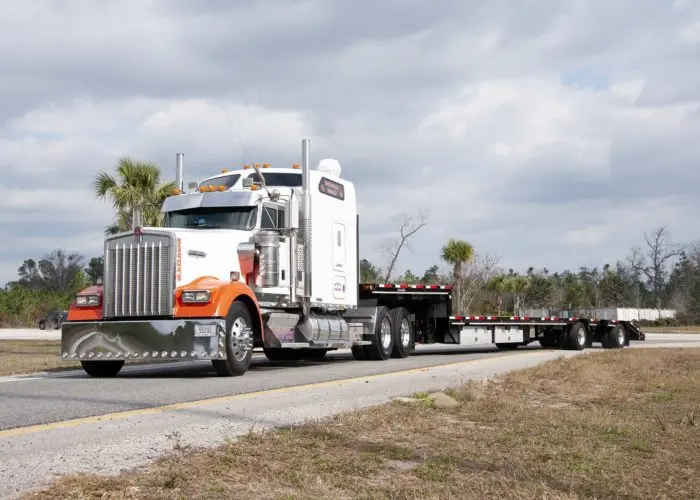
A Conestoga is a specialized flatbed with a retractable tarp mounted on a rigid frame. It protects freight from weather and debris while still allowing flatbed-style crane or forklift loading. The tarp rolls back completely for loading and extends over the cargo during transit — providing weather protection equivalent to a dry van without the loading restrictions of an enclosed trailer.
Conestoga rates in 2026 average $3.20 to $4.20 per loaded mile — a 15 to 25% premium over standard flatbed rates. That premium is real. So is the value it delivers for the right freight. Here is how to know when the Conestoga is the right call.
What a Conestoga Actually Is
A Conestoga trailer starts with a standard flatbed chassis — 48 to 53 feet long, 102 inches wide. The difference is the rolling tarp system mounted on a rigid frame that runs the length of the trailer.
Drivers can retract these curtains completely when loading and unloading and then use them to cover their freight while in transit. The result is a trailer that loads like a flatbed — from the side or top, with a crane or forklift — but transits like an enclosed trailer, with the cargo fully protected from rain, snow, wind, and road debris.
Flatbeds offer maximum weight capacity — around 48,000 pounds. Conestogas add a rolling tarp for weather and security protection, but at a slightly lower capacity of about 44,000 pounds. The 4,000-pound capacity difference is the primary trade-off. For most freight, it is irrelevant — the average flatbed load weighs 30,000 to 38,000 pounds, well within Conestoga limits.
The Primary Advantage: No Manual Tarping
The most immediate operational benefit of the Conestoga is what it eliminates — manual tarping.
On a standard flatbed, tarping is labor-intensive and physically demanding. Heavy canvas tarps must be thrown over the load, spread across the cargo, and secured at every anchor point — often in adverse weather conditions, and often on top of the load itself. This work takes time, creates driver fatigue, and introduces injury risk that accumulates over a driving career.
A single claim for water-damaged cargo can cost $5,000 to $50,000 or more depending on the freight value. The Conestoga’s reliable coverage essentially eliminates weather-related damage claims. For shippers of high-value or moisture-sensitive cargo, that damage elimination is worth significantly more than the rate premium.
About 65% of goods transportation companies opt for Conestoga trailers for their flexibility, reporting a 15% boost in efficiency upon their adoption.
The Freight That Belongs on a Conestoga
Conestoga trailers are typically worth the added expense when freight requires protection from contamination or cosmetic damage during transit. Several categories consistently justify the premium.
Glass and Architectural Products
Glass panels, window systems, and architectural glazing products are among the most common Conestoga commodities — and the most obvious fit. These products cannot tolerate moisture, road debris, or the surface contact that manual tarp systems create. The Conestoga’s frame keeps the tarp structure off the cargo surface while providing complete weather enclosure.
Finished Metal Products and Steel Fabrications
Raw steel ships fine on a standard flatbed. Painted, coated, or finished steel — structural components headed to a construction site, equipment panels, fabricated assemblies — benefits significantly from Conestoga protection. Surface corrosion and cosmetic damage from road debris can render finished metal products unusable on arrival.
High-Value Industrial Equipment
Precision machinery, electronic components, and equipment with exposed controls or sensitive surfaces all benefit from the enclosed transit environment the Conestoga provides. The ability to load with a crane or forklift from the side — while still delivering dry-van-equivalent protection — makes the Conestoga the only equipment type that satisfies both requirements simultaneously.
Building Materials Requiring Surface Protection
Lumber products, composite panels, and pre-finished building materials that need protection beyond what manual tarping reliably provides are strong Conestoga candidates. One tarp that shifts or fails during a rainstorm can damage an entire load. The Conestoga’s rigid frame system eliminates that failure mode.
When the Standard Flatbed Is Still the Right Call
The Conestoga premium is not justified for every load. For most individual freight, a traditional flatbed is the better choice. Flatbeds offer greater loading flexibility, wider equipment availability, fewer dimensional restrictions, and lower transportation costs.
Heavy freight approaching the weight limit, cargo that is genuinely weather-tolerant, and loads on lanes where Conestoga availability is limited are all situations where the standard flatbed with manual tarping remains the more practical choice.
There are roughly 40,000 to 50,000 Conestoga trailers in the U.S. versus over 500,000 standard flatbeds. Conestoga availability is genuinely constrained — which is both why the premium exists and why advance planning matters more for Conestoga freight than for standard flatbed moves.
The Decision Framework
Choose a Conestoga when your freight is moisture-sensitive, surface-sensitive, or high-value enough that a single damage claim would exceed the rate premium across multiple shipments.
Choose a standard flatbed when your freight is weather-tolerant, when you are running near the weight limit, or when the lane you are on has limited Conestoga availability that would create capacity problems.
When both options are viable, the Conestoga’s elimination of manual tarping labor and weather-related damage claims frequently makes it the lower total-cost option — even at a higher linehaul rate.
How Jansson LLC Helps U.S. Businesses Access Conestoga Capacity
Conestoga trailers are scarcer than standard flatbeds — and finding the right carrier for sensitive freight on your specific lane requires carrier relationships that extend beyond the standard equipment pool.
Jansson LLC is a Landstar freight agent with access to a nationwide carrier network — including experienced Conestoga operators across all 48 contiguous states who understand the loading requirements, weather protection standards, and cargo sensitivity considerations that make Conestoga freight different from standard flatbed moves.
Contact Jansson LLC today. Let’s match your sensitive freight to the right equipment — and make sure it arrives in the condition it left in.