A three-letter code written into your purchase order determines who pays for freight, who handles customs, and who absorbs the financial loss if cargo is damaged in transit.
Most importers and exporters know which Incoterm they use. Fewer understand exactly what that term commits them to — and where the hidden exposure lies when the wrong term is chosen for the wrong shipment.
Incoterms are standardized international trade rules published by the International Chamber of Commerce. The current version — Incoterms 2020 — has been in effect since January 1, 2020, and contains 11 rules that define the responsibilities of sellers and buyers at every stage of a shipment.
This article focuses on the three most commonly used terms for U.S. importers and exporters — EXW, FOB, and DDP — and what each one actually means for your cost exposure and risk position.
What Incoterms Actually Govern
Before diving into the specific terms, one important boundary: Incoterms do not govern price, payment terms, or the transfer of title. They govern costs, risk, and logistics responsibilities — specifically, where the risk of loss or damage transfers from seller to buyer, who arranges and pays for each leg of transport, and who handles export and import customs clearance.
Every Incoterm in the official ICC text is broken into seller obligations and buyer obligations covering delivery, risk, transport, insurance, customs, costs, and documents. The term you choose determines your position on each of those variables.
EXW — Ex Works
Of the three terms covered here, EXW gives the buyer the most control — and the most responsibility. It is the starting point on the spectrum, where the seller does the least and the buyer does almost everything.
What It Means
EXW places the minimum responsibility on the seller. Under EXW, the seller makes the goods available at their own premises — their factory, warehouse, or named location. The buyer is responsible for everything from that point forward.
That means the buyer arranges and pays for pickup from the seller’s location, all inland transport to the export port, export customs clearance in the seller’s country, the main international freight, import customs clearance in the destination country, and delivery to the final destination.
Where the Risk Transfers
Risk transfers to the buyer the moment the goods are made available at the seller’s premises — before the buyer’s carrier even loads them.
When EXW Makes Sense
EXW gives the buyer maximum control over the supply chain. If you have strong freight rates, established carrier relationships, and the operational capability to manage export clearance in the seller’s country, EXW can be cost-effective.
The Hidden Problem
Most U.S. buyers do not have the ability to clear export customs in a foreign country — China, Vietnam, or Mexico — without a licensed local agent. If something goes wrong during loading at the seller’s facility, the risk is already the buyer’s even though the goods have not moved.
For containerized freight especially, EXW creates practical complications that FCA — a cleaner alternative for multimodal shipments — avoids.
FOB — Free on Board
FOB sits in the middle of the responsibility spectrum — splitting obligations more evenly between seller and buyer than either EXW or DDP. It is the most widely used Incoterm in global trade, though it comes with an important caveat that many shippers overlook.
What It Means
FOB is the most commonly used Incoterm for ocean freight shipments. Under FOB, the seller is responsible for delivering the goods to the origin port and loading them on board the vessel. The seller also handles export customs clearance.
The buyer is responsible for the main ocean freight, marine insurance, import customs clearance, and delivery from the destination port to the final location.
Where the Risk Transfers
Risk transfers from seller to buyer once the goods are on board the vessel at the origin port.
When FOB Makes Sense
FOB is appropriate when the buyer wants to control the main freight leg — typically because they have negotiated favorable ocean rates — while the seller handles the complexity of export clearance in their home country.
The Important Caveat for Containers
FOB was written for bulk and break-bulk cargo loaded directly onto a ship. With containerized freight, the container is typically handed to the terminal days before the vessel loads — creating a gap where the risk technically remains with the seller even though the goods are no longer in their control.
The ICC’s own guidance is to use FCA instead of FOB for containerized goods. Buyers and sellers who default to FOB out of habit are often carrying unintended risk exposure during that terminal gap.
DDP — Delivered Duty Paid
DDP sits at the opposite end of the spectrum from EXW. The seller takes on maximum responsibility — and the buyer takes on almost none. It is the most convenient term for buyers and the most demanding for sellers.
What It Means
DDP represents the seller’s maximum obligation. The seller is responsible for everything — all transport costs from origin to the named destination, export customs clearance, the main international freight, import customs clearance in the destination country, and all import duties and taxes.
Risk remains with the seller until the goods are delivered to the named destination, ready for unloading.
Where the Risk Transfers
Risk transfers to the buyer only at the named destination — the latest possible transfer point of any Incoterm.
When DDP Makes Sense
DDP is common in e-commerce and consumer goods trade where the buyer — often a retailer or end customer — expects a fully landed, duty-paid price with no customs involvement on their side.
The Hidden Problem for Sellers
DDP puts sellers in the position of clearing import customs in a country where they may not have a licensed customs broker relationship. Import duties must be paid by the seller — and if tariff structures change after the contract is signed, the seller absorbs the cost increase.
For U.S. sellers exporting under DDP, the implication is particularly significant given the tariff changes of 2025. A DDP contract that was profitable at 2024 duty rates may not be at 2026 rates.
The Decision Framework
Choosing the right Incoterm requires answering two questions honestly.
How much of the freight journey do you want to control — and can you actually control it? If you have strong freight rates and operational capability at the origin end, buy on EXW or FCA and control the main leg. If you would rather the other party handle it, move toward DAP or DDP.
Where do you want risk to transfer — and are you equipped to manage it from that point? Delivered terms like DAP and DDP keep risk with the seller the longest. EXW transfers risk to the buyer almost immediately. FOB lands somewhere in the middle — but with the containerization caveat above.
How Jansson LLC Helps U.S. Businesses Navigate Cross-Border Freight
Incoterm selection determines your risk and cost exposure on paper. Execution determines whether that exposure materializes in practice — and that comes down to carrier reliability, documentation accuracy, and logistics coordination at every handoff point.
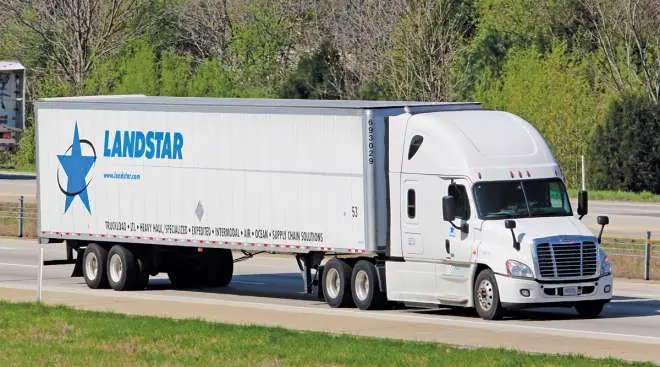
Jansson LLC is a Landstar freight agent with access to a nationwide carrier network — including experienced cross-border operators on U.S.-Mexico and U.S.-Canada corridors who understand documentation requirements, customs coordination, and the logistics execution that keeps international shipments moving on schedule.
Contact Jansson LLC today. Let’s make sure your cross-border freight is moving under the right terms — and with the right carrier to execute them.