Building materials are among the most weather-sensitive cargo categories in commercial freight — and among the most commonly damaged during transit.
Two to five percent of building material loads arrive damaged, draining up to three percent of freight spend every year. For a contractor or distributor moving millions of dollars of materials annually, that damage rate is not a rounding error. It is a meaningful and largely preventable cost.
The three most vulnerable materials — drywall, lumber, and insulation — each have distinct failure modes when exposed to rain, humidity, extreme heat, or cold. Understanding those failure modes is the first step toward preventing them.
Why Building Materials Are Uniquely Vulnerable
Building materials are not packaged like consumer goods. They are dense, heavy, and often irregularly shaped — shipped in bundles, sheets, and rolls that expose significant surface area to ambient conditions throughout transit.
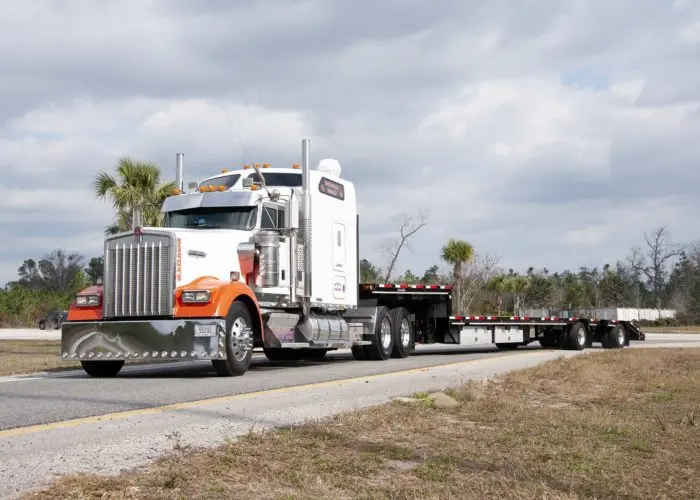
Harvard’s Joint Center for Housing Studies projects homeowner renovation and repair spending will reach approximately $524 billion in 2026. That spending drives enormous freight volume — an estimated $640 billion in annualized building materials distribution activity. Most of that freight moves on flatbeds and open trailers where weather protection depends entirely on how the load is prepared and secured before the truck leaves the yard.
Drywall: The Material Most Likely to Be Ruined by a Single Weather Event
Sheetrock and gypsum wall panels are particularly vulnerable to moisture and impact during transportation. A single rain event — even brief exposure to driving rain during loading or transit — can compromise the paper facing, cause edge softening, and trigger mold growth that makes the panels unusable on arrival.
Protection Requirements
Drywall must travel with full tarp coverage on open trailers — not partial coverage that leaves edges exposed. The tarp must seal against wind-driven rain at highway speeds, which means proper tie-down at every anchor point along the load’s perimeter.
Edge protectors are mandatory where straps contact the sheets. Without them, strap tension damages the facing at the contact points — a form of transit damage that is invisible at pickup and only apparent when the sheets are installed.
Stack drywall flat, never on edge. Vertical stacking concentrates stress at the bottom sheets and creates instability that compounds every handling event between origin and delivery.
Lumber: Moisture, Warping, and the Problem of Long-Term Exposure
Lumber shipped on flatbeds is exposed to ambient humidity throughout transit — not just to rain events. Extended transit times in high-humidity conditions cause moisture absorption that leads to warping, checking, and dimensional instability that makes the lumber difficult to work with on the job site.
Protection Requirements
Bundle lumber tightly and band it securely to prevent individual pieces from shifting and twisting during transit. Loose bundles that move independently during transport produce warped boards even when the weather is dry.
For pressure-treated lumber — which arrives from the treating facility with elevated moisture content — ventilation during transit is as important as protection. Solid tarping that traps moisture against pressure-treated lumber accelerates the surface checking that makes the material harder to finish.
For finish lumber and engineered wood products, full moisture barrier protection is required. A single rain event on a flatbed can cause edge swelling and delamination in engineered products that renders them unusable.
Insulation: The Lightest Load With the Highest Vulnerability
Insulation — fiberglass batts, rigid foam board, spray foam components — has the highest freight class of the three materials and the most specific weather requirements. Lighter items like insulation are class 92.5-110, which reflects both their low density and their handling sensitivity.
Protection Requirements
Fiberglass batt insulation absorbs moisture readily and loses its R-value when wet. Wet insulation cannot simply be dried and reused — the fiber structure is compromised, and the product must be replaced. Full tarp protection and dry trailer conditions are non-negotiable for batt insulation in any weather.
Rigid foam board is less moisture-sensitive than batt insulation but highly vulnerable to UV exposure and surface degradation during extended transit or yard storage. For long-haul loads or loads with significant dwell time, UV-blocking tarp coverage is the appropriate protection.
Spray foam component kits — isocyanate and polyol resin — are temperature-sensitive materials. The components must remain within the manufacturer’s specified temperature range during transit to maintain their chemical stability and performance characteristics. In extreme cold, components gel and become unusable. In extreme heat, off-gassing and pressure buildup create safety risks.
The Carrier Selection Variable That Changes Everything
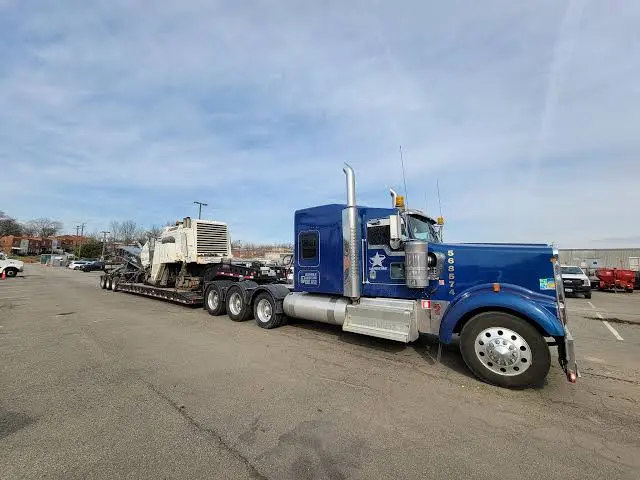
All of the protection practices above depend on the carrier arriving at your dock with the right equipment — appropriate tarps in good condition, functional tarp straps, edge protectors for the load type, and a driver who knows how to apply them correctly.
Construction sites have become targets to thieves due to the high value of equipment and materials. A carrier with verified delivery protocols — signed receipt confirmation, photo documentation, sealed load practices — provides protection against both weather damage and loss claims that an unverified carrier cannot.
Failing to comply with FMCSA regulations can lead to serious consequences, including fines, delays, or accidents. Carriers who understand the regulatory requirements for building materials transport — weight limits, securement standards, and HOS compliance on long-haul deliveries — are the ones whose loads consistently arrive in usable condition.
How Jansson LLC Helps U.S. Businesses Move Building Materials Safely
Weather protection for building materials starts with carrier selection — and carrier selection starts with a logistics partner who knows which carriers have the right equipment, the right practices, and the right track record for sensitive freight.
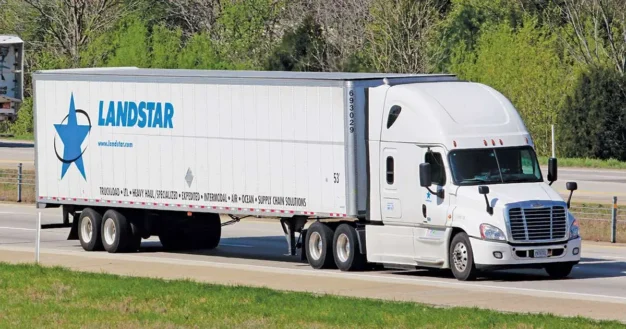
Jansson LLC is a Landstar freight agent with access to a nationwide carrier network — including experienced flatbed and covered freight operators who understand drywall, lumber, and insulation handling requirements across all 48 contiguous states.
Through the Landstar network, Jansson helps U.S. building materials distributors, contractors, and suppliers match their specific load types to carriers equipped to protect them — so materials arrive at the job site ready to use, not ready to be returned.
Contact Jansson LLC today. Let’s make sure your building materials are moving with the right carrier — and arriving in the condition your project requires.