Shipping heavy construction equipment is one of the most complex logistics challenges in commercial freight. The stakes are high on every dimension — the equipment is expensive, the loads are almost always oversize, the compliance requirements are detailed, and the consequences of getting any step wrong range from costly citations to catastrophic road incidents.
Heavy equipment transport in 2025 received 45% more FMCSA scrutiny than general freight — and 37% of violations involve improper cargo restraint, a preventable issue that starts with planning, not with the chains themselves.
Whether you are moving a single excavator across state lines or coordinating a multi-unit construction fleet to a new project site, the best practices that keep heavy equipment moves compliant and damage-free are the same.
Understanding What Triggers Compliance Requirements
The FMCSA defines heavy machinery as vehicles and equipment weighing over 10,000 pounds. This classification includes excavators, bulldozers, cranes, loaders, graders, and most other construction equipment.
Any load that exceeds standard legal limits requires additional planning before the truck rolls. The standard federal limits on the Interstate Highway System are 8.5 feet wide, 13.5 feet tall, 53 feet long, and 80,000 pounds gross vehicle weight. Most heavy construction equipment exceeds at least one of these thresholds — which means most heavy equipment moves require permits, and many require escort vehicles and route surveys.
Cranes are in a category of their own. Ranging from 20,000 pounds to over 10 million pounds, hauling cranes is incredibly complex. They require complete disassembly, movement across multiple flatbed trailers or specialized multi-axle trailers, and all correct oversized and overweight permits for every state on the route.
Choosing the Right Trailer
Trailer selection is the first decision that determines everything downstream — from permit requirements to securement method to route availability.
Standard Flatbed
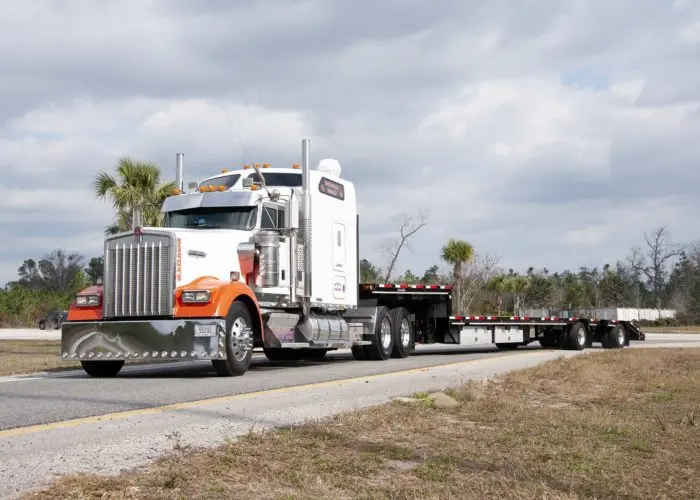
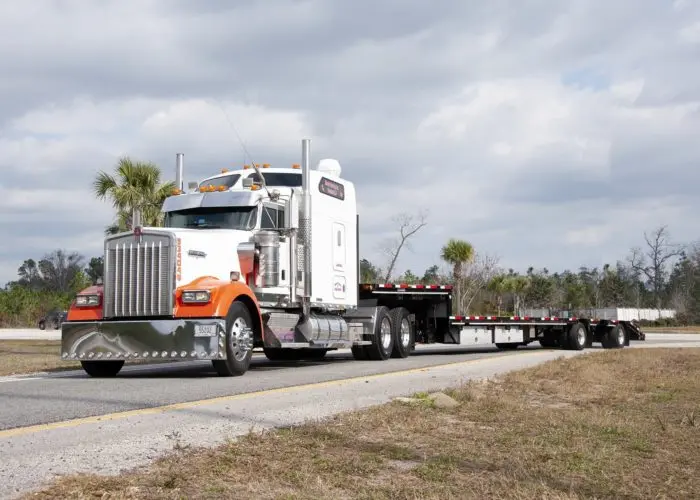
A standard flatbed — 48 or 53 feet — works for equipment that fits within legal height limits. Cargo height is approximately 60 inches above the deck. For equipment that fits within that envelope and does not require lowering to the trailer surface, a flatbed is the simplest and most widely available option.
Step Deck
A step deck drops to approximately 36 to 40 inches off the ground behind the upper deck, allowing cargo up to 10 feet 2 inches tall without triggering oversize permits in most states. Wheeled equipment that can be driven up rear ramps is well-suited to step deck transport.
Lowboy and RGN
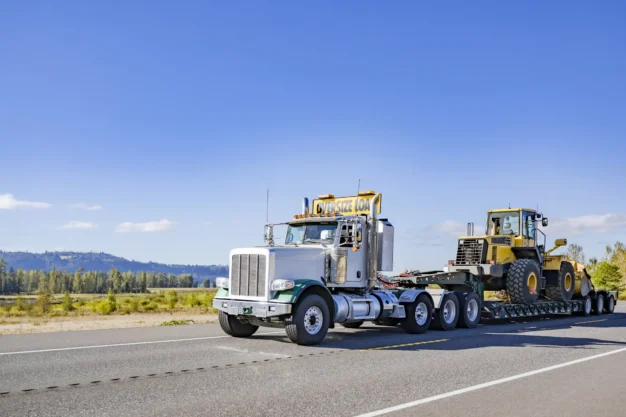
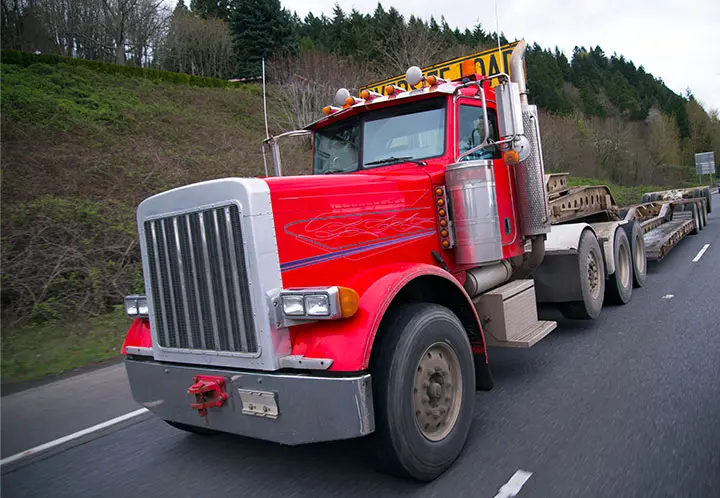
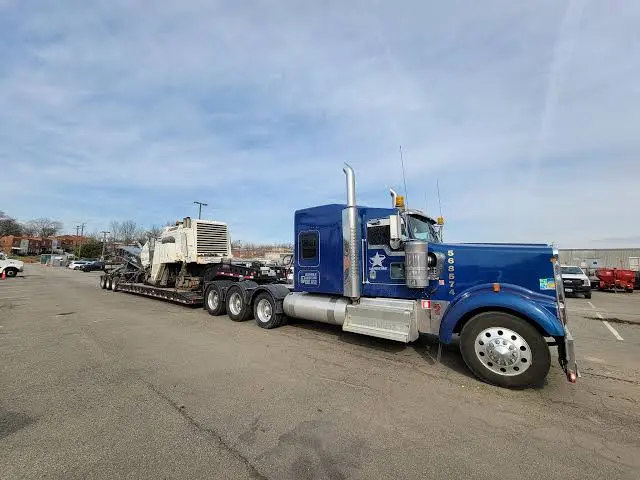
For equipment that exceeds step deck height clearance — most excavators, bulldozers, and large machinery — a lowboy or RGN trailer is the standard choice. The RGN’s removable gooseneck drops to the ground and allows equipment to drive directly onto the deck, which is essential when no crane is available at the loading site.
A standard RGN carries loads up to 42,000 pounds, with multi-axle configurations scaling capacity significantly higher for superloads.
Securement Requirements Under FMCSA 393.130
FMCSA 393.130 is the definitive standard for heavy equipment securement — and 62% of equipment haulers misunderstand or incorrectly apply these regulations, risking $4,000 to $12,000 in fines per violation.
The basic requirements: FMCSA standards require at least one tie-down for every 10 feet of equipment length, with a minimum of four tie-downs for any piece of equipment over 10,000 pounds. Each tie-down must meet or exceed the working load limit requirements for the load being secured.
Equipment-specific requirements add another layer. Tracked equipment such as excavators and bulldozers must be secured through the frame or track frame — never through the bucket, boom, or blade. Steering on wheeled equipment must be secured and parking brakes engaged. Booms and arms must be lowered to transport position — and if they cannot be lowered, they must be separately secured with their own tie-down system.
Grade 70 chains remain the standard for heavy equipment securement. Working load limit ratings are stamped on each component — and 42% of securement failures stem from using worn binders or mismatched components. A chain that is rated for the load but worn beyond safe service life is a compliance failure waiting to happen.
Pre-Transport Equipment Preparation
Proper preparation before loading prevents the most common causes of damage and compliance failure during transit.
Hydraulic systems must be retracted and locked. Mobile components — excavator arms, bulldozer blades, crane booms — must be secured in transport position and internal hydraulic pressure relieved. This prevents components from shifting, bouncing, or leaking during transit.
Fuel tanks should be reduced to approximately one quarter capacity — enough to drive the equipment for loading and unloading, but not so much that a leak creates a hazardous materials incident during transit.
Any loose attachments — buckets, blades, ripper teeth — should be removed and transported separately or secured with their own independent tie-down system. Quick-attach mechanisms must be verified locked before the truck moves.
Multi-State Permit Coordination
Heavy equipment moves across state lines require a permit from every state the load passes through. Each state has its own dimensional thresholds, permit processing timelines, seasonal restrictions, and escort vehicle requirements.
For loads triggering superload classification — typically 16 feet wide, 16 feet tall, 110 feet long, or 150,000 pounds gross — engineering certification for each bridge on the proposed route is required. This process adds two to six weeks per state to the planning timeline and can require route changes when bridges cannot support the load.
Spring load restrictions in more than 35 states reduce allowable axle weights by 20 to 35% on secondary roads from March through May. A route that is legal for an 80,000-pound gross load on the Interstate may produce violations the moment it touches a restricted secondary road during spring restriction season.
How Jansson LLC Helps U.S. Businesses Move Heavy Construction Equipment
Heavy equipment logistics require specialized carrier relationships, multi-state permit expertise, and the route planning experience that keeps complex loads moving without enforcement interruptions.
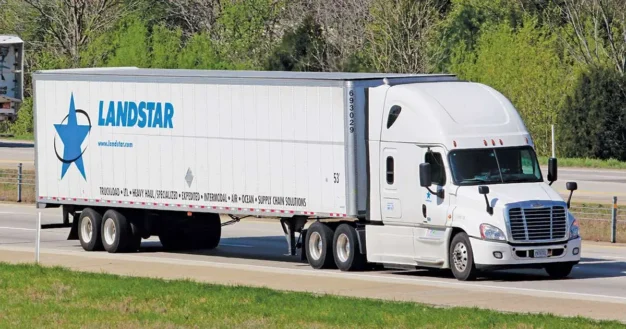
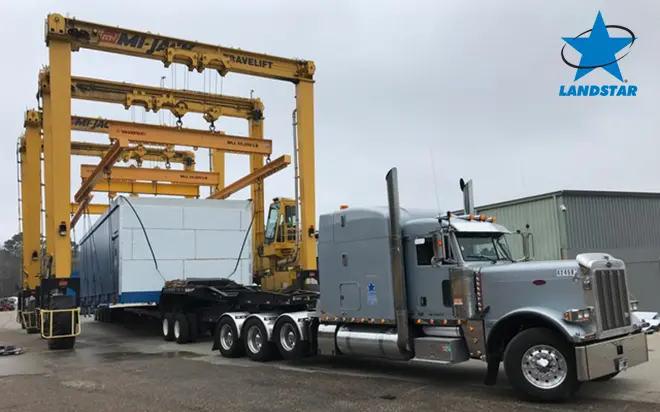
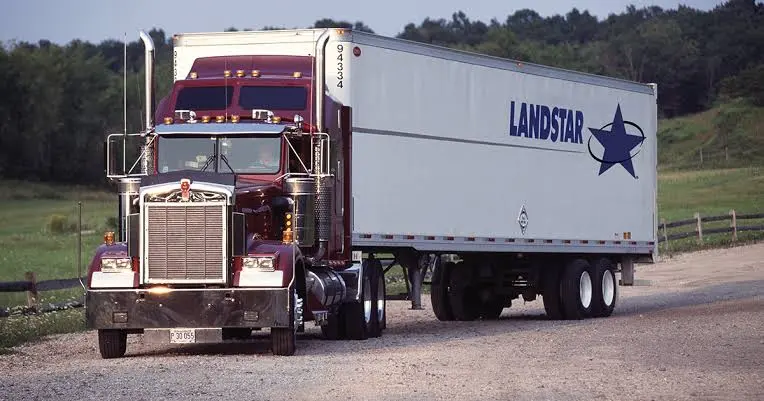
Jansson LLC is a Landstar freight agent with access to a nationwide carrier network — including experienced heavy haul operators who handle excavators, cranes, bulldozers, and other construction equipment across all 48 contiguous states.
Through the Landstar network, Jansson helps U.S. businesses identify the right trailer configuration for their specific equipment, coordinate permit applications across every state on the route, and ensure heavy freight arrives safely and in full compliance from origin to destination.
Contact Jansson LLC today. Let’s move your equipment safely, compliantly, and without the compliance surprises that stop heavy loads before they reach the job site.