Most flatbed shippers focus on what they are loading. The ones who consistently avoid violations, damaged freight, and inspection delays also pay close attention to where they are loading it.
Weight distribution is not an optional best practice in flatbed freight. It is a federal compliance requirement — and getting it wrong creates consequences that show up at weigh stations, in roadside inspections, and eventually in CSA scores that affect your carrier relationships for up to three years.
In 2024, FMCSA enforcement data shows over 420,000 weight-related violations issued to commercial vehicles — at an average fine of $2,100 per incident before legal fees and permit costs. Overweight violations are the third most common cause of out-of-service orders in North America. And unlike mechanical defects, weight violations do not announce themselves through warning lights. They show up at the scale — usually 200 miles from where a better loading decision could have prevented the problem entirely.
The Federal Weight Limits Every Flatbed Shipper Must Know
Federal highway weight standards are established under 23 U.S.C. § 127 and enforced through FMCSA size and weight regulations on the Interstate Highway System.
The standard federal limits are: 20,000 pounds on a single axle, 34,000 pounds on a tandem axle group, and 80,000 pounds gross vehicle weight for a standard five-axle combination.
These limits exist because concentrated weight damages road surfaces and bridge structures. The Federal Bridge Formula — codified in 49 CFR Part 658 — goes further, limiting the weight that any group of consecutive axles may carry based on the distance between them.
Bridge Formula violations are frequently cited because operators focus on gross weight while ignoring axle-spacing calculations. A load that places 36,500 pounds on a tandem axle while running 78,000 pounds gross is still an overweight event — even though the gross weight is legal. The axle limit is what triggers the violation.
The practical implication is straightforward: a load can be legal on gross weight and still produce a citation if weight is not properly distributed across the axle groups.
How Improper Deck Placement Creates Problems
Where a load sits on the deck determines which axle groups bear the weight — and whether that weight distribution complies with federal limits. The three most common deck placement errors each produce a distinct and predictable compliance problem.
Front-Loading and Steer Axle Overload
Placing too much weight toward the front of the trailer transfers load onto the tractor’s steer axle — which has its own weight limit of 12,000 to 13,000 pounds depending on the axle configuration.
A steer axle overload creates immediate handling problems. Steering becomes heavier and less precise. Braking distances increase. Tire wear accelerates. And at the weigh station, the steer axle violation triggers a citation regardless of what the overall gross weight shows.
Rear-Loading and Frame Stress
Placing too much weight toward the rear of the trailer creates the opposite problem. Excessive rear loading reduces weight on the steer axle — sometimes to the point of reducing steering traction — while concentrating load behind the drive axles in a way that stresses the trailer frame.
Frame bending from chronic overloading at the rear is cumulative damage. It may not be visible on a single load — but it compromises trailer structural integrity over time and can produce sudden failure under load.
Uneven Side-to-Side Distribution
A load that is heavier on one side than the other creates lateral instability. This is particularly dangerous on flatbeds carrying irregular cargo — steel beams, machinery, coiled metal — where the center of gravity can be difficult to estimate visually.
Uneven lateral loading increases rollover risk on curves and during sudden lane changes. It also accelerates tire wear on the heavier side and can produce uneven brake performance that extends stopping distances asymmetrically.
The Bridge Formula in Practice
Most weight issues on flatbed freight involve the Bridge Formula rather than simple axle limits — and most operators do not fully understand how the formula works until a violation makes it concrete.
The formula limits load based on the number of axles in a group and the distance between the outermost axles in that group. The longer the wheelbase, the more total weight is permitted. The shorter the wheelbase, the more restrictive the limit.
For flatbed operators, this means that where cargo is placed on the deck directly affects which axle groups bear the load — and whether the load distribution complies with the formula for those axle groups. Moving a heavy piece of equipment 24 inches forward or rearward on the deck can be the difference between a legal load and a citation.
What Proper Deck Placement Actually Looks Like
Proper weight distribution starts with knowing the cargo weight and calculating how placement will affect each axle group before loading begins — not after the truck is rolling.
Heavier items belong in the center of the trailer, over the drive axles. Lighter items go toward the front and rear. Side-to-side balance should be verified visually and — for critical loads — with portable axle scales before departure.
If any axle is overweight, adjusting the load before departure is significantly less costly than discovering the problem at a weigh station. The inspection delay, the citation, the potential out-of-service order, and the CSA score impact all compound the cost of a loading decision that was not verified before the truck left the dock.
More than 35 states impose reduced weight limits on secondary roads from March through May — seasonal restrictions that can catch shippers off guard if the carrier’s route includes non-interstate segments. A load legally distributed for interstate operation may still produce a violation if the route touches a restricted secondary road during spring restriction season.
How Jansson LLC Helps U.S. Businesses Move Flatbed Freight Safely

Weight distribution compliance starts with the loader — but it is enforced at the inspection station. Working with carriers who understand axle weight requirements, deck placement standards, and seasonal restriction calendars is what keeps your freight moving without enforcement interruptions.
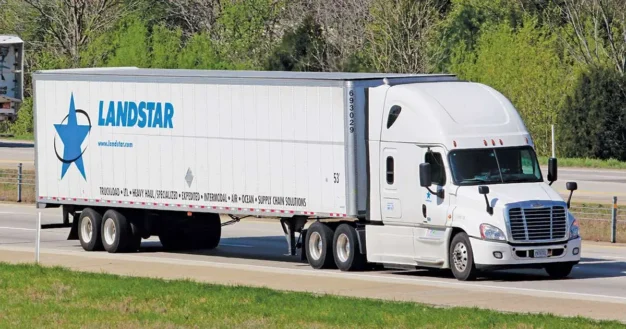
Jansson LLC is a Landstar freight agent with access to a nationwide carrier network — including experienced flatbed operators who understand FMCSA weight regulations, Bridge Formula requirements, and the loading practices that keep freight compliant from the dock to the destination.
Contact Jansson LLC today. Let’s make sure your flatbed freight is loaded correctly, distributed properly, and moving without axle violations from the first mile to the last.