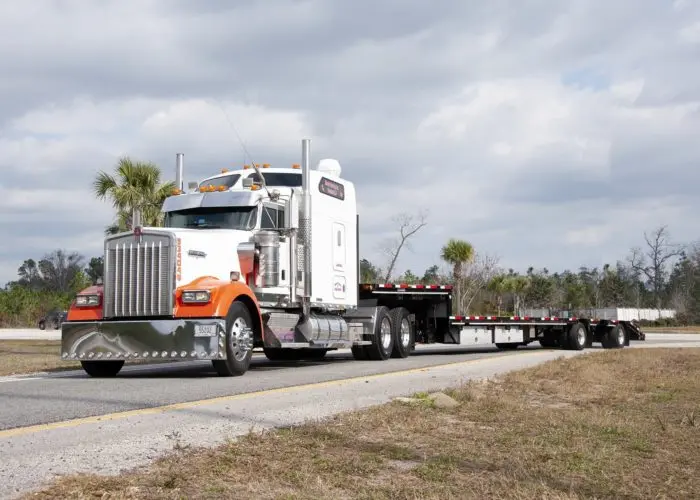
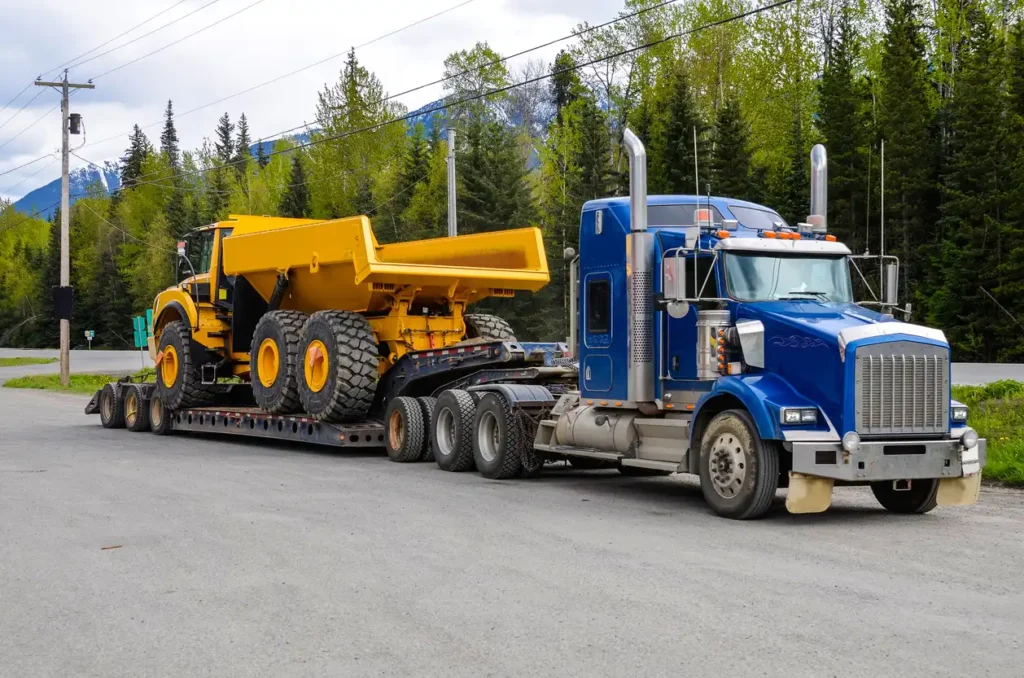
Moving heavy or oversized freight across state lines is not just a logistics challenge. It is a regulatory maze — and the complexity multiplies with every state border your load crosses.
There is no unified federal overweight permit. A load moving from Texas to Ohio through Louisiana, Mississippi, Tennessee, and Kentucky requires five separate permits with five separate routing approvals. Each state has its own rules. Each has its own timeline. And each has its own penalties if something goes wrong.
For U.S. businesses moving construction equipment, industrial machinery, wind energy components, or other heavy freight, this complexity is not a one-time problem. It is a recurring operational challenge that delays shipments, inflates costs, and creates compliance exposure on every multi-state move.
Why There Is No Simple Solution
Most shippers assume that getting federal FMCSA approval covers their heavy haul movement. It does not.
While FMCSA regulations establish general parameters for all commercial vehicles, any load exceeding these thresholds is subject to further scrutiny and special permitting requirements in each individual state. Federal compliance is the floor — not the ceiling.
What that means in practice is that a single shipment crossing five states requires five separate permit applications, five separate routing approvals, and compliance with five different sets of dimensional limits, bridge weight restrictions, travel time windows, and escort vehicle requirements.
Each state issues its own permits with different maximum dimensions, weight limits, escort requirements, travel time restrictions, and fees — with processing timelines ranging from 24 hours to two weeks.
Miss one permit. Choose the wrong route in one state. Travel during a restricted window. Any of these is enough to stop your freight — or generate a violation.
The Variables That Catch Most Shippers Off Guard
Most permit problems do not happen because shippers ignored the rules. They happen because the rules are different in every state — and the differences are not always obvious until a load is already on the road. Here is where the surprises tend to appear.
Dimensional Limits Vary by State
The standard legal width on U.S. highways is 8.5 feet. The standard legal height is 13.5 to 14.5 feet. But these are starting points — not uniform rules.
Some states allow wider loads than others. Both Texas and Florida require route approvals, but their specific dimensional thresholds differ. A configuration that is legal in one state may require additional permits, escort vehicles, or a completely different route in the next.
Spring Load Restrictions Add Seasonal Complexity
More than 35 states impose reduced weight limits on secondary roads from March through May — typically reducing allowable gross vehicle weight by 20 to 35% on affected routes. Timing varies by state and year based on actual soil temperature readings.
Violation fines during spring restriction periods are typically double the standard rate. Planning a heavy haul route without accounting for seasonal restrictions is one of the most common and costly mistakes in heavy freight logistics.
Escort Vehicle Requirements Differ
Most states do not require escort vehicles for loads under 10 feet wide — but some require escorts for all oversized loads regardless of width. The number of escorts required, their positioning, and their equipment specifications all vary by state.
If the haul enters or transits several states, the operator must confirm the escort requirements in each state — and use the largest size required within that group of states for safety equipment such as flags and banners.
Municipal Permits May Be Required Too
State permits for an over-dimensional load may not be the only permits required. Municipal permits may also be required if the route passes through city streets — in addition to state permits.
This layer of complexity is frequently overlooked. A shipper who secures all state permits but fails to obtain a required municipal permit can still have their load stopped in the middle of a city.
The Cost of Getting It Wrong
In 2024, FMCSA enforcement data shows over 420,000 weight-related violations issued to commercial vehicles — at an average fine of $2,100 per incident before legal fees and permit retroactive costs.
Beyond the fines, a stopped load means missed delivery windows, idle equipment on a job site, and the cost of re-permitting and re-routing on an emergency basis. For construction projects with tight timelines, a single permit error can cascade into significant downstream costs.
What Proper Multi-State Heavy Haul Planning Looks Like
Getting a multi-state heavy haul right requires four things done in sequence before the truck rolls.
Accurate load dimensions and weight.
Every permit application requires precise measurements — length, width, height, gross vehicle weight, and axle spacing. Estimates create errors. Errors create violations.
State-by-state permit applications submitted in advance.
Applying at least three business days before departure is recommended — but longer lead times are needed for states with complex review processes or engineering review requirements.
Route review for bridges, clearances, and restrictions.
The permitted route must account for bridge weight ratings, low clearances, construction zone restrictions, and seasonal load limits on every road segment.
Escort and safety equipment coordination.
Escort vehicles must be arranged and safety equipment must meet the most stringent requirements of any state on the route.
How Jansson LLC Helps U.S. Businesses Move Heavy Freight Across State Lines
Multi-state heavy haul planning is not something to figure out on the first move. It requires experience with state-by-state permit systems, knowledge of seasonal restrictions and escort requirements, and the carrier relationships to execute complex routes reliably.
Jansson LLC is a Landstar freight agent with access to a nationwide carrier network — including experienced heavy haul operators who regularly move oversized loads, manage multi-state permit coordination, and handle the routing complexity that specialized freight demands across all 48 contiguous states.
Through the Landstar network, Jansson helps U.S. businesses identify the right trailer configuration and carrier for their specific load, coordinate permit applications across every state on the route, and move heavy freight safely and on schedule — without the compliance headaches of managing it alone.
Contact Jansson LLC today. Let’s map the route, coordinate the permits, and make sure your heavy haul moves on the first try.