Cross-border freight rates between the U.S. and Mexico do not move in isolation. They move with the peso — and in 2026, that relationship is more volatile than most shippers have planned for.
The USD/MXN exchange rate has swung from 17.10 to 18.14 within a single year — a spread of more than one full peso. That may sound modest. For businesses moving significant freight volume across the border, it translates directly into unpredictable freight costs, compressed margins, and budget variances that can be difficult to explain to a CFO after the fact.
Understanding how currency moves affect your cross-border freight costs — and how to plan around them — is one of the most underappreciated advantages in U.S.-Mexico supply chain management.
How Currency Affects Your Cross-Border Freight Costs
Mexican Carrier Rates Are Priced in Pesos
Most Mexican trucking companies price their services in Mexican pesos. That is the currency their drivers are paid in, their fuel is purchased in, and their operating costs are denominated in.
When a U.S. shipper negotiates cross-border rates with a logistics partner who works with Mexican carriers, those rates ultimately reflect the underlying peso cost. When the peso strengthens against the dollar — meaning more dollars are required to buy the same number of pesos — the dollar cost of Mexican carrier services goes up. When the peso weakens, those same services cost fewer dollars.
Over the past 12 months, the Mexican peso has strengthened approximately 14.57% against the U.S. dollar. That is not a rounding error. For a shipper moving $2 million in annual cross-border freight, a 14% currency movement in the wrong direction represents $280,000 in additional cost exposure — before any other market factors are considered.
Fuel and Labor Costs Are Amplified by Currency Moves
Diesel prices in Mexico fluctuate with both the global crude market and the peso-dollar exchange rate. Mexican carriers operating on peso-denominated fuel face higher peso costs when fuel prices rise — and those costs eventually find their way into carrier rates.
Labor costs work the same way. Mexico’s minimum wage increased to 278.80 pesos per day as of January 2025. As the peso strengthens, that wage costs more in dollar terms for U.S. shippers sourcing services through Mexican operators. Nearshoring trends are amplifying this effect — as more U.S. manufacturers move production to Mexico, competition for Mexican carrier capacity increases, putting additional upward pressure on rates regardless of currency direction.
Tariffs Interact With Currency in Both Directions
The relationship between tariffs and currency adds another layer of complexity. When the U.S. announced tariffs on Mexican goods in early 2025, the immediate market reaction was a significant weakening of the peso — with the USD/MXN rate jumping roughly 3% in response to investor concerns over reduced Mexican export demand.
A weaker peso makes Mexican freight services temporarily cheaper for U.S. dollar payers. But it also signals broader economic instability that tends to increase other costs — insurance, financing, and risk premiums — across the cross-border supply chain.
What This Means for Your Freight Budget
Most U.S. shippers build annual freight budgets based on current rate levels. For domestic freight, that approach is reasonable. Rate moves tend to be gradual and tied to identifiable market signals.
For cross-border freight, annual budgets that do not account for currency volatility are systematically underestimating cost exposure. A rate that looks fixed in dollar terms may not stay fixed if the carrier reprices based on peso movements — which many Mexican operators do on short cycles.
Currency fluctuations have a direct impact on import/export costs. When a currency depreciates, imports become more expensive and exports become cheaper. The practical implication for U.S. shippers is straightforward: the peso’s direction in any given quarter can make your cross-border freight budget look accurate or wildly off — without any operational changes on your end.
How Smart Shippers Manage the Currency Risk
Build Rate Review Cycles Into Carrier Agreements
Rather than locking into annual rates that may not reflect currency reality, build structured rate review cycles into your cross-border carrier agreements — quarterly reviews tied to a published exchange rate benchmark. This gives both parties a transparent mechanism to adjust without adversarial renegotiation.
Track the USD/MXN Rate as a Freight KPI
Most shipping teams track fuel prices and spot market rates. Few track the peso-dollar exchange rate as a freight metric. Add it to your monitoring dashboard. The peso’s weekly movement is publicly available from Banxico, Wise, or Trading Economics — and a significant move is usually a leading indicator of an upcoming carrier rate conversation.
Work With a Logistics Partner Who Understands Both Markets
Currency expertise alone does not move freight. But a logistics partner who understands how peso volatility flows through carrier pricing — and who maintains relationships with multiple cross-border operators — can help you navigate rate moves before they hit your invoices.
How Jansson LLC Helps U.S. Businesses Navigate Cross-Border Freight

Cross-border shipping between the U.S. and Mexico involves currency risk, carrier coordination complexity, and documentation requirements that domestic freight simply does not.
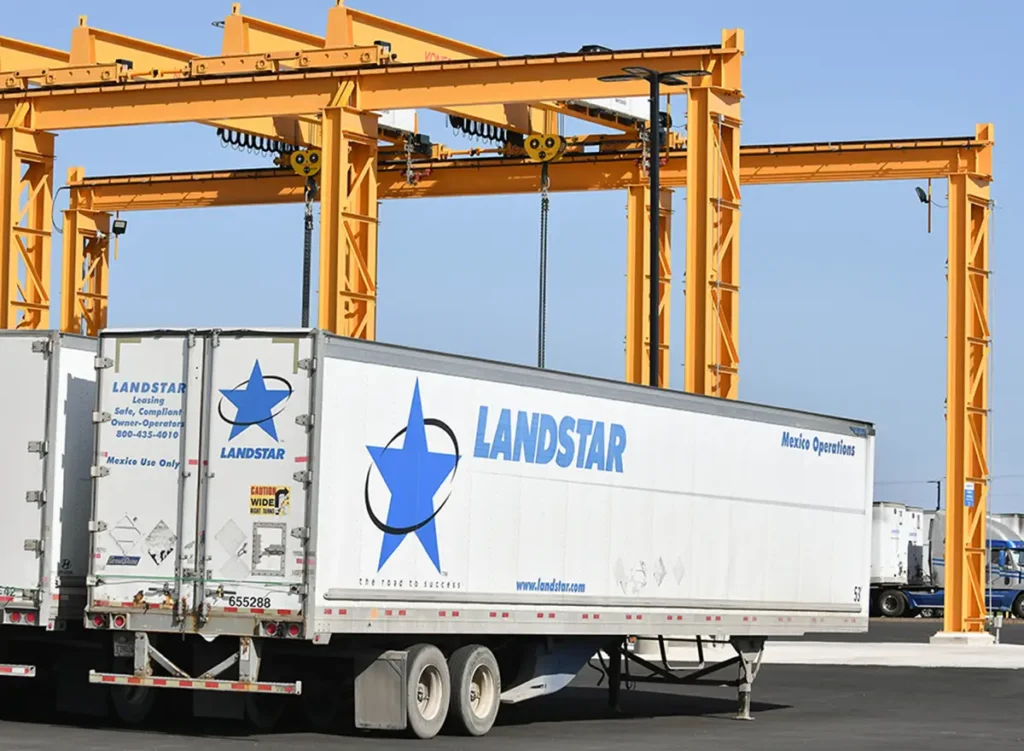
Jansson LLC is a Landstar freight agent with access to a nationwide and cross-border carrier network — including experienced U.S.-Mexico operators who understand the operational and financial realities of cross-border freight.
Through the Landstar network, Jansson helps U.S. businesses evaluate cross-border freight costs with full visibility into the factors that drive them, coordinate multi-carrier cross-border moves efficiently, and build freight strategies that account for the real cost variables of U.S.-Mexico trade — including the ones that do not show up on a domestic rate sheet.
Contact Jansson LLC today. Let’s build a cross-border freight strategy that holds up — even when the peso does not.